 ultimate-guide
Full Replacement Cost Insurance Explained for 2026
Table of Contents
- What Full Replacement Cost Insurance Actually Means
- Actual Cash Value vs Replacement Cost for Couriers
- Goods in Transit Insurance Explained: What Gets Covered
- How Replacement Cost Claims Are Calculated
- Partial Loss vs Total Loss: How the Claim Changes
- Policy Limits, Deductibles and the Endorsements That Close the Gap
- Documentation Best Practices for a Smooth Claims Settlement
- Frequently Asked Questions
Last Updated: September 14, 2026
What Full Replacement Cost Insurance Actually Means
Full replacement cost insurance pays to repair or rebuild damaged property at today's prices, without deducting for wear and tear. At Direct Couriers London Ltd, we explain it to clients moving antiques and bulky furniture almost every week.
The Difference Between Replacement Cost and Market Value
Market value is what your item would sell for today, second-hand. Replacement cost is what you would pay for a new equivalent now.
A three-year-old oak dining table might fetch a modest sum at auction; replacing it new costs considerably more. A replacement cost basis closes that gap.
Actual Cash Value vs Replacement Cost for Couriers
Actual cash value (ACV) is replacement cost minus depreciation, the cheaper basis most basic transit policies default to.
For couriers the difference is stark: ACV reflects what goods were worth when damaged, not what a replacement costs, leaving a shortfall the seller absorbs.
Depreciation is the reduction in an item's value caused by age, wear, and use, calculated rather than guessed, though methods vary between insurers.
| Basis | What It Pays | Depreciation Applied | Best For |
|---|---|---|---|
| Replacement cost (RCV) | Cost to replace new | No | New goods, antiques, high-value stock |
| Actual cash value (ACV) | Cost minus wear | Yes | Older, low-value, easily replaced items |
How Depreciation Affects Your Claim
Depreciation is usually the largest single deduction in an ACV settlement, applied using the item's age and expected useful life at the time of loss.
Depreciation keeps running until the item is written down to salvage value, which on a long-distance move can turn a modest claim into a token payment.
Goods in Transit Insurance Explained: What Gets Covered
Goods in transit insurance covers your cargo from collection to delivery, separate from the courier's own vehicle cover.
A courier's motor policy protects the van, not the antique sideboard inside it; transit cover protects the goods against damage, loss, and theft.
What gets covered typically includes:
- Physical damage during loading, transit, and unloading
- Theft or non-delivery
- Loss from a covered casualty such as a road incident
- Damage from handling by the carrier
Outside the standard scope: inherent vice, poor packing, and gradual deterioration, the policyholder's responsibility, not the carrier's.
Like Kind and Quality: The Standard That Decides Your Payout
Like kind and quality requires a replacement to match the damaged item in type, age, condition, and function, the language that decides whether your payout buys a genuine equivalent or a cheap substitute.
Under a replacement cost basis the insurer owes an item of comparable specification, equivalent, not identical. A solid oak table should be replaced with solid oak, not veneer.
For antiques and one-off pieces where no true equivalent exists, insurers often settle on a specialist valuation, where an independent appraisal earns its fee.
How Replacement Cost Claims Are Calculated
Calculating a replacement cost claim follows a set sequence: establish the item, confirm the basis, price the replacement, then apply the deductible and policy limit.
The steps, in order:
- Report the loss and complete a proof of loss
- Establish the item's specification and condition
- Confirm the policy basis (replacement cost or ACV)
- Obtain current market prices for an equivalent replacement
- Apply the policy limit and deductible
- Agree the settlement figure
The deductible is subtracted once from the total; the policy limit caps it. Everything between those figures is what you receive.
A Worked Example
Suppose a walnut sideboard bought new for £2,400 three years ago is destroyed in transit. A like-for-like replacement now costs £2,900, and your policy has a £250 excess and a £5,000 sum insured.
- Replacement cost established: £2,900
- Less policy excess: £250
- Net settlement: £2,650
The £2,650 sits below the £5,000 limit. Had replacement cost been £5,600, the insurer would pay £5,000 minus the £250 excess, £4,750, leaving a £600 shortfall.
That shortfall is the most common reason a claim disappoints, not the insurer being difficult, but an out-of-date sum insured.
Why the Sum Insured Is Not the Same as the Payout
The sum insured is not the amount you receive, it is the ceiling. The payout is the lower of replacement cost and the sum insured, less the excess.
Where replacement cost exceeds the sum insured, the shortfall falls on you. Underinsurance of 20 to 30 per cent is common because sums insured are set at purchase and never revisited (abi.org.uk).
The Role of the Loss Adjuster
For claims above a few thousand pounds, the insurer appoints a loss adjuster to verify the item, the basis and the replacement price. They are not there to reject your claim, but they will test it.
What the adjuster will ask for:
- Proof of ownership, such as a receipt or bank statement
- Evidence of condition before the loss, such as photographs
- A replacement quote from a comparable supplier
- Confirmation of the policy basis and any endorsements
Cooperating early shortens the process; disputing the valuation without evidence lengthens it.
What Most Guides Miss: Partial Loss Maths
Most explanations of replacement cost assume total destruction, but most claims are partial: a dented cabinet door, a chipped marble top, a torn leather panel.
On a partial loss under a replacement cost basis, the insurer pays repair cost plus any residual reduction in value. If the repair restores the item fully, only the repair cost is payable.
A repair costing £400 that leaves the item worth £300 less than an undamaged equivalent produces a £700 claim, not £400, the difference between a fair settlement and an underpaid one.
Depreciation and the Replacement Cost Basis
Depreciation does not apply to a replacement cost settlement, only to an actual cash value one. Under a replacement cost basis, the insurer does not deduct for wear and tear.
It still matters indirectly, feeding the like kind and quality comparison: a ten-year-old sofa is replaced with an equivalent ten-year-old sofa in comparable condition, priced at today's sourcing cost.
Replacement cost does not mean new-for-old in every case, it means equivalent-for-equivalent at today's prices.
Partial Loss vs Total Loss: How the Claim Changes
A partial loss means goods are damaged but repairable or salvageable; a total loss means destroyed, stolen, or uneconomical to repair.
The maths changes entirely: a partial loss covers repair costs plus any reduction in value; a total loss covers full replacement cost, subject to limits.
A dented cabinet door is a partial loss; a cabinet crushed beyond repair is a total loss, same item, two very different settlements.
Policy Limits, Deductibles and the Endorsements That Close the Gap
Policy limits and deductibles decide your net payout; endorsements close the gaps between what you insured and what replacement actually costs.
Four endorsements matter most for anyone carrying high-value goods:
- Inflation guard automatically increases your sum insured over time, so rising construction and material costs do not leave you underinsured.
- Extended replacement cost pays a percentage above the policy limit, useful when rebuilding costs spike.
- Guaranteed replacement cost removes the limit entirely for the covered structure, the strongest protection available.
- Ordinance or law coverage pays for the extra cost of meeting current building codes during reconstruction.
Extended vs Guaranteed Replacement Cost: The Practical Difference
Extended replacement cost is a percentage buffer, typically up to 125 per cent of the sum insured (abi.org.uk). With a £200,000 sum insured and a £230,000 rebuild, a 125 per cent endorsement covers it fully; at £260,000 you are £10,000 short.
Guaranteed replacement cost removes the ceiling: the insurer pays whatever it costs to rebuild or replace, subject to the policy's general terms, provided the sum insured was set honestly at inception.
That last point matters: guaranteed replacement cost is not a licence to underinsure. If the sum insured was set well below true replacement cost at inception, the insurer may reduce the payout proportionally. The guarantee protects against unexpected cost rises, not deliberate underinsurance.
| Endorsement | How It Works | Best For |
|---|---|---|
| Inflation guard | Sum insured rises automatically, often in line with an index | Long-term policies where costs drift |
| Extended replacement cost | Pays a set percentage above the limit, commonly 120-130% | Properties or stock where a modest overrun is likely |
| Guaranteed replacement cost | Removes the limit entirely, subject to honest sum insured | High-value or hard-to-replace items |
| Ordinance or law | Pays extra cost of meeting current building regulations | Older buildings and non-standard stock |
How to Choose Between Them
The choice depends on three factors: replacement cost volatility, item value, and your appetite for risk.
For goods in transit, extended replacement cost is the practical middle ground, cheaper than a guarantee and covering modest overruns. For a one-off antique or bespoke piece, guaranteed replacement cost is worth the premium because there is no reliable market price to benchmark against.
Inflation guard is the most overlooked and most needed endorsement: inexpensive, and it solves the slow erosion that catches policyholders out after two or three years without a review.
Deductibles: How They Interact with Endorsements
The deductible, or excess, is subtracted once from the total settlement and does not interact with the endorsement percentage: a 125 per cent endorsement on a £200,000 limit pays a maximum £250,000, less the excess (abi.org.uk).
For high-value transit, a higher excess for a lower premium can make sense if you can absorb it comfortably. The excess is what you self-insure; set it too high and a small claim becomes uneconomical to pursue.
What Most Guides Miss: The Endorsement Audit
Endorsements are not set-and-forget: they need auditing at every renewal, because the gap they close changes over time.
A practical audit routine:
- Compare the sum insured against current replacement costs, not the purchase price
- Check whether the inflation guard index reflects your actual cost exposure
- Confirm the extended replacement cost percentage and whether it still covers realistic overruns
- Review whether guaranteed replacement cost is available and priced sensibly for your highest-value items
- Check ordinance or law cover if you hold older or non-standard stock
An endorsement adequate two years ago may be inadequate today. The audit takes an hour and is the highest-return task in policy management.
Documentation Best Practices for a Smooth Claims Settlement
Documentation decides how fast and how fully a claim settles. Insurers pay on evidence, and the policyholder who documents properly gets paid first.
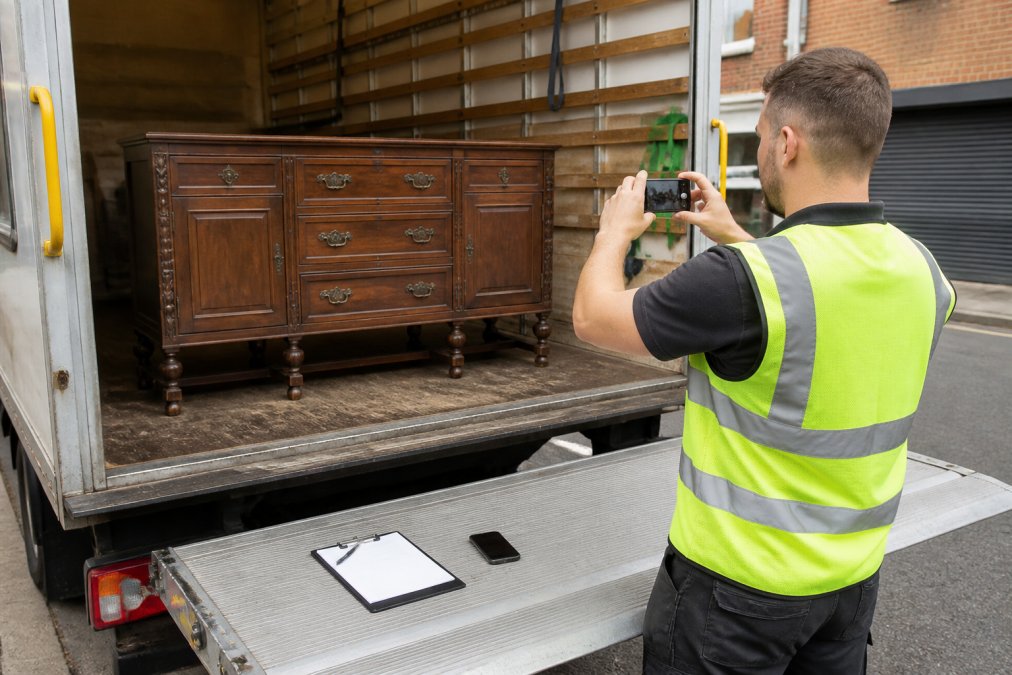
The routine that works:
- Photograph every item before loading, from multiple angles
- Record condition notes at collection and delivery
- Keep original receipts and valuations for high-value goods
- Note the like kind and quality specification in writing
- Retain the proof of loss and all correspondence
- Log the date, time, and handler for each stage
A common mistake is photographing only the damaged item after the fact. Insurers want the pre-transit condition, which establishes the claim baseline; without it you argue from a weaker position.
Documentation gathered at the moment of loss is worth far more than the same evidence assembled a fortnight later, once memories have blurred and packaging discarded.
Understanding full replacement cost insurance is the difference between a claim that restores you and one that leaves you out of pocket. At Direct Couriers London Ltd, our fully insured fleet, ranging from compact vans to tail-lift Luton vans, carries your goods with same-day and next-day options and instant tracking throughout. For anyone moving antiques, bulky furniture, or palletised stock, our tailored storage and nationwide coverage keep the process dependable from collection to delivery. Contact us today to discuss your shipment.
Frequently Asked Questions
What is full replacement cost insurance?
Full replacement cost insurance pays to repair or replace damaged goods at today's prices, without deducting for age or wear. If a three-year-old oak table is destroyed in transit, the payout covers what it costs to buy a comparable new one now, not its second-hand value. It differs from actual cash value cover, which subtracts depreciation first. Replacement cost value (RCV) settlements usually require you to repair or replace the item before the full amount is released.
What are the disadvantages of replacement cost coverage?
Premiums run higher than actual cash value cover because the insurer carries more risk. You may also need to fund the replacement upfront and claim back afterwards, and some policies cap payouts at the sum insured, so under-declaring the value of your goods leaves a shortfall. Like kind and quality clauses mean you get a comparable item, not a cash sum of your choosing. Check policy limits and any inner limits on high-value single items before you ship.
Does full replacement cost insurance cover depreciation?
It removes depreciation from the settlement calculation. Where an ACV claim on a five-year-old sofa might pay only its depreciated value, a replacement cost claim pays what a new equivalent costs at current market prices. That said, depreciation still matters at the claim stage: the insurer assesses the item's age and condition to confirm it was not already beyond economic repair. Keep receipts and photographs to support the condition of goods before transit.
Why is replacement cost coverage important for courier services?
Couriers move furniture, antiques and palletised stock where a single damaged item can cost thousands to replace. Without replacement cost cover, a claim on a depreciated antique settles well below what it costs to source a like kind and quality replacement, and the gap comes out of your pocket or your customer relationship. For regular shippers, goods in transit insurance explained in plain terms usually means checking the per-load limit and whether replacement cost or ACV applies.