 listicle
Best Courier for Palletized Goods: 2026 UK Review
Table of Contents
- How We Evaluated the Best Couriers for Palletized Goods
- Quick Comparison: Top Pallet Couriers at a Glance
- 1. Direct Couriers London Ltd: Best for Tail-Lift and Same-Day Service
- 2. DHL Express: Best for International Pallet Shipping
- 3. TPS Global Logistics: Best for High-Value and Fragile Pallets
- 4. Easyship: Best for E-commerce Integration
- 5. Parcel Monkey: Best for Comparing Pallet Delivery Costs
- 6. UPS: Best for Large-Scale Business Freight
- How to Pack a Pallet for Shipping: Compliance and Safety
- Pallet Size, Weight and Transit Insurance Explained
- Frequently Asked Questions
Last Updated: September 17, 2026
How We Evaluated the Best Couriers for Palletized Goods
Finding the best courier for palletized goods starts with one hard fact: not every carrier that accepts a pallet is equipped to handle it well. This review scores each provider on five criteria: tail-lift and forklift capability, insurance cover, tracking visibility, international reach and e-commerce integration.
Quick Comparison: Top Pallet Couriers at a Glance
The table below compares each provider on the criteria that decide most pallet bookings. Note that several carriers quote per consignment rather than publishing rates, so always request a shipping quote for your pallet dimensions and weight.
| Provider | Best For | Tail-Lift / Forklift | Insurance | Pricing Model |
|---|---|---|---|---|
| Direct Couriers London Ltd | Tail-lift and same-day service | Tail-lift Luton vans | Fully insured fleet | Quote-based |
| DHL Express | International pallet shipping | Depot handling | Standard cover | Quote-based |
| TPS Global Logistics | High-value and fragile pallets | Dedicated handling | Tailored cover | Quote-based |
| Easyship | E-commerce integration | Carrier-dependent | Carrier-dependent | Free, pay per shipment |
| Parcel Monkey | Comparing delivery costs | Carrier-dependent | Carrier-dependent | Pay per shipment |
| UPS | Large-scale business freight | Depot handling | Standard cover | Quote-based |
1. Direct Couriers London Ltd: Best for Tail-Lift and Same-Day Service
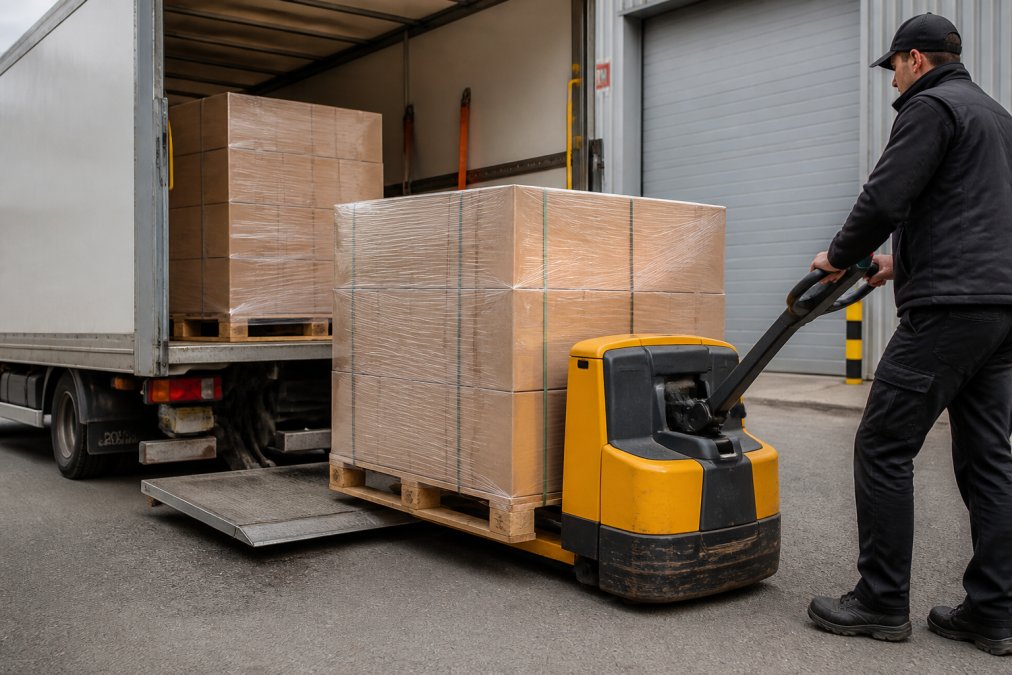
Direct Couriers London Ltd is the strongest pick for anyone shipping palletized goods that need to move today, not next week. The fleet runs from compact vans up to tail-lift Luton vans, which means a pallet can be loaded and lowered without a forklift or loading bay at either end.
2. DHL Express: Best for International Pallet Shipping
DHL Express has a global network that handles customs clearance, end-to-end tracking and flexible collection, with infrastructure for international consignments.
3. TPS Global Logistics: Best for High-Value and Fragile Pallets
High-value and fragile pallets need a provider that treats handling as the product, not an afterthought. TPS Global Logistics offers dedicated palletized goods transport with same-day and next-day options, and handles fragile and bulky items.
4. Easyship: Best for E-commerce Integration
Easyship is a multi-carrier platform that compares rates across carriers, automates customs documentation and plugs into major e-commerce platforms, allowing bulky-goods sellers to manage pallet shipping inside the same dashboard as their smaller parcels.
5. Parcel Monkey: Best for Comparing Pallet Delivery Costs
Parcel Monkey puts multiple carrier rates side by side, allowing you to see what a specific pallet dimensions and weight combination costs. Its shipping calculator returns instant quotes and discounted commercial rates.
6. UPS: Best for Large-Scale Business Freight
UPS covers domestic and international palletized freight, with tracking and account support.
How to Pack a Pallet for Shipping: Compliance and Safety
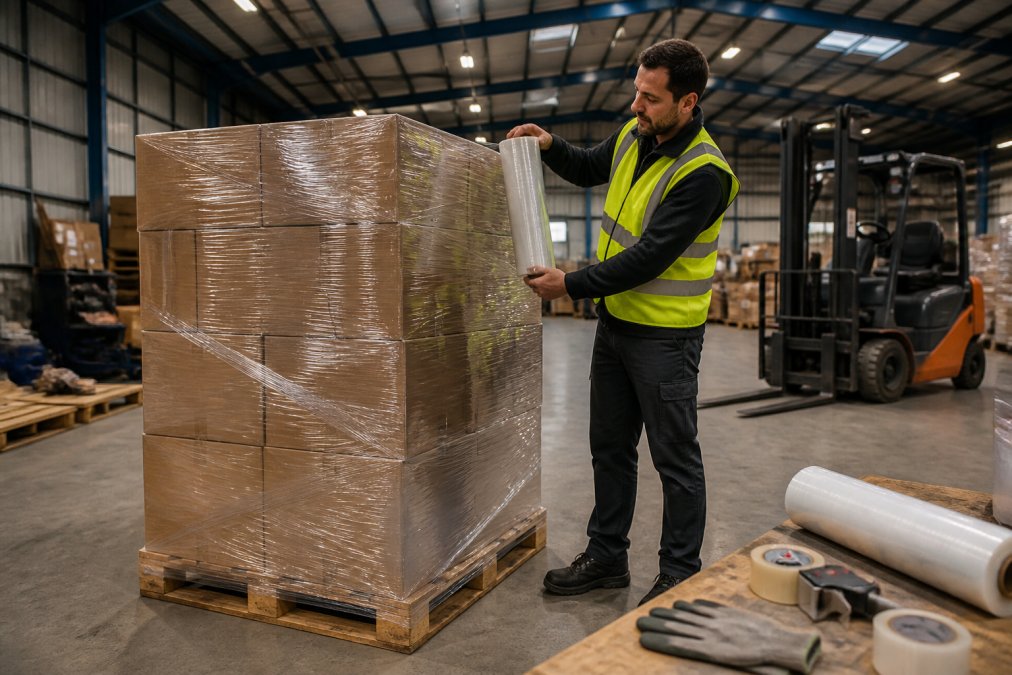
Correct packing is what separates a clean delivery from a rejected collection. Build the heaviest items at the bottom, keep the load within the pallet footprint, and secure it with pallet wrapping applied from the base upward so the load and pallet move as one unit. Add edge protectors and strapping for anything that shifts, and use a pallet collar or corner boards when the load is taller than it is wide.
The compliance points that actually stop shipments
Two rules catch sellers out more than any other.
ISPM 15 and wood packaging. Any wood packaging material, including the pallet itself, plus crates, dunnage and blocking, must meet ISPM 15 before it can cross a border. In practice that means the wood has been heat-treated or fumigated and then stamped with the IPPC mark: the wheat-sheaf symbol, the country code, the producer registration number and the treatment code (HT for heat treatment, MB for methyl bromide).
Markings, labels and documentation
A compliant pallet carries more than a shipping label. Expect to provide:
- A pallet label with consignment reference, piece count and weight
- Handling instructions (this way up, keep dry, do not stack)
- A commercial invoice and packing list for international movements
- Any required customs paperwork, such as an export declaration or preference evidence
Stackable versus non-stackable
Declare stackability honestly. A non-stackable pallet cannot have another pallet placed on top, so it occupies a full footprint in the trailer and is priced accordingly. Marking a load as stackable when it is not risks crush damage and a claim that will be difficult to win.
Overhang, weight distribution and securing
- No overhang: the load must sit inside the pallet edges. Overhang snags on curtains, damages adjacent freight and can be refused at collection.
- Even weight distribution: keep the centre of gravity low and central. Top-heavy pallets tip during tail-lift lowering.
- Correct film tension: too loose and the load shifts, too tight and you crush the bottom layer.
- Strapping for heavy or rigid loads: film alone is not enough for machinery, tiles or drummed goods.
Pallet Size, Weight and Transit Insurance Explained
How pallet pricing is actually calculated
Volumetric weight is the number that decides your bill. Carriers charge on whichever is greater: actual weight or volumetric weight, calculated from length × width × height and divided by a carrier-specific divisor. A light but tall pallet can cost more than a dense one because it consumes trailer space rather than payload.
What standard carrier liability actually covers
This is where most buyers are caught out. A carrier's standard liability is not the same as the value of your goods. It is usually capped at a modest amount per kilogram or per consignment, and it is subject to exclusions for inadequate packaging, undeclared fragility and consequential loss. In practice, standard liability rarely covers the full commercial value of a pallet of stock.
How to make a claim that succeeds
Claims are won or lost on evidence gathered before the pallet moves. A practical process:
- Photograph at collection. Capture the wrapped pallet from all four sides, plus the label and the pallet base. This is your proof of condition at handover.
- Document the packing method. Note the film, strapping and edge protection used. If a claim is disputed on packaging grounds, this record is your defence.
- Inspect at delivery and note damage on the proof of delivery. Signing clean and reporting damage later weakens the claim considerably.
- Photograph the damage in situ, before the pallet is unwrapped or moved, and keep the packaging.
- Notify the carrier within the stated window. Claims windows are short, often a few days for visible damage and longer for concealed damage, so log the claim immediately.
- Submit the evidence pack: collection photos, delivery photos, proof of delivery, invoice showing value, and a written description of the loss.
Dispute resolution if a claim is rejected
If a claim is declined, ask for the specific reason in writing and the clause relied on. Common grounds for rejection are late notification, inadequate packaging, or an undeclared prohibited item. If the carrier is a member of a recognised trade body, its dispute or arbitration procedure may be available. For cross-border consignments, the applicable convention and the carrier's own terms and conditions govern the limits and time bars, so read them before you book rather than after something goes wrong.
Quick reference: what to confirm before every booking
- Actual weight and volumetric weight, using post-wrapping dimensions
- Vehicle payload and tail-lift working load limit
- Stackable or non-stackable status
- Declared value and whether transit insurance is in place
- Claims notification window and evidence requirements
- ISPM 15 compliance for any wood packaging crossing a border
Frequently Asked Questions
What is the best pallet delivery service in the UK?
The best service depends on your needs. For same-day and tail-lift deliveries, Direct Couriers London Ltd offers fully insured nationwide coverage. For international shipments, DHL Express and FedEx provide strong customs support. For comparing rates across multiple carriers, Parcel Monkey and Easyship are useful platforms. Consider your pallet dimensions, weight, urgency, and whether you need door-to-door or kerbside delivery before choosing.
How much does it cost to ship a pallet?
Pallet shipping costs vary based on dimensions, weight, distance, and service level. A pallet delivery cost calculator can give you an estimate, but final pricing depends on factors like volumetric weight, whether the pallet is stackable or non-stackable, and any residential surcharge. For accurate pricing, request a quote from your chosen courier with full consignment details.
What are the standard pallet dimensions for shipping?
The most common pallet size in the UK is 1200mm x 1000mm, known as a standard UK pallet. Euro pallets measure 1200mm x 800mm. Maximum weight capacity is typically 1000kg, but this varies by courier. Always confirm pallet dimensions and weight limits with your logistics provider before booking, as exceeding limits can lead to refused collections or additional charges.
How do I prepare goods for palletized transport?
Start by stacking goods evenly on a heat-treated pallet that meets ISPM 15 standards. Wrap the load with pallet wrapping film, secure it with straps, and attach a shipping manifest. Label the pallet clearly with delivery details. For fragile items, add corner protection and consider a non-stackable designation. Proper preparation reduces transit damage and helps ensure smooth customs clearance for international shipments.
What is the difference between a tail-lift and a standard van delivery?
A tail-lift van has a hydraulic platform at the rear that lowers pallets to ground level, making it suitable for sites without a forklift or loading dock. Standard van deliveries require the recipient to have forklift access or a loading bay. If your delivery address is a residential property or a location without lifting equipment, request a tail-lift vehicle to avoid kerbside delivery issues.
Pallet shipping rewards preparation and punishes guesswork. If you want the tail-lift capability, insurance cover and tracking visibility that heavy consignments demand, Direct Couriers London Ltd handles same-day and next-day palletized goods nationwide with a fully insured fleet and instant tracking, plus storage when you need it. Contact us today for a quote.