 listicle
Secure Storage for Ecommerce Stock: A Practical Guide
Last Updated: November 1, 2026
Quick Summary
Secure storage for ecommerce stock means a dedicated unit sized to your peak holding plus a working aisle, with controlled access, dry and ventilated conditions, and insurance that covers business stock. Separate storage from your home before stock starts causing cancelled orders or fulfilment errors.
- Size a unit around your peak holding, not a quiet week, adding 30% for picking space.
- Most stock damage in storage comes from damp, pests, water ingress and fire, not theft.
- Assign every SKU a fixed location code and record stock movements as they happen.
- Replenish top-selling lines to the pick face before you start packing orders.
- Compare storage on total cost including rent, insurance, packaging, transport and your time.
Table of Contents
- Why Ecommerce Sellers Need Dedicated Secure Storage for Ecommerce Stock
- Self Storage for Online Sellers: Matching Unit Size to Your Stock
- Storage Unit Security Features That Protect Valuable Stock
- Inventory Management for Small Business: Tracking Stock Across Sites
- Stock Storage and Fulfilment: Building a Workflow That Keeps Orders Moving
- Cost, Compliance and Insurance: The Parts Sellers Overlook
- Planning Your Storage and Delivery Setup with Direct Couriers London Ltd
- Frequently Asked Questions
Why Ecommerce Sellers Need Dedicated Secure Storage for Ecommerce Stock
Most online sellers don't plan to outgrow their spare room. It just happens. A few extra pallets, a Black Friday stock-up, a supplier deal on bulky furniture, and suddenly the hallway is a warehouse with worse lighting. Secure storage for ecommerce stock stops being a nice-to-have at exactly the moment your living space, your family, and your insurance policy all start to complain.
Online sellers who scale cleanly are usually the ones that separate storage from home long before it becomes urgent.
When a Spare Room Stops Working
The tipping point is rarely dramatic. It's usually one of these:
- You can't find an item that your listing says is in stock, so you cancel an order.
- Your home insurer asks what's in the garage, and you realise you never told them about the stock.
- A pallet arrives and there's nowhere to put it except the front room.
- You're packing orders at 11pm because the stock is under your bed.
The moment stock starts affecting your ability to fulfil orders accurately, you have an operational problem, not a space problem. Dedicated storage fixes both.
What Dedicated Storage Actually Solves
Dedicated storage gives your stock a fixed home with room to grow, so picking, packing and replenishment stop competing with daily life. It also creates a clean boundary between personal and business assets, which matters for insurance.
Self Storage for Online Sellers: Matching Unit Size to Your Stock
The right unit size is the one that holds your peak stock plus a working aisle, not your average month. Sellers consistently undersize because they measure a quiet week and forget the seasonal surge.
Here's a practical way to size it:
- Count your largest expected stock holding in pallets or shelf-metres, not units.
- Add 30% for picking space and packaging materials.
- Check ceiling height, because vertical racking changes everything.
- Confirm you can access individual items without unloading the whole unit.
Size a unit around your peak holding, not a quiet week, using these steps. For deeper guidance, read what is commercial storage and how do you choose the right service?.
| Step | What to do |
|---|---|
| 1 | Count largest expected stock holding in pallets or shelf-metres |
| 2 | Add 30% for picking space and packaging materials |
| 3 | Check ceiling height, as vertical racking changes everything |
| 4 | Confirm individual items are accessible without unloading the unit |
Storage Unit Security Features That Protect Valuable Stock
Storage unit security features are the physical and electronic measures that help stop unauthorised access to stock. They matter most for high-value, easily resold goods such as furniture, antiques, branded electronics and anything with a strong second-hand market.
When you compare facilities, ask specifically about the security measures each one provides, such as how access is controlled and logged, how the site is monitored, and whether staff are present during access hours.
Protection Beyond the Padlock: The Risks Thieves Don't Cause
Physical security is the baseline, but most stock damage in storage is not caused by theft. Humidity, temperature swings, pests, water ingress and fire can ruin inventory that a locked door protects perfectly. Sellers who focus only on locks often discover the gap when a cardboard box collapses or a fabric item develops mildew.
A practical inventory-protection checklist:
- Humidity and damp. Ask whether units are dry and well ventilated, since cardboard, paper, textiles and wood are vulnerable to damp. Keeping stock off a concrete floor on pallets or racking can help reduce the risk.
- Temperature swings. Extreme heat or cold can damage some goods, so ask how the unit is insulated and avoid storing heat-sensitive stock against an external wall.
- Pests. Cardboard and paper can attract rodents and insects, so keep stock in sound packaging and check the unit regularly.
- Water ingress. Check the roof, walls and floor for stains or damp patches before you sign.
A secure setup considers access, the condition of the unit and whether insurance covers business stock. Check these before you sign, not just the padlock.
Inventory Management for Small Business: Tracking Stock Across Sites
Inventory management for small business gets genuinely harder the moment stock lives in two places. The fix is a single source of truth: one stock count, updated at the point of movement, visible to everyone who picks or sells. For a broader view, see our guide to managing logistics for small ecommerce.
A workable routine looks like this:
- Assign every SKU a fixed location code, such as aisle-bay-shelf.
- Record stock in and stock out at the moment it happens, not at month end.
- Reconcile the storage count against your sales platform weekly.
- Set a reorder trigger for your fastest-moving lines.
Stock Storage and Fulfilment: Building a Workflow That Keeps Orders Moving
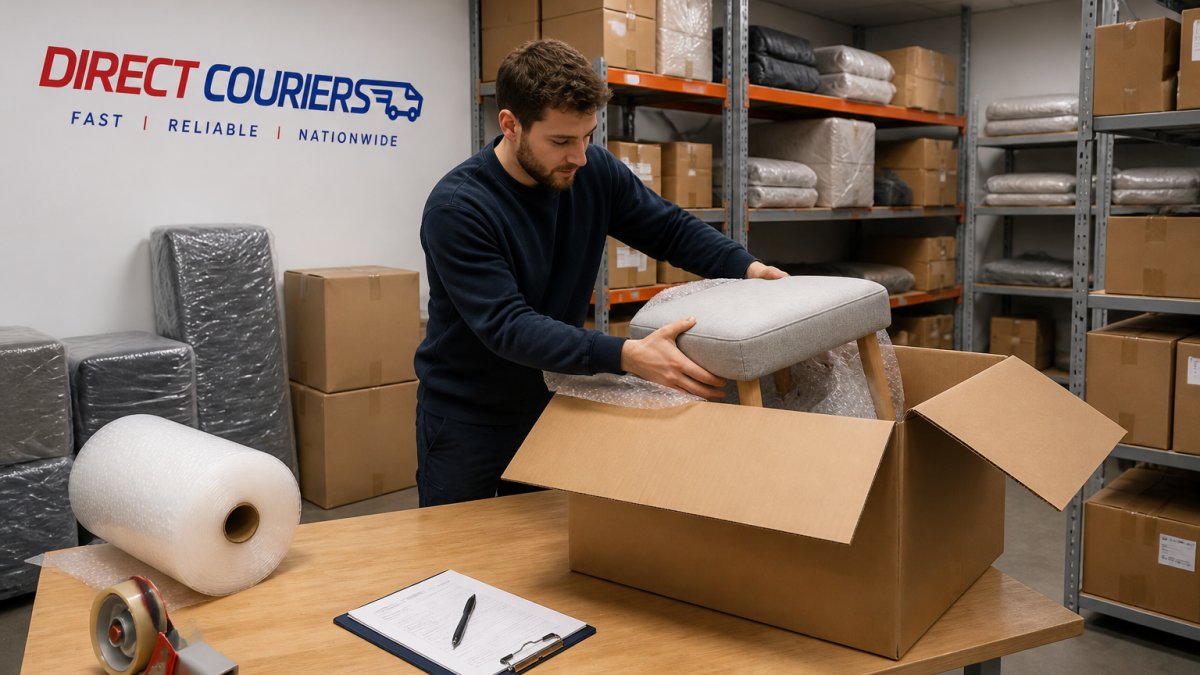
Stock storage and fulfilment work best when stock flows in one direction: in at the back, picked in the middle, out at the front. Our guide on outsourcing ecommerce storage for heavy goods walks through the how-to.
Picking, Packing and Replenishment in Practice
A simple weekly rhythm keeps orders moving:
- Replenish first. Move top-selling lines to the pick face before you start packing.
- Pick in batch. Group orders by location so you walk each aisle once.
- Pack at a fixed station with packaging supplies stored within arm's reach.
- Book collection once the day's parcels are staged and labelled.
- Record the outbound movement so your stock count stays accurate.
Watch out: if you pack before you replenish, you'll pick from a half-empty shelf and short-ship an order you could have filled.
Cost, Compliance and Insurance: The Parts Sellers Overlook
The cheapest unit is rarely the cheapest setup. Total cost includes the unit rent, access hours, insurance, packaging materials, and the transport between storage and your customers. Compare on that full figure, not the headline rent.
Building a Transparent Total Cost of Storage
Most sellers compare only the monthly unit price. A more useful comparison breaks cost into fixed and variable components:
- Unit rent, the headline figure for the space. Ask whether VAT is included and whether there is a minimum term.
- Access and admin fees, ask which fees, if any, are charged separately from the rent, such as for access hours or keys.
- Insurance, check whether cover is provided by the facility or whether you need your own business contents cover, and confirm what is included.
- Packaging and consumables, boxes, tape, void fill and labels. These scale with order volume, not unit size, so estimate them separately.
A practical way to compare options is to model a typical month: peak stock volume, number of collections, and average distance to customers. Then add the fixed and variable costs above.
Compliance and Insurance Checks Before You Sign
Three things sellers routinely miss:
- Insurance. Check whether you need your own cover and what it protects, since policies often treat theft, fire, water damage and accidental damage separately. Confirm the policy covers business stock, not just personal belongings.
- Compliance. If you store anything regulated, aerosols, lithium batteries, flammable liquids, or goods with specific handling requirements, confirm what the facility permits before you sign. Facilities set their own prohibited-goods lists, and storing restricted items can invalidate insurance or breach the terms.
- Access terms. Short-term flexibility is worth paying for if your stock is seasonal. Check notice periods, whether you can downsize or upsize without penalty, and what happens if you need to leave early.
Pricing depends on volume, access frequency and delivery distance, so check current prices or request a quote from Direct Couriers London Ltd on its website. For sellers comparing self-storage with home storage, fulfilment services or a warehouse lease, the same total-cost discipline applies: list every component, then compare like with like. Operational efficiency often hinges on how effectively a business manages its physical footprint by using self storage to balance inventory overflow with seasonal demand fluctuations.
Planning Your Storage and Delivery Setup with Direct Couriers London Ltd
The setup that works is the one where storage and delivery are handled by people who talk to each other. Direct Couriers London Ltd offers a fleet ranging from compact vans to tail-lift Luton vans, with fully insured delivery, same-day and next-day services across the UK, and instant tracking. You can arrange the courier service that moves stock between storage and customers.
Frequently Asked Questions
What is the best type of storage for ecommerce stock?
It depends on volume and how often you need access. For most small and growing sellers, a self-storage unit with drive-up or trolley access works well because you can reach stock without booking a loading bay. If you hold pallets or heavy equipment, look for units with level access and room to manoeuvre a pallet truck. Sellers shipping bulky furniture or antiques often pair a unit with a courier that handles large items.
How can I keep ecommerce inventory secure in storage?
Start with the facility itself: gated access, CCTV monitoring, electronic access control and individual unit alarms are the features worth confirming before you sign. Then layer your own habits on top, such as keeping a stock log, not leaving high-value items near the door, and using sealed, labelled boxes so a missing carton is obvious. Check what the site's insurance covers and whether your own business policy extends to goods held in storage, because the two are not the same.
Is self storage for online sellers suitable for a small operation?
Yes. Self storage for online sellers is often the first step out of a spare room, and most facilities offer small units that suit a few pallets or a shelving run. You are not locked into warehouse-scale commitments, and you can scale up as order volume grows. The main thing to check is access hours and whether you can receive deliveries there, since some sites restrict courier drop-offs.
Can I use a storage unit to pack and dispatch online orders?
Many sellers do, but confirm the facility's rules first. Some sites allow light packing inside the unit, while others ask you to use a designated packing area or prohibit it entirely for fire-safety reasons. If you plan to pack on site, ask about lighting, power, trolley access and whether couriers can collect from the unit. A unit with good access makes stock storage and fulfilment far smoother than one buried at the back of a corridor.
What insurance should I consider for stock in storage?
Check two things: what the storage facility's own insurance covers, and whether your business contents policy extends to goods held off site. Many standard policies exclude stock in storage unless you add it, so read the wording or ask your broker. For high-value items such as antiques, keep a dated inventory with photographs and purchase records, because a claim will need evidence of what was there and what it was worth.
The challenge is rarely finding space. It's building a setup that holds up when orders spike and a customer emails asking where their furniture is. We handle both halves: secure storage for your ecommerce stock and the insured, tracked delivery that gets it to the door. Get started with Direct Couriers London Ltd and put your stock somewhere it can grow.