 how-to
Outsource Ecommerce Storage for Heavy Goods: A How-To Guide
Table of Contents
- Why Outsource Ecommerce Storage for Heavy Goods
- Understanding Third-Party Logistics for E-commerce
- Step 1: Assess Your Warehousing Needs
- Step 2: Evaluate Pallet Storage for Businesses
- Step 3: Compare Warehouse Storage Costs
- Step 4: Select a Provider for Bulky Item Fulfilment
- Step 5: Implement Your Outsourced Storage Solution
- Common Mistakes to Avoid
- Frequently Asked Questions
Last Updated: October 11, 2026
Why Outsource Ecommerce Storage for Heavy Goods
Storing heavy goods yourself drains resources. Space costs money. Equipment costs more. Staff time adds up fast. When you outsource ecommerce storage, you shift these burdens to specialists who handle them at scale.
Heavy products demand different handling than light items. Pallets need racking systems. Forklifts replace hand trucks. Insurance requirements change. A third-party logistics provider manages all of this. They have the equipment, the space, and the expertise already in place.
Many businesses discover this too late. They've already invested in warehouse space, hired staff, and purchased equipment. Then they realize they're competing with logistics companies on something those companies do better and cheaper. The smarter move is to outsource ecommerce storage from the start.
Understanding Third-Party Logistics for E-commerce
Third-party logistics providers, or 3PLs, manage warehousing, inventory, and fulfillment for online sellers. They receive your stock, store it, pick orders, pack boxes, and arrange shipping. You focus on sales. They handle the rest.
For heavy goods specifically, a 3PL becomes even more valuable. They understand weight limits, stacking rules, and safety protocols. They know how to store a pallet of cast iron without damaging the floor. They can handle a shipment of furniture without scratching surfaces.
A 3PL also scales with you. Sell ten units this month, fifty next month? Your storage needs adjust instantly. You don't buy more racking or hire more staff. The provider absorbs the fluctuation.
Step 1: Assess Your Warehousing Needs
Before contacting a provider, know what you actually need. Guessing costs you money and creates problems later.
Calculate storage space requirements
Start with your inventory volume. Count how many units you hold at peak season. Heavy goods take up space proportional to their weight, not their count. A pallet of steel toolboxes occupies far less floor space than a pallet of foam cushions.
Calculate your average monthly order volume. If you ship 200 units per month, you need enough storage to hold stock for at least one month, plus buffer for seasonal spikes. For heavy goods, add 20-30% extra to account for slow-moving items that occupy space longer.
Document your SKU count. Each product requires its own storage location. More SKUs mean more complexity and potentially higher storage costs.
Identify equipment and handling requirements
List the equipment your goods need. Do they require:
- Standard pallet racking
- Heavy-duty racking rated for concentrated loads
- Climate control (temperature or humidity)
- Specialized handling (forklifts, pallet jacks)
- Fragile item protection
- Hazardous material storage
Heavy goods often demand heavy-duty racking. Standard racking handles 500-1,000 kilograms per pallet. Heavy-duty racking handles 2,000+ kilograms. Know which your products need before you shop for providers.
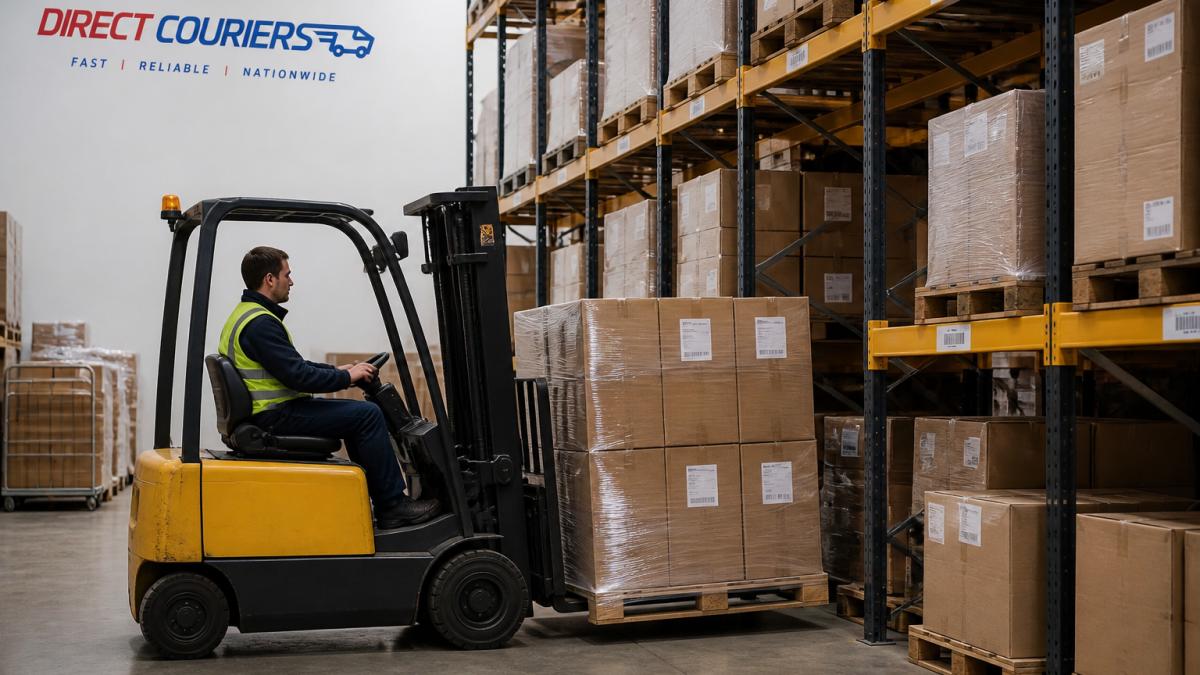
Step 2: Evaluate Pallet Storage for Businesses
Pallet storage is the standard for heavy goods. Your items arrive on pallets, stay on pallets, and ship on pallets. Understanding pallet storage costs and options matters.
A standard pallet measures 1.2 metres by 1 metre. One pallet occupies roughly 1.2 square metres of floor space. A 3PL charges per pallet per month, or per square metre, depending on their model.
Ask providers about their pallet storage pricing structure. Some charge a flat rate per pallet. Others charge by weight. Some use a tiered model: cheaper rates for long-term storage, higher rates for short-term. Heavy goods often qualify for volume discounts because they generate less handling work per kilogram of space. Negotiating these rates requires a clear understanding of how long term storage costs fluctuate based on inventory turnover and facility demand.
Confirm whether the price includes pallet storage only, or if it bundles receiving, putaway, and order fulfillment. A bundled rate simplifies budgeting.
Step 3: Compare Warehouse Storage Costs
Storage costs for heavy goods differ fundamentally from general ecommerce warehousing because of weight-based handling, equipment demands, and risk exposure. Understanding the fee structure before you commit prevents budget surprises.
Heavy-goods cost components
Unlike light goods, heavy goods warehousing typically involves multiple distinct charges:
Pallet storage or floor-space fees form the base cost. Providers charge either per pallet per month (typically £8-£25 depending on region and facility type) or per square metre per month (£15-£40). Heavy goods often occupy fewer pallets relative to weight, so pallet-based pricing may favour you; conversely, floor-space pricing may penalise bulky but lighter items. Ask providers which model they use and request a sample calculation for your specific inventory mix.
Receiving and putaway fees cover unloading, inspection, and placement into storage. These are often charged per pallet (£2-£8) or per hour. Heavy goods require more careful receiving, weight verification, racking suitability checks, and damage inspection take longer. Confirm whether receiving is bundled in your monthly rate or charged separately.
Handling and picking fees apply when orders are fulfilled. For heavy goods, these are higher because forklift operation, load securing, and careful packing demand more labour and time. Expect £1-£5 per pick for heavy items, compared to £0.50-£1.50 for light goods. Some providers charge by weight moved; others charge per order or per pallet handled.
Accessorial charges cover services beyond standard storage and picking. These include:
- Hazardous material surcharges (if applicable)
- Climate-controlled storage (if required)
- Specialized racking or equipment rental
- Damage claims investigation and processing
- Returns handling and restocking
- Labelling, repackaging, or kitting services
Inbound freight coordination may be charged separately. Some 3PLs include basic freight handling; others charge for LTL (less-than-truckload) or FTL (full-truckload) coordination, appointment scheduling, and dock management. For heavy goods arriving on pallets, clarify whether freight fees are included or pass-through.
Requesting and comparing quotes
Request quotes from at least three providers. Provide each with identical information to ensure fair comparison:
- Your average monthly inventory (in pallets and total weight)
- Your peak season inventory (same metrics)
- Your monthly order volume and average orders per day
- Your SKU count and product categories
- Any special handling needs (fragile, hazardous, oversized, climate-controlled)
- Your expected order fulfillment timeline (same-day, next-day, etc.)
Ask each provider to itemize their quote. A quote should show:
- Monthly storage fee (base rate and any volume discounts)
- Receiving and putaway fee (per pallet or per hour)
- Picking and packing fee (per order or per item)
- Any minimum monthly charges
- Any setup or onboarding fees
- A sample monthly invoice based on your provided volumes
This transparency prevents hidden costs from appearing after you commit.
Identifying total cost of ownership
The lowest monthly rate rarely equals the lowest total cost. Calculate your likely annual spend for each provider using your average and peak volumes:
(Monthly storage fee × 12) + (Average monthly picks × picking fee × 12) + (Average monthly receives × receiving fee × 12) + (Accessorial charges estimate × 12) + Setup fees
Then adjust for service level. A provider offering high picking accuracy and next-day fulfillment may cost less in the long run than a cheaper provider with lower accuracy and slower fulfillment, because returns and customer complaints are expensive.
Negotiating volume discounts and service-level agreements
Heavy goods providers often offer volume discounts. If you commit to a minimum monthly pallet count or annual spend, you may negotiate reductions on base storage fees. Ask explicitly whether discounts apply and what volume thresholds unlock them.
Negotiate a service-level agreement (SLA) that commits the provider to specific performance metrics. An SLA should specify:
- Picking accuracy target (e.g., 99.5% or higher)
- Order fulfillment time (e.g., pick and pack within 4 hours of order receipt)
- Inventory count accuracy (e.g., monthly cycle counts with <0.5% variance)
- Damage claim response time (e.g., investigation completed within 5 business days)
- Availability and uptime (e.g., 99% system availability)
An SLA with penalty clauses protects you if service degrades. For heavy goods, where errors are costly, an SLA is not optional, it's essential.
Step 4: Select a Provider for Bulky Item Fulfilment
Selecting the right provider for heavy goods requires evaluation criteria that go beyond standard ecommerce warehousing. Heavy goods create unique risks: structural damage, safety hazards, shipping damage, and regulatory compliance. A provider strong on light goods may fail catastrophically with heavy goods.
Heavy-goods experience and references
Experience with heavy goods is non-negotiable. Ask prospective providers:
- How many heavy goods clients do they currently serve?
- What product categories do they handle (furniture, machinery, tools, automotive parts, etc.)?
- What is their average pallet weight and maximum pallet weight they regularly handle?
- How long have they been storing heavy goods (minimum 2-3 years is reasonable)?
Request references from at least two heavy goods clients in your product category. Contact those references directly and ask:
- How long have you used this provider?
- What is your average pallet weight and monthly volume?
- Have you experienced any damage to goods in storage or during fulfillment?
- How quickly do they respond to issues or damage claims?
- Would you recommend them to another heavy goods business?
- What would you change about their service?
References from similar businesses (same product type, similar volume) are far more valuable than generic testimonials. A provider excellent with palletized steel may struggle with fragile furniture or oversized items.
Facility infrastructure and equipment verification
Visit the facility in person if possible, or request a detailed video tour. Inspect for:
Racking systems and load capacity. Heavy-duty racking should be clearly labelled with maximum load ratings. Standard racking typically handles 500-1,000 kg per pallet; heavy-duty racking handles 2,000+ kg. Ask the provider to show you the racking specifications and confirm they match your product weights. Racking should be regularly inspected for damage or wear; ask when their last inspection occurred and request a copy of the inspection report.
Floor condition and load-bearing capacity. Heavy goods concentrate weight in small areas. Floors must be reinforced concrete, typically rated for 5,000-10,000 kg per square metre. Ask the provider for documentation of their floor load rating. Cracks, settling, or soft spots indicate structural problems that could damage goods or create safety hazards.
Forklift and material-handling equipment. The provider should have forklifts, pallet jacks, and load-securing equipment appropriate for your goods. Ask:
- How many forklifts do they operate?
- What is the maximum lift capacity of each?
- When was each last serviced and certified?
- Do they have backup equipment if a forklift breaks down?
For oversized or unusually shaped items, ask whether they have specialized equipment (cranes, spreader bars, load levellers) or can arrange it.
Receiving dock and staging area. The dock should have adequate space for unloading and inspection. For heavy goods arriving on pallets, the dock should have a level surface, weather protection, and equipment to handle multiple pallets simultaneously. Ask how many inbound shipments they can process per day and whether they have appointment scheduling to prevent bottlenecks.
Warehouse management system (WMS) and inventory accuracy
A strong WMS is critical for heavy goods because errors are expensive. Evaluate the WMS on:
Real-time visibility. You should be able to log in anytime and see current stock levels, order status, and shipment tracking. The system should update within minutes of receiving, picking, or shipping. Ask for a demo and test the interface yourself.
Integration with your sales channels. If you sell on multiple platforms (your website, Amazon, eBay, etc.), orders should flow automatically to the provider's WMS. Manual order entry creates delays and errors. Confirm the provider supports integrations with your specific sales channels.
Inventory accuracy reporting. Ask the provider for their monthly cycle-count accuracy. Accuracy should be high; lower accuracy indicates process problems. Request their last three months of accuracy reports. If they won't provide them, that's a red flag.
Barcode and SKU management. Confirm the provider uses barcode scanning for receiving, picking, and shipping. Each SKU should have a unique barcode. Barcodes reduce picking errors dramatically, manual picking accuracy is typically 95-97%, while barcode-assisted picking achieves 99.5%+.
Picking, packing, and shipping performance
Order fulfillment speed. Ask what fulfillment times they offer (same-day, next-day, 2-day, etc.) and whether they can meet your required timeline. For heavy goods, next-day fulfillment is common; same-day may incur surcharges. Confirm their fulfillment time is measured from order receipt to shipment, not just from picking.
Picking accuracy. Request their picking accuracy rate and ask how they measure it. Accuracy should be verified through cycle counts or sample audits, not just customer complaint rates. For heavy goods, where a wrong item means a costly return, high accuracy is essential.
Packing standards and damage prevention. Ask how they pack heavy goods for shipment. Do they use:
- Protective wrapping or padding?
- Reinforced boxes or crates?
- Load-securing straps or edge protectors?
- Dunnage (blocking and bracing materials) to prevent shifting?
Request examples of how they pack your specific products. Improper packing is the leading cause of damage in transit. A provider with strong packing discipline will show you their standards and examples.
Carrier relationships and shipping options. Heavy goods require carriers with appropriate equipment (liftgates, pallet jacks, etc.). Ask:
- Which carriers do they use regularly (DPD, Parcelforce, Yodel, etc.)?
- Can you choose your preferred carrier for certain shipments?
- Do they negotiate rates on your behalf?
- Can they arrange LTL (less-than-truckload) or FTL (full-truckload) freight for large shipments?
- Do they handle residential delivery coordination (appointment scheduling, liftgate delivery, etc.)?
Insurance, compliance, and risk management
Public liability and product liability insurance. The provider must carry insurance covering damage to your goods and liability for injuries on their premises. Ask for:
- Proof of current insurance (certificate of insurance)
- Coverage limits
- Whether your goods are covered in storage and during handling
- The claims process and typical claim payout time
Hazardous material compliance (if applicable). If any of your products are classified as hazardous (flammable, corrosive, etc.), confirm the provider is licensed and trained to store them. Ask for:
- Their hazmat certifications or licenses
- Their storage procedures and segregation practices
- Their staff training records
- Their compliance with relevant regulations (e.g., COSHH, Control of Substances Hazardous to Health)
Health and Safety compliance. All warehouses must comply with relevant health and safety regulations. Ask whether the provider has:
- Current compliance documentation
- Recent workplace safety audits or inspections
- Staff training records for forklift operation, load securing, and manual handling
- Incident and accident reporting procedures
- A documented safety policy
Damage claim procedures. Ask for their damage claim process in writing. It should specify:
- How to report damage (within how many days?)
- How they investigate claims (photos, inspection, etc.)
- How fault is determined (carrier, provider, shipper)
- Average claim payout time
- Whether they have a damage waiver or insurance option
For heavy goods, where damage claims are common, a transparent and fair claims process is essential.
Making your final decision
Create a simple scoring matrix. List your top three candidates and score each on:
- Heavy goods experience (1-5 scale)
- Facility infrastructure (1-5)
- WMS capability (1-5)
- Picking accuracy (1-5)
- Packing quality (1-5)
- Insurance and compliance (1-5)
- Cost (1-5, where 5 is lowest cost)
- References feedback (1-5)
Weight the criteria by importance to your business. If accuracy is critical, weight it heavily. If cost is the primary driver, weight it accordingly. The highest-scoring provider is your best choice.
Step 5: Implement Your Outsourced Storage Solution
Once you've selected a provider, implementation requires coordination. A smooth transition protects your business continuity.
Setting up inventory tracking and SKU management
Work with your provider to establish your SKU labeling system. Each product needs a unique identifier. Barcodes work best, they reduce picking errors and speed up receiving.
Create a detailed inventory list. Include:
- SKU number
- Product name and description
- Weight and dimensions
- Quantity on hand
- Reorder point
- Storage location (if you have a preference)
Upload this to the provider's WMS. Test the system before you ship your first pallet. Confirm that stock levels update correctly when orders ship.
Managing picking, packing, and shipping workflows
Define your order fulfillment process. When a customer orders, how quickly should the provider pick and pack? Same day? Next day? Confirm the provider can meet your timeline.
Establish your packing standards. Should items be wrapped? Boxed? Padded? For heavy goods, proper packing prevents damage and reduces returns. Provide clear written instructions or images showing your preferred packing method.
Set up automated order feeds if possible. When a customer orders through your website, that order should flow directly to the provider's system. Manual order entry creates delays and errors.
Monitor performance weekly. Review picking accuracy, packing quality, and shipping speed. If performance drops, address it immediately. A small issue now becomes a big problem later.
Common Mistakes to Avoid
Choosing a provider based on price alone wastes money. A cheap warehouse with poor accuracy or slow fulfillment generates returns, refunds, and lost customers. The lowest price rarely equals the best value.
Underestimating peak season needs creates stockouts. If you don't reserve enough space for your seasonal surge, you'll scramble for overflow storage or turn away orders. Plan for your peak season volume, not your average volume.
Failing to verify insurance coverage leaves you exposed. If your goods are damaged and the provider isn't insured, you absorb the loss. Before signing, confirm their coverage limits match your inventory value.
Neglecting to track performance metrics means problems hide until they become critical. Monitor accuracy, speed, and damage rates from day one. Early detection lets you address issues before they damage your reputation.
| Mistake | Impact | Prevention |
|---|---|---|
| Choosing by price alone | Poor accuracy, slow shipping, lost customers | Request references; compare service levels |
| Underestimating peak demand | Stockouts, overflow costs, lost sales | Plan for 120% of peak season volume |
| Skipping insurance verification | Uninsured losses if goods are damaged | Confirm coverage limits in writing |
| Ignoring performance metrics | Hidden problems until they escalate | Track accuracy, speed, and damage weekly |
Outsourcing ecommerce storage for heavy goods removes the operational burden from your business. You focus on selling; the provider handles warehousing, inventory, and fulfillment. The right 3PL becomes a competitive advantage. At Direct Couriers London Ltd, we understand the unique demands of heavy goods logistics. Our fully insured nationwide services include flexible storage options, same-day and next-day delivery, and real-time tracking so you know exactly where your stock is at all times. Contact us today to discuss how we can simplify your ecommerce storage and fulfillment operations.
Frequently Asked Questions
How do you outsource storage for heavy e-commerce goods?
Start by assessing your storage volume, handling requirements, and budget. Research third-party logistics providers that specialise in heavy goods and bulky item fulfilment. Verify their equipment (forklifts, racking systems), insurance coverage, and warehouse management systems. Request quotes, compare service levels, and negotiate a trial period before committing to a long-term contract. Ensure they offer real-time tracking and can handle your order volume.
What should you look for in a warehouse for bulky products?
Look for adequate ceiling height (minimum 4-5 metres for racking), reinforced flooring to support heavy loads, proper pallet storage systems, and forklift access. Verify they have climate control if needed, comprehensive insurance, and a warehouse management system for SKU tracking. Confirm they can handle your specific product dimensions and weight limits, and ask about their returns processing capabilities and order accuracy rates.
How much does outsourced e-commerce storage cost?
Warehouse storage costs depend on several factors: volume of inventory, storage duration, pallet versus floor space, handling requirements, and location. Most providers charge monthly fees based on space used, plus picking and packing fees per order. Freight costs for inbound and outbound shipments are usually separate. Request detailed quotes from multiple providers to compare total costs, and ask about seasonal pricing adjustments or volume discounts for growing businesses.
What equipment should a warehouse have for heavy goods?
Essential equipment includes racking systems rated for your product weight, forklifts or pallet jacks, weighing scales, and secure shelving. The facility should have a warehouse management system for inventory tracking, barcode scanning equipment, and proper loading docks with tail-lift access for safe delivery. For very heavy items, confirm they have specialist equipment like pallet movers or crane access if needed, and that staff are trained in safe handling procedures.