 how-to
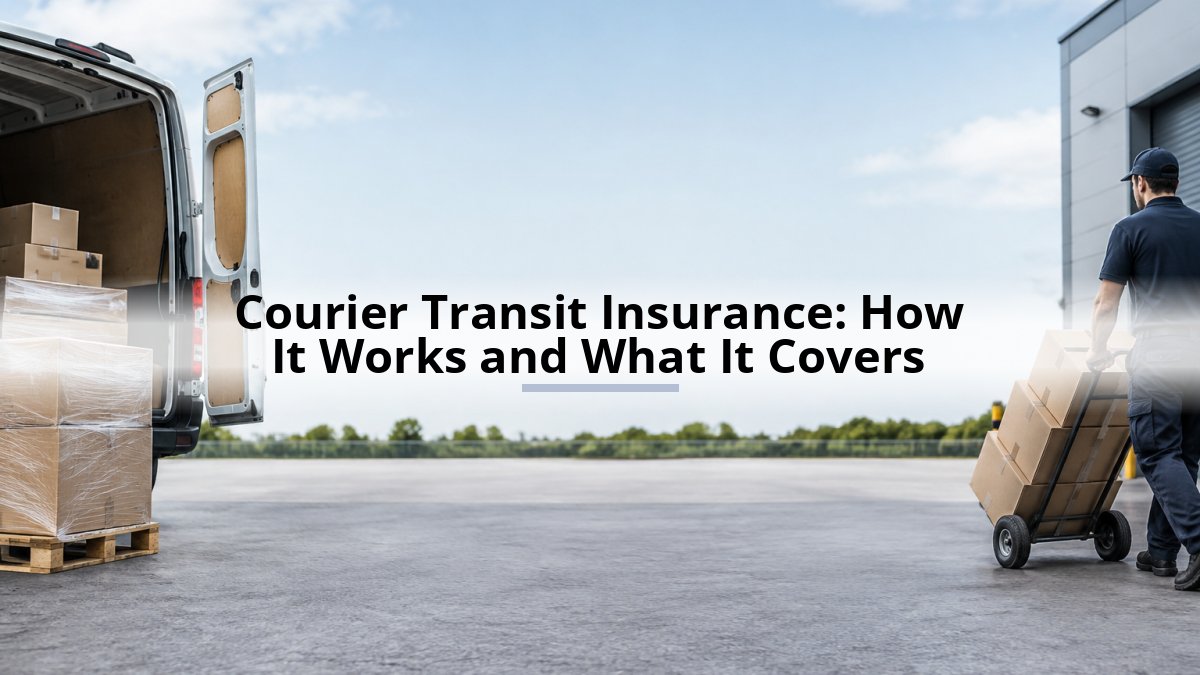
Courier Transit Insurance: How It Works and What It Covers
Last Updated: November 9, 2026
Quick Summary
Courier transit insurance is a policy that pays out when goods you are carrying, or goods you have hired a courier to carry, are lost, stolen or damaged between collection and delivery. It protects the cargo itself, not the van, and cover depends on the policy and its terms.
- Courier van insurance covers the vehicle and third-party liability, while goods in transit cover protects the customer's cargo.
- Set your maximum value per load from your single most expensive consignment, not your average one.
- Cover often starts when goods are signed for at collection, so check when it ends too.
- Report loss or damage to the courier and insurer in writing on the day, as policies set short notification deadlines.
- The excess is deducted from the settlement, so a £250 excess on a £1,200 assessed loss gives a £950 offer.
Table of Contents
- What Courier Transit Insurance Actually Covers
- Courier Insurance vs Goods in Transit Cover: What's the Difference?
- Levels of Goods in Transit Cover and How to Set Your Limit
- Cover Across the Full Journey: Collection, Transit and Delivery
- Policy Limits, Exclusions and the Wording That Decides Claims
- How to Make a Goods in Transit Insurance Claim
- Who Is Liable When Goods Are Lost or Damaged?
- Questions to Ask Before You Book a Fully Insured Courier
- Frequently Asked Questions
What Courier Transit Insurance Actually Covers
Courier transit insurance is a policy that pays out when goods you are carrying, or goods you have hired a courier to carry, are lost, stolen or damaged between collection and delivery.
Here is the part most guides get wrong. Having "insurance" does not automatically mean your goods are fully protected. GEODIS guidance on goods in transit insurance makes the point plainly: cover depends on the policy and its terms.
So the real question is never "are you insured?" It is "what exactly does your policy cover, and up to how much?"
The events that trigger a payout
Most goods in transit policies respond to a defined list of insured events. A common approach is to cover:
- Theft of goods from a locked vehicle
- Loss where goods cannot be traced
- Accidental damage during loading or unloading
Watch out: "delayed delivery" usually sits outside that list. If a late parcel costs you a customer, that is a consequential loss, and most cargo policies exclude it.
Courier Insurance vs Goods in Transit Cover: What's the Difference?
Courier insurance and goods in transit cover protect different things. Courier insurance, often sold as courier van insurance, covers the vehicle and third-party liability.
Think of it as two separate risks:
| Cover type | What it protects | Typical trigger |
|---|---|---|
| Courier van insurance | Your vehicle, third-party injury, property damage | Collision, vehicle theft |
| Goods in transit insurance | The customer's goods being carried | Theft, loss, accidental damage |
| Public liability | Claims from members of the public | Injury or damage on site |
| Employers' liability | Your staff | Injury at work |
Van insurance is a legal requirement for driving on public roads; goods in transit protection is generally a commercial choice. That is why a courier can be fully road-legal and still leave your goods unprotected.
Levels of Goods in Transit Cover and How to Set Your Limit
Levels of goods in transit cover range from basic named-peril policies to all-risks cover, and the level you choose sets what actually gets paid. The cover limit is the maximum the insurer will pay for any one load. Get that number wrong and a claim gets capped, however strong your policy looks.
Working out the right maximum value per load
Start with your single most expensive consignment, not your average one. Then check three limits:
- Maximum value per load: the total cap for one journey
- Single-item limit: the cap for any one item, often lower than the load limit
- Excess: the amount you pay towards each claim
If you regularly move high-value antiques, ask whether the policy needs a higher single-item limit. Many standard policies set that limit well below the value of a good piece of furniture. Underinsuring to save on premiums is a false economy.
Cover Across the Full Journey: Collection, Transit and Delivery
Cover should follow the goods from the moment they leave the collection address to the moment they arrive.
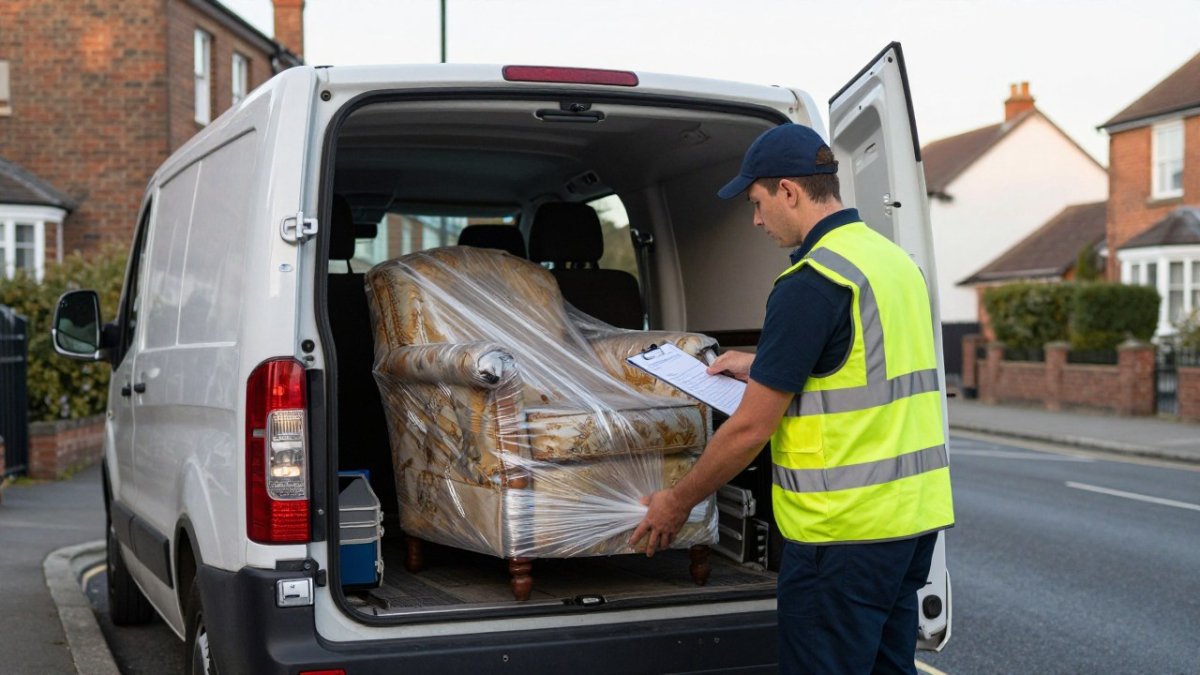
A common mistake is assuming cover starts when the van pulls away. In practice, it often starts when the goods are signed for at collection.
For fragile or high-value loads, how to insure fragile furniture shipments walks through protecting goods at every stage.
Policy Limits, Exclusions and the Wording That Decides Claims
The policy wording decides claims, not the sales pitch. Exclusions are where most disputes are won and lost, so read them before you pay. Typical exclusions include:
- Inadequate packaging by the sender
- Goods left unattended in an unlocked vehicle
- Perishable or hazardous items not declared
Watch out: "new for old" replacement is not guaranteed. Many policies settle at market value, which can be far below what you paid. If full replacement cost matters to you, confirm it in writing.
How to Make a Goods in Transit Insurance Claim
Making a goods in transit insurance claim is largely an evidence-and-timing exercise. Claims often succeed or fail on what was recorded at the time of the incident, so keeping clear records matters. The sequence below reflects how a typical policy responds, but always check your own wording for the specific deadlines and evidence requirements that apply.
Step 1: Notify in writing, on the day
Report the loss or damage to the courier and to your insurer in writing as soon as you become aware of it. Policies commonly set notification deadlines, which can be short, so check your own wording for the exact window.
Watch out: a phone call is not notification. Send an email or use the insurer's claims portal so you have a timestamped record, and keep the acknowledgement.
Step 2: Preserve the evidence before anything moves
Photograph the goods and the packaging from multiple angles before you dispose of or repair anything. Keep the consignment note, the proof of delivery, the collection receipt and any signed handover documents. For damage claims, retain the packaging itself, insurers often want to see whether the packaging was adequate, because inadequate packaging is a standard exclusion.
Step 3: Quantify the loss
Provide proof of value: the purchase invoice, the sales invoice, or a valuation for second-hand or antique goods. State clearly whether you are claiming replacement cost or market value, because the policy will settle on one basis. Accurate documentation remains essential even when your vehicle requires Gales Recovery to ensure that the transit process resumes without further complications regarding the cargo's insured status.
Step 4: Submit the claim and understand the assessment
An insurer or loss adjuster will generally assess the claim against three things: whether the event is an insured peril, whether an exclusion applies, and whether the value is within the policy limits. For larger or disputed claims, a loss adjuster may inspect the goods or request a statement. Cooperate fully and answer requests in writing.
Step 5: Account for the excess and the settlement basis
The excess is deducted from the settlement, not added to it. If your excess is £250 and the assessed loss is £1,200, the offer is £950, subject to the policy limit. Settlement may be repair, replacement, or a cash payment at market value. "New for old" is not automatic; many policies settle at market value, which for used goods can be well below the purchase price.
A worked example (illustrative, not a quote)
Suppose a courier carries a consignment worth £4,000 with a per-load limit of £5,000, a single-item limit of £1,500 and a £250 excess. A table worth £1,800 is damaged in transit and assessed at £1,800.
If you are unsure what a claim can include, courier delivery failure compensation rights sets out the difference between a contractual remedy and an insurance payout. For high-value goods, courier insurance for valuable items explains how sub-limits apply.
Who Is Liable When Goods Are Lost or Damaged?
Liability and insurance are not the same thing, and confusing them is the most common source of disputes. Liability is the legal or contractual obligation to compensate for a loss. Insurance is the mechanism that funds that obligation. A courier can be liable for a loss and still have no insurance to meet it, and a courier can have insurance that does not respond because the contract excludes liability in the first place.
The default position: a carrier is responsible for goods in its care
A carrier is generally responsible for goods while they are in its custody, subject to the terms of the contract. That responsibility can be limited or excluded by the contract, which is why the terms and conditions matter as much as the policy wording.
Watch out: a low contractual liability cap does not increase because the goods were valuable.
Hire and reward changes the cover required
If you carry goods for payment, you are generally operating for hire and reward. That is a commercial use, and the cover should reflect it. A policy that assumes private or social use can leave a paid courier without valid protection. This is separate from the legal requirement for motor cover: road-legal van insurance does not automatically extend to carrying goods for reward.
How contract terms shift responsibility
The contract between courier and customer can allocate risk in several ways:
- Limiting liability to a fixed sum per consignment or per kilogram
- Excluding certain categories of goods, such as cash, jewellery or hazardous items
- Requiring the customer to declare value above a threshold and pay a supplement
These terms do not override the insurance policy, but they determine what the customer can recover from the courier directly. If the contract caps liability at £500 and the goods were worth £5,000, the customer's remedy against the courier may be limited to £500 unless the value was declared and agreed.
Where insurance sits in the picture
Goods in transit insurance protects the cargo owner against loss, and the courier's own policy protects the courier against claims. In practice, the two interact: the customer may claim on their own policy and the insurer may then seek to recover from the courier, or the customer may claim against the courier's liability cover.
A practical check before you book
Ask the courier three questions: what is your contractual liability limit per consignment, does your policy cover goods carried for reward, and what value did you declare for this load? If the answers do not match the value of your goods, arrange your own cover or agree a higher declared value in writing. how to verify courier insurance coverage walks through the evidence to request.
Questions to Ask Before You Book a Fully Insured Courier
Before you book, ask for proof and specifics. "Fully insured" is a claim, not a guarantee, so test it.
Ask:
- What is your maximum value per load, and your single-item limit?
- Does cover include loading, transit and unloading?
- What excess applies, and who pays it?
If you want a step-by-step way to check, how to verify courier insurance coverage shows the process. Once you are satisfied, you can view our courier service and book with confidence.
Protecting goods in transit comes down to asking the right questions before anything moves.
Frequently Asked Questions
Is goods in transit insurance a legal requirement for couriers?
No. Goods in transit cover is not a legal requirement, but courier van insurance is compulsory to drive on public roads, and hire and reward cover is needed to carry customer goods for payment. Some customers may ask for goods in transit protection before booking, so while it is not law, it is worth checking what cover you hold. Check your policy wording to confirm what is included rather than assuming standard van insurance covers the cargo.
Does standard van insurance include goods in transit cover?
Usually not. A standard courier van insurance policy covers the vehicle itself, third-party injury and property damage, but it typically excludes the customer goods you are carrying. Goods in transit insurance is a separate policy that pays out for theft, loss or accidental damage to the cargo. If you carry parcels or furniture for hire and reward, ask your insurer directly whether goods carried are covered and up to what maximum value per load.
How do I calculate the level of transit insurance I need?
Add up the highest total value of goods you might carry on a single run, not the average. Include every item on a multi-drop day and the most expensive single item, because policies often apply both a maximum value per load and a single-item limit. If you regularly move antiques or high-value furniture, set the cover limit above your busiest day. Review it whenever your typical load changes, and check the excess before you claim.
What happens if a parcel is damaged during transit?
Report the damage to the courier immediately and photograph the packaging and item before moving anything. Keep the original boxes and any wrapping, since insurers may ask for evidence. Then submit a claim under the goods in transit policy with proof of value, such as an invoice or receipt, plus the collection and delivery paperwork. Claims are assessed against the policy wording, so exclusions for poor packing or delayed delivery causing consequential loss can affect the outcome.