 how-to
Courier Delivery Failure Compensation Rights: What Can You Claim?
Last Updated: October 25, 2026
Quick Summary
When a courier delivery failure happens, the retailer is legally responsible to you, not the courier, because goods stay at the retailer's risk until they reach you under the Consumer Rights Act 2015. You can typically claim a refund of the delivery charge, a replacement or redelivery, or a full refund of the goods if delivery never happens.
- Contact the retailer, not the courier, unless you arranged and paid for the courier yourself.
- Goods must be delivered within 30 calendar days of purchase unless you agreed a different date.
- A courier marking a parcel as delivered to a safe place does not end the retailer's responsibility if you did not authorise it.
- For credit card purchases over £100 and under £30,000, a Section 75 claim makes the card provider jointly liable.
- Send one clear, dated email with attachments rather than a series of short messages.
Table of Contents
- Who Is Responsible When a Courier Delivery Fails?
- Your Consumer Rights for Late or Missed Deliveries
- Compensation for Late Delivery: What You Can Realistically Claim
- Missing Parcel Refund Rights: Getting Your Money Back
- How to Claim for a Lost Parcel: A Step-by-Step Process
- Parcel Delivery Complaint Letter Template
- Escalating a Courier Delivery Failure Claim
- Choosing a Reliable Courier to Avoid Delivery Failures
- Frequently Asked Questions
Who Is Responsible When a Courier Delivery Fails?
When a courier delivery failure happens, the retailer is legally responsible to you, not the courier. This is the single most important fact in this guide, and most people get it wrong.
The law is clear. Under the Consumer Rights Act 2015, goods stay at the retailer's risk until they reach you (Consumer Rights Act 2015). The contract is between you and the seller.
So who do you contact? The retailer. Always.
There is one key exception. If you arranged and paid for the courier yourself, the contract shifts. You become the sender, and your claim runs against the courier under their terms of carriage.
- Bought from a retailer: claim against the retailer
- Arranged your own courier: claim against the courier
- Marketplace seller: claim against the seller, then escalate to the platform
- Private sale: limited protection, so check the terms first
If you need to check whether a courier's insurance actually covers your goods, our guide on how to verify courier insurance coverage walks through the checks step by step.
Your Consumer Rights for Late or Missed Deliveries
Consumer rights for late delivery are stronger than most shoppers realise. The Consumer Rights Act 2015 gives you clear remedies when goods arrive late, arrive damaged, or never arrive at all.
The rules work like this:
- Goods must be delivered within 30 calendar days of purchase unless you agreed a different date.
- If you agreed a specified date, that date is binding.
- If no date was agreed, delivery must happen within a reasonable time.
- A guaranteed delivery time or delivery window forms part of the contract.
Miss any of these and the seller is in breach of contract. Your first remedy is simple: ask for redelivery or a refund.
Timing matters. The 30-day default is a legal backstop, not a target.
The Consumer Rights Act 2015 legislation sets out these statutory rights in full. Citizens Advice also publishes plain-English guidance on how to complain about faulty goods or services.
Compensation for Late Delivery: What You Can Realistically Claim
Compensation for late delivery usually means a refund of the delivery charge, not a payout for your inconvenience. That is the honest answer, and it surprises people.
You can typically claim:
- A proportionate refund of the postage costs or carriage cost if the delivery service failed
- A full refund of the delivery charge if the item arrived late or not at all
- A replacement or redelivery at no extra cost
- A full refund of the goods if delivery never happens
What you generally cannot claim from a consumer retailer is compensation for consequential losses.
This is where the essential delivery date rule matters. If you told the seller the date was critical, and they accepted it, your position strengthens considerably.
Business buyers have less protection. If you bought through a business account, the consumer statute may not apply. Your claim then rests on the courier's contract terms, which often cap liability.
For high-value items, understanding what full replacement cost insurance covers helps you judge realistic compensation before you claim.
Missing Parcel Refund Rights: Getting Your Money Back
Missing parcel refund rights are straightforward when you bought from a retailer. If the parcel never arrives, you are entitled to your money back. The retailer cannot insist you wait indefinitely.
Here is the practical sequence:
- Check the tracking information and any proof of delivery.
- Confirm whether a delivery attempt was made or a safe place was used.
- Contact the retailer in writing and state the parcel has not arrived.
- Request a replacement or a full refund.
- Set a clear deadline for their response.
Watch out: a courier marking a parcel as "delivered to safe place" does not automatically end the retailer's responsibility.
Marketplace purchases need a slightly different route. Contact the individual seller first, then open a case with the platform. Keep every message.
Private sales are the weakest position. Once money changes hands between individuals, consumer law protections largely fall away, so agree terms in writing before you pay.
If your parcel contains valuables, our guide on courier insurance for valuable items explains how to protect your money if things go wrong.
How to Claim for a Lost Parcel: A Step-by-Step Process
Claiming for a lost parcel takes a clear sequence, and doing it in order keeps your claim strong.
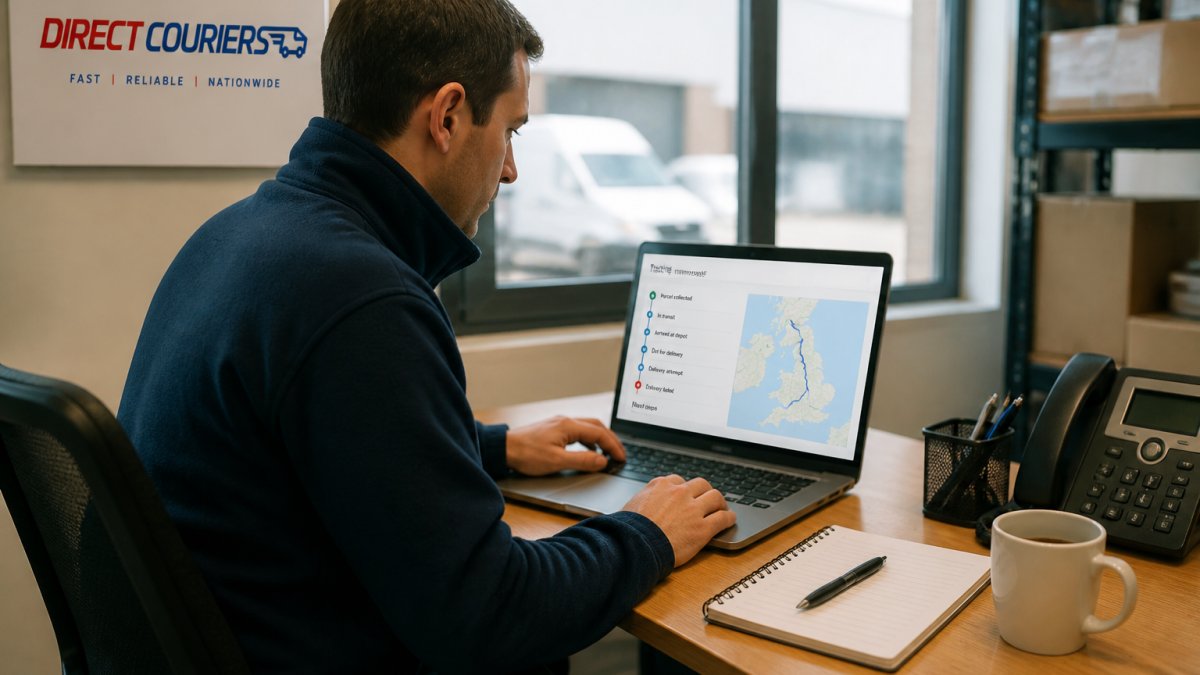
Step 2: Contact the retailer in writing. Use email or the platform message system so there is a record.
Step 3: State the remedy you want and set a deadline. Ask for a replacement or a full refund, and give a reasonable deadline such as 14 days.
Step 5: Escalate on a timetable. If the retailer ignores you or refuses, move to a formal complaint, then to the escalation routes covered in the next section.
A common mistake is to accept a vague "we'll look into it" and stop chasing. Keep the deadline you set and follow up in writing when it passes.
Here is the claim sequence in order, with the action each step requires.
| Step | What to do | Key detail |
|---|---|---|
| Step 1 | Build your evidence file | Order confirmation, tracking number, dated screenshots |
| Step 2 | Contact the retailer in writing | Use email or platform messages, not phone |
| Step 3 | State the remedy and set a deadline | Replacement or full refund, e.g. 14 days |
| Step 4 | Handle a tracking dispute explicitly | Ask for proof of delivery and delivery photo |
| Step 5 | Escalate on a timetable | Formal complaint, then escalation routes |
Parcel Delivery Complaint Letter Template
A parcel delivery complaint letter template saves you time and removes emotion from the process. Copy this, fill in the blanks, and send it in writing.
Dear [Retailer Name],
Order number: [Number] Order date: [Date] Expected delivery date: [Date]
I am writing to report that my order has not arrived. The tracking information shows [status], but no parcel has been delivered to me.
Under the Consumer Rights Act 2015, I am entitled to delivery within the agreed timeframe.
Keep the tone factual. Do not threaten. A clear, dated letter with evidence attached gets resolved far faster than an angry email.
Send it to the retailer, not the courier, unless you arranged the courier yourself.
Escalating a Courier Delivery Failure Claim
Escalation follows a ladder, and each rung needs the one below it completed first. Skipping steps slows you down and can weaken a chargeback or court claim. This section explains what each route actually requires, which is where most guides stop short.
- Formal complaint to the retailer. Ask for the complaint to be logged and request a written final response. Keep the reference number.
- Deadlock letter or final response. This is the retailer's written last word. You need it for most alternative dispute resolution routes and for a clear record if you go to court.
- Alternative dispute resolution or the relevant ombudsman. Use the scheme the retailer is signed up to, if any. Provide your evidence file and the final response.
- Payment provider chargeback. For card payments, ask your card provider to raise a chargeback. This is a scheme rule, not a legal right, and it is time-limited, so act promptly after the final response.
- Section 75 claim. For credit card purchases over £100 and under £30,000, the card provider is jointly liable with the retailer. This is a statutory route under the Consumer Credit Act 1974 and can be used alongside a chargeback discussion with your provider.
- Small claims court. For unresolved sums, the small claims track is designed for lower-value disputes and does not usually require legal representation.
Keep every reference number. Escalation teams ask for them, and missing references send you back to the start. If the retailer will not engage at all, the final response plus your evidence file is what unlocks the later rungs.
Choosing a Reliable Courier to Avoid Delivery Failures
Choosing a reliable courier is the most effective way to avoid delivery failures in the first place. Prevention beats claiming, every time.
Look for these signals before you book:
- Fully insured service with clear cover terms
- Instant tracking information you can share with your own customers
- A fleet that matches your goods, from compact vans to tail-lift Luton vans
- Clear delivery window commitments
- A named contact when something goes wrong
A common mistake is choosing purely on price. The cheapest quote often comes with the weakest cover and the vaguest delivery promises. When a valuable item goes missing, that saving disappears fast.
For business sellers, a courier that handles bulky furniture and palletised goods properly reduces damaged goods claims and protects your customer relationships.
At Direct Couriers London Ltd, our fully insured fleet and instant tracking give you a clear record if a dispute ever arises. Our courier service covers same-day and next-day delivery nationwide. For practical prevention, read our guide on how to avoid courier delivery delays.
Frequently Asked Questions
Who is responsible if a courier loses a parcel?
The retailer is legally responsible for the parcel until it is delivered to you, under the Consumer Rights Act 2015. This means you should contact the retailer, not the courier, to resolve a missing parcel. The retailer must either replace the goods or issue a full refund. If you arranged the courier yourself, for example when sending an item you sold, then you hold the contract with the courier and must claim directly with them.
Can I claim compensation for delayed delivery?
You can claim compensation for late delivery if the delay caused you a measurable loss, but the process depends on who you contracted with. For consumer purchases, the retailer is responsible for delivering within a reasonable time, and you may be entitled to a refund of delivery charges if the delay was significant. If you paid for a guaranteed delivery time and it was missed, you can often recover the postage cost. Consequential losses, such as lost earnings, are harder to claim and usually require showing the loss was foreseeable.
How long should I wait before reporting a parcel as missing?
Most couriers advise waiting a set period before reporting a parcel as missing, often 10 working days for standard deliveries. Check the retailer's or courier's tracking information first, as parcels are sometimes left in a safe place or with a neighbour. If the tracking has not updated for several days or the delivery window has passed, contact the retailer promptly. For time-sensitive items, report the issue as soon as the expected delivery date has passed.
Should I contact the retailer or the courier about a missing parcel?
Contact the retailer first. Your contract of sale is with the retailer, and they are responsible for the goods until delivery. The retailer holds the contract with the courier and can pursue a claim on their end. Contacting the courier directly is only appropriate if you arranged and paid for the delivery yourself, such as when sending a parcel to a buyer. In that case, you are the courier's customer and must file the claim with them.
Delivery failures cost you time, money, and customer trust. The fix starts with a courier that turns up, tracks properly, and insures your goods. Direct Couriers London Ltd offers same-day and next-day delivery, a fully insured fleet from compact vans to tail-lift Luton vans, and instant tracking on every job. Get started with Direct Couriers London Ltd and move your goods with confidence.