 how-to
How to Avoid Courier Delivery Delays: 7 Proven Steps
Table of Contents
- The Real Reasons for Courier Delivery Delays (and What They Cost You)
- Step 1: Give the Courier an Accurate Delivery Address for Parcels
- Step 2: Share Recipient Contact Information and Authorisation Details
- Step 3: Write Delivery Instructions That Remove Every Question
- Step 4: Prepare, Label and Measure Every Parcel Correctly
- Step 5: Match Delivery Speed to the Shipment, Not the Panic
- Step 6: How to Track a Delayed Parcel and Escalate It Fast
- Step 7: Plan for Weather, Peak Season and Network Disruption
- Frequently Asked Questions
Last Updated: October 7, 2026
The Real Reasons for Courier Delivery Delays (and What They Cost You)
Most courier delivery delays are not bad luck.
A missing flat number. A postcode typed one digit wrong. A recipient who is not home.
This guide from Direct Couriers London Ltd walks through seven proven steps to avoid courier delivery delays.
Below, we'll show you exactly how to prepare every shipment so it arrives on time.
The Five Most Common Causes of a Delivery Delay
Five problems cause almost every delay we see:
- Wrong or incomplete address. A missing house number or flat letter stops the van.
- No recipient contact details. The driver cannot call ahead or get access.
- Vague delivery instructions. "Leave at the side" means nothing without a landmark.
Every step below fixes one of these. Fix all seven and delays become rare.
Step 1: Give the Courier an Accurate Delivery Address for Parcels
An accurate delivery address for parcels is the single biggest factor in on-time delivery. Get this wrong and nothing else can save the shipment.
Here is what a complete address needs:
- Full building name and street
- Flat, unit or suite number
- Full postcode
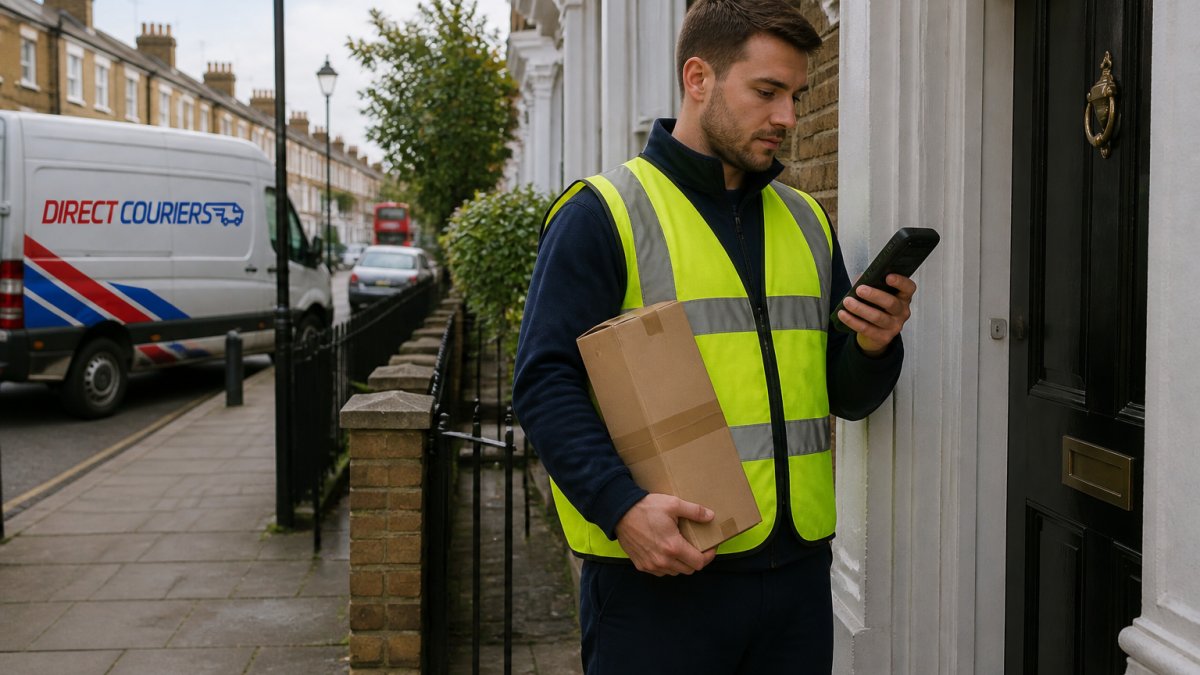
How to Validate a Postcode Before You Book
Always check the postcode against the Royal Mail postcode finder before you confirm the booking. It takes ten seconds and catches typos that would otherwise send a driver to the wrong street.
Then confirm the address with the recipient by message. Ask them to reply with the full address, not just "yes." People spot their own mistakes faster than anyone else.
Step 2: Share Recipient Contact Information and Authorisation Details
Recipient contact information turns a failed delivery into a completed one. A phone number lets the driver call ahead, find the right door and hand over the parcel.
Collect these details at booking:
- A mobile number that will be answered on delivery day
- A backup contact if the main recipient is out
- Written authorisation if someone else will sign
If a neighbour or building manager can accept the parcel, say so in writing. Couriers need clear permission before they hand goods to a third party.
Step 3: Write Delivery Instructions That Remove Every Question
Good delivery instructions answer every question before the driver asks it. Vague notes cause missed deliveries and wasted trips.
Write instructions like this:
- "Blue door beside the pharmacy. Buzz flat 4."
- "No parking on the high street. Use the rear service road."
- "Recipient works nights. Do not knock before 11am."
Keep them short and specific. One clear sentence beats a paragraph.
A common mistake is writing instructions for yourself rather than a stranger. The driver has never seen your building. Describe it as if they are arriving for the first time.
Step 4: Prepare, Label and Measure Every Parcel Correctly
Correct packing and labelling keep parcels moving through the network without stops. Poor packaging leads to re-wrapping, re-labelling and delays.
Check these before collection:
- Use a box strong enough for the weight inside
- Seal every seam with proper packing tape
- Write the full address on the parcel itself, not just the label
Wrong dimensions are a hidden delay. If your parcel is bigger or heavier than booked, the courier may re-price or re-route it. Measure the packed box, not the item.
Step 5: Match Delivery Speed to the Shipment, Not the Panic
Choose delivery speed based on the shipment, not on last-minute stress. Panic booking is how time-critical deliveries fail.
Use this simple guide:
| Shipment type | Best speed | Why |
|---|---|---|
| Urgent documents | Same-day | Needs immediate collection |
| Standard online order | Next-day | Meets most customer expectations |
| Bulky furniture | Scheduled 2-3 day | Needs a tail-lift van and planning |
| Palletised goods | Booked freight | Requires the right vehicle and slot |
Next-day delivery is not always the fastest result. A bulky item booked on a scheduled service often arrives in better condition than one rushed onto the wrong van.
Match the vehicle to the goods too. Heavy furniture and pallets need a tail-lift Luton van, not a compact car-derived van.
Step 6: How to Track a Delayed Parcel and Escalate It Fast
Tracking a delayed parcel starts the moment it stalls, not the day it is due. Early action keeps a small hold-up from becoming a lost shipment.
Set up tracking alerts at booking. Most courier portals let you subscribe to email or SMS updates, and some send a notification on every scan. Turn these on for anything time-critical.
The Tracking Events That Actually Matter
Not every scan is equal. These are the events worth watching, and what each one tells you:
- Collection scan. Confirms the parcel is physically with the courier. If this has not appeared by the end of the collection day, the job was never picked up, call the courier immediately rather than waiting.
- Depot or hub scan. Shows the parcel entered the network. A gap of more than one working day between collection and the next hub scan usually means a mis-sort or a missed trailer.
- Out for delivery scan. The parcel is on a van. If this appears but no delivery follows, the most common causes are a wrong address, no access, or a recipient who was out.
A status that stops updating for a full working day is the trigger point. Do not wait for the estimated delivery date to pass.
When to Escalate and What to Say
Escalate as soon as a parcel stalls for a full working day, or sooner if a collection scan never appears.
A short, factual message gets a faster answer than a complaint. Use this structure:
- Reference: tracking number and booking date
- Problem: the last scan, its timestamp, and the gap since
- Impact: what the parcel is and why the deadline matters
Say this: "Tracking number [X] has not updated since [date]. The recipient is available today on [number]. Please confirm the current location and the next step."
Keep it short and factual. You want a clear answer, not an argument.
Working Through the Complaint Process
If the first response does not resolve it, escalate in writing and keep a dated record of every message. Ask for a named contact and a case reference.
According to Citizens Advice guidance on parcel problems, keeping a record of tracking updates and messages makes it far easier to resolve a dispute if the parcel does not arrive.
Reduce Repeat Delays With Data
After each delayed shipment, note the cause: address, access, packaging, customs or network. Patterns show up fast. If the same postcode or the same depot keeps causing holds, change the service or the collection time rather than hoping it improves.
Step 7: Plan for Weather, Peak Season and Network Disruption
Weather, peak season and network failures cause delays no one can fully control. What you can control is how early you plan around them, and how quickly you switch to a backup when the primary route fails. Proactive logistics management requires a broader perspective on operational bottlenecks to effectively reduce supply chain delays and maintain consistent delivery timelines.
Build a Contingency Plan Before You Need One
A contingency plan is a short document, not a feeling. It should answer four questions in advance:
- What is the cut-off? Decide the latest point at which a shipment can still arrive on time. Work backwards from the deadline, not forwards from the booking.
- What is the backup route? Name a second courier, a different collection time, or a different service level. A backup you have never used is not a backup.
- Who decides? Give one person authority to switch couriers or upgrade the service without waiting for approval.
Peak Season and Predictable Pressure
Peak periods are forecastable, so treat them as a planning problem rather than a surprise:
- Book earlier in the week, not on Fridays, when weekend holds are most likely
- Add a buffer day during November and December, and around public holidays
- Confirm collection slots in advance rather than requesting them on the day
Weather and Network Disruption
Check weather warnings before time-critical runs and build in an alternative for routes that cross exposed or flood-prone areas. When a network fails, a depot outage, a system fault or a strike, the fastest recovery is usually a different service level or a different courier, not a longer wait on the same one.
International Shipments: Get the Paperwork Right First
For international shipments, prepare customs paperwork before the parcel leaves. Missing or inconsistent documents are a common cause of border delays, and the government guidance on exporting goods explains what a shipment needs before it departs.
Check these before booking:
- A commercial invoice with an accurate description, quantity and value for each item
- Correct commodity codes and country of origin
- The recipient's contact details and, where required, their tax or EORI number
A vague description such as 'gift' or 'samples' invites a query. Describe goods specifically and keep the invoice, packing list and label consistent with each other.
The End-to-End Prevention Checklist
Run this sequence from booking to proof of delivery. It pulls every step above into one order:
- Validate the address against the postcode finder and confirm it with the recipient in writing.
- Collect contact details, a mobile answered on the day, a backup contact and any written authorisation.
- Write clear instructions that answer access, parking and timing questions.
- Pack, label and measure the parcel after packing, and record the final weight and dimensions.
- Match the service to the goods and the deadline, including the right vehicle.
- Set up tracking alerts and note the trigger point for escalation.
- Prepare customs documents for any international shipment before collection.
- Confirm collection and keep the receipt or collection scan.
- Monitor scans and escalate at the first full-day gap.
- Capture proof of delivery and log the outcome, including any delay cause.
Measure Performance, Not Just Outcomes
Track on-time rates, failed deliveries and delay causes each month. The numbers show which courier, which service and which routes work best for your business, and where a contingency plan is worth the cost. Review the data quarterly and adjust your default courier or service level when the pattern justifies it.
Frequently Asked Questions
Why does my parcel keep getting delayed?
Most courier delivery delays trace back to four things: an incomplete or wrong delivery address, a recipient who is not in when the driver arrives, an access problem such as a locked gate or no parking, or a parcel that was under-declared on size and weight. Check your booking confirmation against the postcode, add a mobile number for the recipient, and include access instructions. If delays repeat on the same route, the issue is usually the address data rather than the courier.
What information should I provide to prevent a delivery delay?
Give the courier the full delivery address including the postcode, the recipient's mobile number, and any access details such as a buzzer code, loading bay location or parking restrictions. For business addresses, add the company name, floor and a contact who can sign. For international shipments, attach commercial invoices and customs paperwork before collection. The more complete the brief at booking, the fewer questions the driver has to resolve on the day.
How do I track a delayed parcel and know when to escalate?
Use the tracking reference to check the parcel's scan history, not just the status label. If the tracking has not updated for more than 24 hours on a next-day service, or the estimated delivery time has passed without a delivery attempt, contact the courier with your reference number and ask for a specific update. Escalate to a named account contact if you are a business customer. Keep a record of each contact so you can show the timeline if a claim becomes necessary.
What should I do if my courier delivery is delayed?
Contact the recipient first so they are not left waiting, then call the courier with your tracking reference and ask what caused the delay and when the next attempt will be. If the item is time-critical, ask whether a same-day or next-day rebooking is possible. For business shipments, log the delay against your delivery performance records and review whether the carrier's service level matches the routes you actually use. Repeated failures on the same lane usually mean the carrier is wrong for that job.