 how-to
Prevent Courier Delivery Delays: A Practical Guide
Table of Contents
- Why Courier Delivery Delays Happen
- Route Optimisation and Planning to Prevent Delays
- Best Practices for Parcel Packaging
- Shipping Address Verification and Accuracy
- How to Track Courier Shipments Effectively
- Selecting a Reliable Courier Partner
- Managing Peak Seasons and Inventory Planning
- Same-Day Courier Service Benefits
- Frequently Asked Questions
Last Updated: September 28, 2026
Why Courier Delivery Delays Happen
Courier delivery delays stem from specific, preventable problems: poor planning, inaccurate information, and weak carrier selection. Understanding how to prevent courier delivery delays is essential for reliable operations. A shipment leaves your warehouse with the wrong address. Traffic congestion hits an unprepared route. A courier service lacks infrastructure for your volume. Each problem compounds the others. The good news: every delay has a fix.
Route Optimisation and Planning to Prevent Delays
Without proper planning, drivers waste hours on congested roads or inefficient stop sequences. Route optimisation means mapping the most efficient path before the driver leaves, accounting for traffic patterns, delivery windows, and vehicle capacity. A well-planned route cuts transit time by hours and reduces fuel costs.
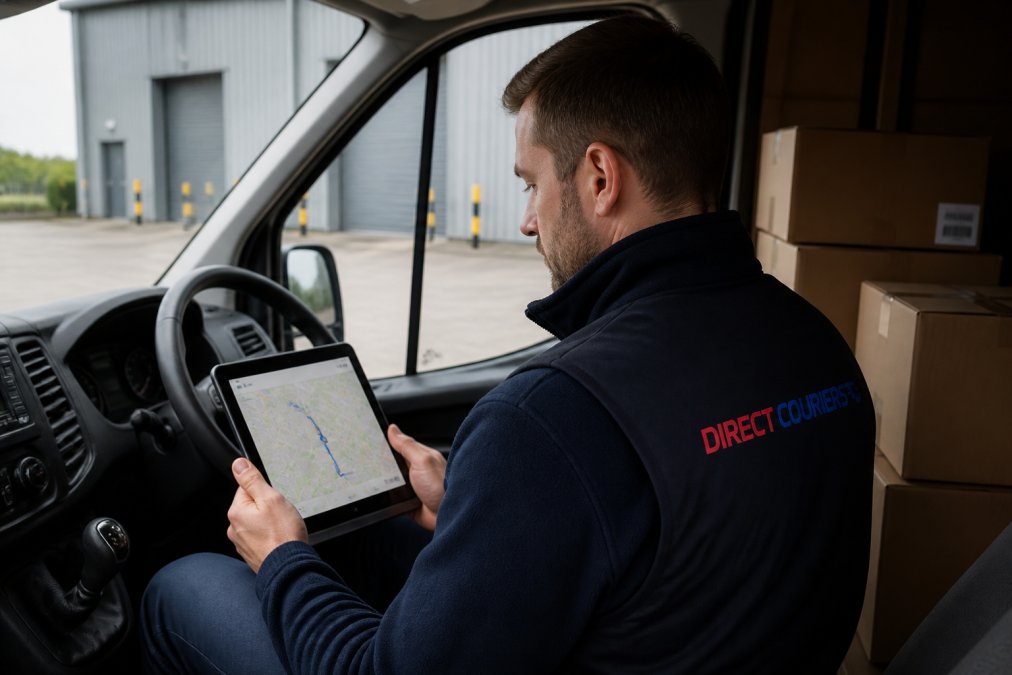
Here's what effective route planning includes:
- Cluster deliveries by postcode. Group nearby addresses together to cut unnecessary backtracking.
- Check traffic data in real time. Avoid peak congestion hours on major roads.
- Set realistic time windows. Build buffer time between stops for unexpected delays.
- Match vehicle size to load. A van too small forces multiple trips; one too large wastes fuel.
- Sequence stops logically. Start with furthest points, work back toward the depot.
Peak seasons expose weak planning. When volumes spike, routes that worked fine in quiet months collapse. Forecast demand, pre-position inventory closer to delivery zones, and book courier capacity early.
Best Practices for Parcel Packaging
Poor packaging delays delivery. Oversized packages get flagged for manual handling; loose contents shift and get damaged, requiring investigation. Proper packaging standards ensure parcels move through the supply chain without friction:
- Use the right box size. Oversized boxes waste space and slow sorting. Undersized ones invite damage and rejection.
- Secure contents firmly. Bubble wrap, foam, or air pillows prevent shifting. Items that move inside the box get damaged and trigger delays for inspection.
- Label clearly and completely. Use a label printer, not a pen. Smudged or handwritten labels cause scanning errors and misroutes.
- Apply labels to the largest flat surface. This ensures barcode readers can scan without rotating the package.
- Avoid tape over the barcode. Even clear tape can confuse optical scanners.
- Use consistent packaging weight. Parcels that are unexpectedly heavy trigger security checks.
Courier partners often reject non-standard packaging. Packaging standards exist to speed parcels through automated sorting.
For fragile items, declare the contents clearly. A box marked "FRAGILE" gets handled with care and routed through gentler logistics channels. Undeclared breakables cause delays when they arrive damaged and require investigation.
Shipping Address Verification and Accuracy
A single digit wrong in a postcode sends a parcel to the wrong delivery area. Shipping address accuracy is non-negotiable. Verification systems catch errors before parcels enter the supply chain.
Here's how to verify addresses:
- Use Royal Mail Postcode Finder. Enter the postcode and building number to confirm the exact address format.
- Check for common errors. Missing flat numbers, incorrect postcodes, or abbreviated street names are frequent culprits.
- Standardise format across your system. If one order uses "Street" and another uses "St", sorting systems may treat them as different addresses.
- Validate addresses at point of entry. Catch errors when customers submit orders, not when couriers can't find the location.
- Store customer addresses correctly. Misspelled names or postcodes in your database persist across multiple shipments.
For business addresses, include building names or suite numbers. A parcel to "123 Business Park" without the suite number goes to reception, not the intended department. That creates delays as staff hunt for the package.
How to Track Courier Shipments Effectively
Real-time tracking removes uncertainty and lets you respond to problems before they escalate. Effective tracking means knowing where a parcel is at every stage: in the depot, on the vehicle, out for delivery, or delivered. This visibility prevents panic and creates an audit trail that catches errors before they compound.
Most couriers provide tracking via barcode scanning, GPS tracking on vehicles, and delivery confirmation. But if your warehouse management system (WMS) and the courier's tracking platform don't communicate, you're manually checking both systems and re-entering data.
Key integration points to establish:
- Real-time shipment status feeds. Parcel status updates automatically in your system without manual intervention.
- Automated exception alerts. If a delivery fails or an address is flagged as undeliverable, your team is notified immediately, not hours later.
- Two-way communication. Your system can push updated delivery instructions to the courier (e.g., "leave in porch" or "call before arrival") without a phone call.
- Proof-of-delivery capture. Signatures and photos from the courier's app sync directly to your records, eliminating disputes over whether a parcel was actually delivered.
- Inventory synchronisation. When a parcel is scanned as delivered, your stock levels update automatically, preventing overselling.
Selecting a Reliable Courier Partner
When evaluating courier partners, assess these factors:
- Fleet size and vehicle types. A courier with only small vans can't handle bulky furniture or palletised goods. Tail-lift vans are essential for heavy items without loading docks.
- Geographic coverage. Nationwide coverage means one partner handles all your deliveries, not multiple carriers with different service levels.
- Service level agreement (SLA) commitments. The contract should specify guaranteed delivery windows and compensation for breaches.
- Tracking capabilities. Real-time GPS and barcode scanning let you monitor every shipment.
- Insurance and liability. Full insurance coverage protects your goods. Confirm replacement values are adequate.
- Carrier accountability. If a delivery fails, does the courier investigate and fix the problem, or just refund the fee?
Direct Couriers London Ltd operates a fully insured fleet ranging from compact vans to tail-lift Luton vans. We cover the UK nationwide with same-day and next-day delivery options. Our service level agreements guarantee on-time delivery.
Managing Peak Seasons and Inventory Planning
Peak seasons expose weak logistics on two fronts: operational (volume overload) and administrative (customs, insurance, and liability delays). When demand spikes, couriers become overwhelmed and delivery windows slip. Delays also occur because insurance documentation is incomplete, customs declarations are missing, or liability protocols aren't in place.
Key administrative steps for peak season:
- Verify insurance coverage limits. Standard courier insurance often caps liability at £20 per kilogramme or £100 per parcel. For peak season, when you're shipping high-value items, confirm your courier's coverage matches your goods' value. If not, purchase additional insurance before the rush begins.
- Prepare customs documentation in advance. For international shipments, incomplete or incorrect customs forms cause holds at borders. Create templates for your most common export destinations (EU, US, Asia) and train staff to complete them correctly before peak season hits.
- Establish liability protocols. Define what happens if a parcel is lost or damaged during peak season. Who investigates? How long does the claim take? What's the compensation process? Document this before volume spikes, not during a crisis.
- Audit carrier insurance policies. Request proof of insurance from your courier partner. Confirm they carry public liability insurance and goods-in-transit coverage. A courier without proper insurance creates risk for your business.
- Create a claims process checklist. If a high-value item is damaged or lost during peak season, your team must follow a specific sequence: photograph the damage, file a claim within the required timeframe (often 48 hours), provide proof of value, and track the claim status. Have this documented and ready.
- Pre-clear high-risk shipments. For items that commonly trigger customs delays (electronics, textiles, certain foods), submit documentation to customs brokers in advance. This prevents last-minute holds.
A practical peak season checklist:
- August/September: Forecast demand, book courier capacity, audit insurance coverage, request updated carrier insurance certificates.
- October: Pre-position inventory, train staff on customs forms and claims procedures, create documentation templates.
- November: Confirm courier readiness, test API integrations, brief customer service on realistic delivery windows.
- December onwards: Monitor daily volume, track claim submissions, communicate proactively with customers on delays.
Same-Day Courier Service Benefits
Same-day delivery has become a competitive necessity for many businesses. Customers expect fast fulfilment, and same-day courier service delivers.
Benefits of same-day courier service include:
- Faster customer satisfaction. Customers receive orders the same day, improving their experience.
- Reduced inventory holding. Stock moves out faster, freeing up warehouse space.
- Competitive advantage. Retailers offering same-day delivery win more orders than those with multi-day lead times.
- Lower returns. Customers who receive items quickly are less likely to cancel orders.
- Premium pricing. Same-day delivery justifies higher shipping fees, improving margins.
Frequently Asked Questions
What are the main reasons courier deliveries get delayed?
Courier delivery delays stem from several factors: inaccurate shipping addresses causing failed first-attempt deliveries, poor route optimisation leading to inefficient travel patterns, inadequate packaging causing damage and returns, traffic congestion and unpredictable weather, and insufficient inventory planning during peak seasons. Selecting a courier partner with proven operational efficiency and real-time monitoring capabilities significantly reduces these risks. Address verification at the point of booking and clear delivery windows communicated to customers help prevent most common delays.
How does same-day courier service benefit prevent delivery delays?
Same-day courier service benefits include reduced transit time, fewer handling touchpoints, and faster order fulfilment. By collecting and delivering within the same day, parcels avoid overnight storage, sorting delays, and the compounding effect of multiple logistics handoffs. Same-day services also allow you to respond immediately to customer orders, reducing the window for address changes or cancellations. For time-sensitive items like antiques or high-value goods, same-day delivery minimises exposure to damage and loss during transit.
What should I do if my courier keeps delivering late?
First, verify that your delivery address is accurate and includes full postcode and building access details. Review your delivery window expectations against realistic transit times for your distance. Contact your courier partner to discuss consistent delays and request a service level agreement that specifies on-time delivery commitments. If delays persist, ask about their tracking and dispatch systems to ensure real-time monitoring is in place. Consider switching to a courier with a stronger track record in your area or one offering guaranteed delivery windows with compensation clauses for failures.
How do I track my courier shipment in real-time?
Most professional couriers provide instant access to tracking information via email, SMS, or a dedicated tracking portal. Request a tracking reference number immediately after booking and share it with your customer. Real-time tracking shows the parcel's current location, estimated delivery time, and any delivery exceptions. This transparency allows you to proactively communicate with customers if delays occur and reduces anxiety about missing deliveries. Ensure your chosen courier offers this capability before committing to a service, as it's essential for managing customer expectations and preventing frustration.