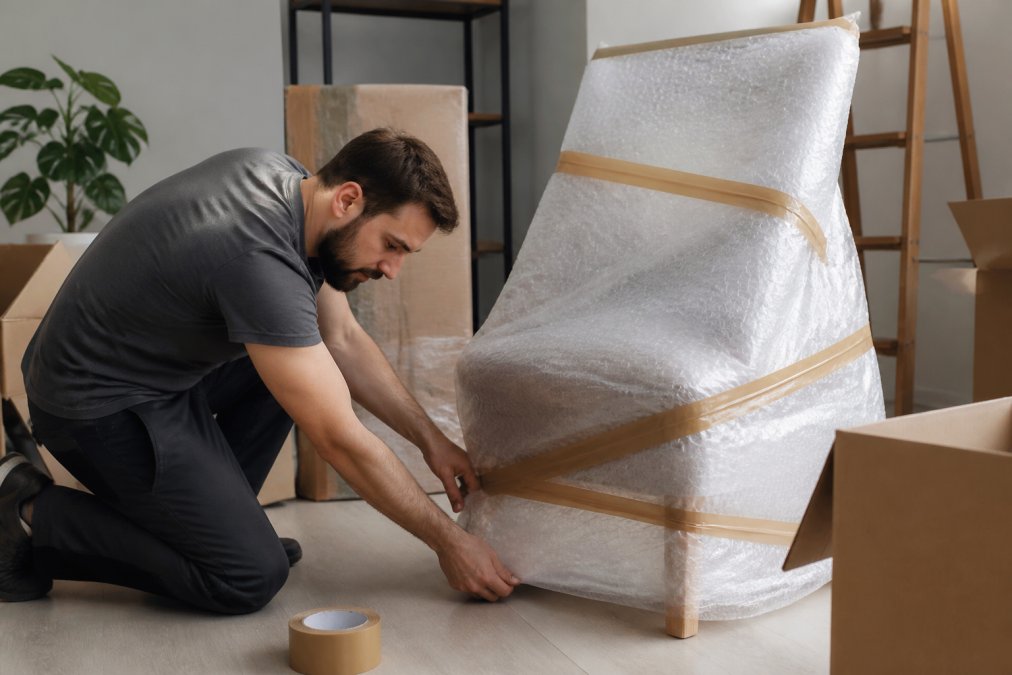
 how-to
How to Insure Fragile Furniture Shipments: 7 Steps
Table of Contents
- Why Standard Courier Cover Often Falls Short for Furniture
- Goods in Transit Insurance for Furniture: How It Works
- How to Pack Fragile Furniture for Courier Delivery
- Insuring Antiques, Heirlooms and High-Value Furniture
- Making a Damage Claim for Furniture Delivery
- How to Insure Fragile Furniture Shipments: A Step-by-Step Checklist
- Frequently Asked Questions
Last Updated: September 18, 2026
Why Standard Courier Cover Often Falls Short for Furniture
Most standard courier cover protects the courier, not your furniture. That is the uncomfortable truth behind how to insure fragile furniture shipments. Basic carrier liability usually pays by weight, not by value, so a light antique chair can be worth far more than the small sum a standard claim would return. According to Citizens Advice guidance on parcel problems, consumers often assume a courier's cover reflects what their item is worth, when in reality it usually caps payouts low.
Furniture makes this worse. Sofas, wardrobes and glass-topped tables are bulky, heavy and easy to scratch. A single handling mistake can cause partial damage that still ruins the piece.
Goods in Transit Insurance for Furniture: How It Works
Goods in transit insurance for furniture is a policy that covers your items while they are being moved, from collection to delivery. It pays out if goods are lost, stolen or damaged on the road. Unlike a courier's own liability, it is arranged around the value of what you are shipping, not the weight of it.
Here is how the two main options differ.
| Feature | Carrier Liability | Third-Party Transit Insurance |
|---|---|---|
| Who arranges it | The courier | You or the seller |
| Payout basis | Weight or a low cap | Declared or agreed value |
| Best for | Low-value items | Fragile, high-value furniture |
| Claim control | Limited | Full documentation trail |
| Typical exclusions | Inadequate packaging, inherent defect, gradual damage | Poor packing, undisclosed pre-existing damage, prohibited goods |
Carrier Liability vs Third-Party Transit Insurance
Carrier liability is the cover a courier already holds. It is automatic, but it is built to limit the courier's exposure, not to make you whole. Under the default liability regime that applies to most domestic road movements, a courier's exposure is capped by weight rather than by the value of the goods, which is why a lightweight antique chair can attract a payout far below its market worth. Third-party transit insurance is a separate policy you take out yourself. It is the stronger choice for anything fragile or valuable.
The trade-off is admin. You need proof of value and good photos before you ship. That paperwork is what wins a claim later. Most practitioners find that insurers will only pay out on a declared value they can see evidence for, so the appraisal or receipt you gather at the start is the document that decides the claim at the end.
Valuation vs Declared Value: What You Are Actually Covered For
This is the point most guides skip. Declared value is the figure you tell the courier or insurer your item is worth. Valuation is the documented, defensible worth of the piece, backed by a receipt, appraisal or market evidence.
If you declare a number you cannot prove, a claim can be reduced to the lower, provable figure. For antiques and heirlooms, a written appraisal is worth arranging before you ship. It is the difference between a payout and an argument.
A common pattern is for a shipper to declare a round figure, say, the price they originally paid, when the piece has since appreciated.
Arranging Cover: What You Actually Need to Provide
When you take out third-party transit insurance for furniture, expect to supply:
- A description of each item, including dimensions and materials
- The declared value, with supporting evidence (receipt, appraisal or valuation letter)
- The collection and delivery addresses, and the date of movement
- Confirmation of how the item will be packed and, for high-value pieces, crated
- Details of any previous damage or restoration
How to Pack Fragile Furniture for Courier Delivery
Good packing is the cheapest insurance you will ever buy. Most damage claims fail not because cover was missing, but because the packing could not survive normal handling. Here is how to pack fragile furniture for courier delivery properly:
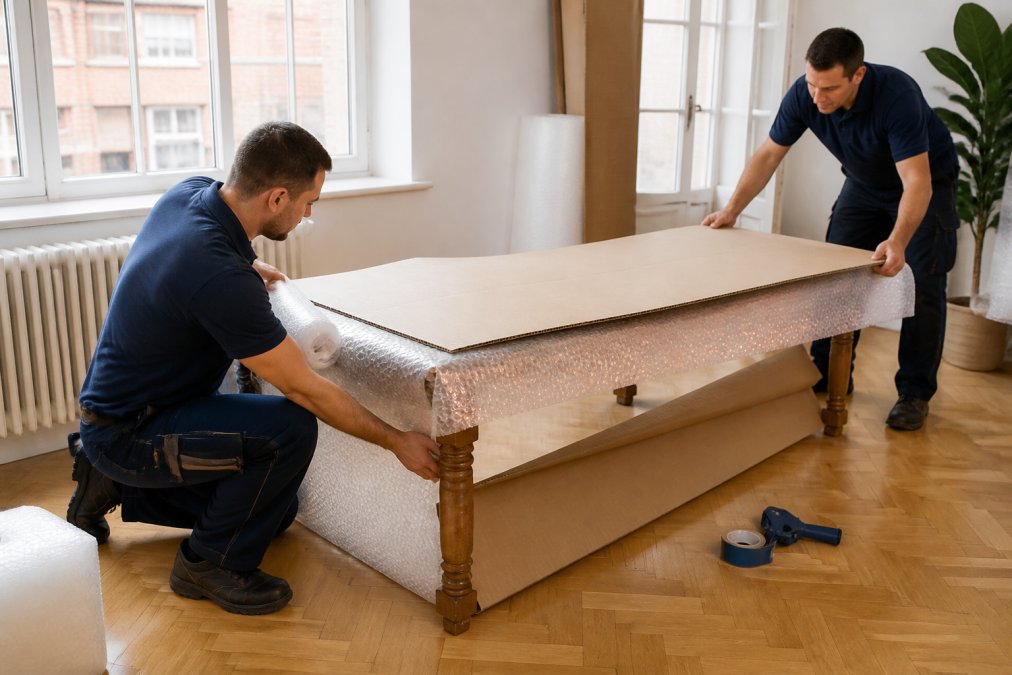
- Wrap every surface in bubble wrap, then add a layer of corrugated cardboard
- Protect corners with foam or cardboard edge guards
- Remove legs, glass and loose fittings, and wrap them separately
- Fill any gaps so nothing can shift inside the box
- Label the item clearly as fragile on every side
Crating and Cushioning for High-Value Pieces
For high-value pieces, crating is the standard. A wooden crate holds its shape under load, which a cardboard box cannot do once it is stacked. Cushioning materials inside the crate absorb shock, and a crate also discourages rough handling because it looks heavy and solid.
The Wood Standard That Applies to International Furniture Crates
This is the detail most packing guides miss. If your furniture is crossing a border on a wooden crate or pallet, the timber must meet the international standard for treated wood packaging, commonly referred to as ISPM 15 (Wood packaging material for import and export). In practice that means the wood carries a visible stamp confirming it has been heat-treated or fumigated, and the crate is built from debarked timber.
Cushioning Materials and How to Use Them
- Bubble wrap for surfaces, applied in overlapping layers rather than a single pass
- Corrugated cardboard as a rigid outer layer over the wrap
- Foam edge guards on every corner, because corners take the first impact
- Timber blocking inside a crate to stop lateral movement
- Corner boards on the outside of the crate to protect the frame during loading
Insuring Antiques, Heirlooms and High-Value Furniture
Antiques need a different approach. Their value often sits in age, rarity and provenance, none of which a standard weight-based payout recognises. For these pieces, arrange cover based on a professional appraisal rather than a guess.
- A clear photo of each item
- Proof of value: receipt, appraisal or valuation letter
- A short description, including any maker's marks
- The declared value you are insuring it for
- Condition notes before shipping
- A copy of the shipping manifest
Making a Damage Claim for Furniture Delivery
Making a damage claim for furniture delivery comes down to evidence and speed. Report the damage as soon as you find it, and keep every document. Insurers and couriers both work from proof, so the person with the better paper trail wins.
A claim usually needs:
- Photos of the damage and the packaging
- Proof of value for the item
- The shipping manifest and tracking details
- A written description of what happened
Inspection, Photographic Evidence and Proof of Value
Inspect the item the moment it arrives, before you sign anything. Note any damage on the delivery paperwork and photograph it immediately. Photographic evidence taken at the door is far stronger than photos taken days later.
How to Insure Fragile Furniture Shipments: A Step-by-Step Checklist
Here is the full process in one place. Work through it in order and you will have covered the main risks before the van arrives.
- Value the item properly. Get an appraisal for antiques and heirlooms.
- Choose the right cover. Use third-party transit insurance for fragile or high-value pieces.
- Pack to a professional standard. Bubble wrap, cardboard, corner guards and fragile labels.
- Crate high-value items. Use a wooden crate built to the piece's shape.
- Document everything. Photos, receipts, appraisal and a full inventory.
- Inspect on delivery. Check the item before signing, and photograph any damage at once.
- Claim quickly. Report damage fast with your full evidence pack.
Frequently Asked Questions
Does standard courier insurance cover fragile furniture?
Usually not at full value. Carrier liability is normally capped by weight or a fixed sum per consignment, so a damaged antique table may only be covered for a fraction of its worth. To insure fragile furniture properly you need goods in transit insurance or a marine cargo policy that states the declared value, covers all-risk transit protection and confirms whether professional packing is required.
What is the difference between carrier liability and goods in transit insurance?
Carrier liability is the courier's own limited cover, capped by their terms and conditions. Goods in transit insurance is a separate policy you arrange yourself, covering the full declared value of your furniture against handling damage, total loss and partial damage. If your shipment is worth more than the carrier's cap, third-party transit insurance is the only way to recover the replacement cost.
How do I prove the value of fragile furniture for an insurance claim?
Keep a shipping manifest with photographs, receipts, purchase invoices or a professional appraisal for antiques. For heirloom pieces, a written valuation from a qualified appraiser carries more weight than an online estimate. Insurers assess claims on proof of value and replacement cost, so store these documents alongside your policy number before collection, not after damage occurs.
Is professional packing required for a furniture insurance claim?
Many policies require it for high-value or antique items. If the insurer specifies professional crating or packing standards, DIY bubble wrap and corrugated cardboard may void the claim. Check the policy wording before booking, and if you pack yourself, photograph every stage of cushioning and fragile labelling so you can show the item left in a properly protected condition.
Fragile furniture is only as safe as the cover and packing behind it. Guessing at value or skipping documentation is how claims fall apart. Direct Couriers London Ltd pairs fully insured delivery with a fleet built for heavy and awkward items, plus instant tracking and flexible storage for stock or belongings. Get started with Direct Couriers London Ltd and move your fragile furniture with cover you can actually rely on.