 listicle
Best Nationwide Courier for Antiques: 2026 Guide
Table of Contents
- Quick Comparison: Best Nationwide Couriers for Antiques
- Direct Couriers London Ltd: Best for Heavy Antique Furniture and Palletised Goods
- Red Rocket Couriers: Best for Bespoke, High-Value Antique Transport
- The UPS Store: Best for Packing and Shipping Smaller Antiques
- How to Secure Drawers for Furniture Transport
- Best Practices for Packing Fragile Furniture
- Insurance Requirements for Antique Shipping
- Conclusion: Choosing the Right Courier for Antiques
- Frequently Asked Questions
Last Updated: September 27, 2026
Quick Comparison: Best Nationwide Couriers for Antiques
Choosing the best nationwide courier for antiques comes down to matching the service to the item. A fragile porcelain vase and a two-metre oak dresser need very different handling, and the wrong courier can turn a sale into a claim.
Quick picks:
- Best for heavy antique furniture and palletised goods: Direct Couriers London Ltd
- Best for bespoke, high-value antique transport: Red Rocket Couriers
- Best for packing and shipping smaller antiques: The UPS Store
| Courier | Best For | Key Strength | Pricing |
|---|---|---|---|
| Direct Couriers London Ltd | Heavy furniture, palletised goods | Tail-lift Luton vans, fully insured, instant tracking | Quote-based |
| Red Rocket Couriers | High-value, delicate pieces | Dedicated vehicles, preservation protocols | Quote-based |
| The UPS Store | Smaller antiques, collectables | Custom crating, nationwide service centres | Variable by weight and size |
Direct Couriers London Ltd: Best for Heavy Antique Furniture and Palletised Goods
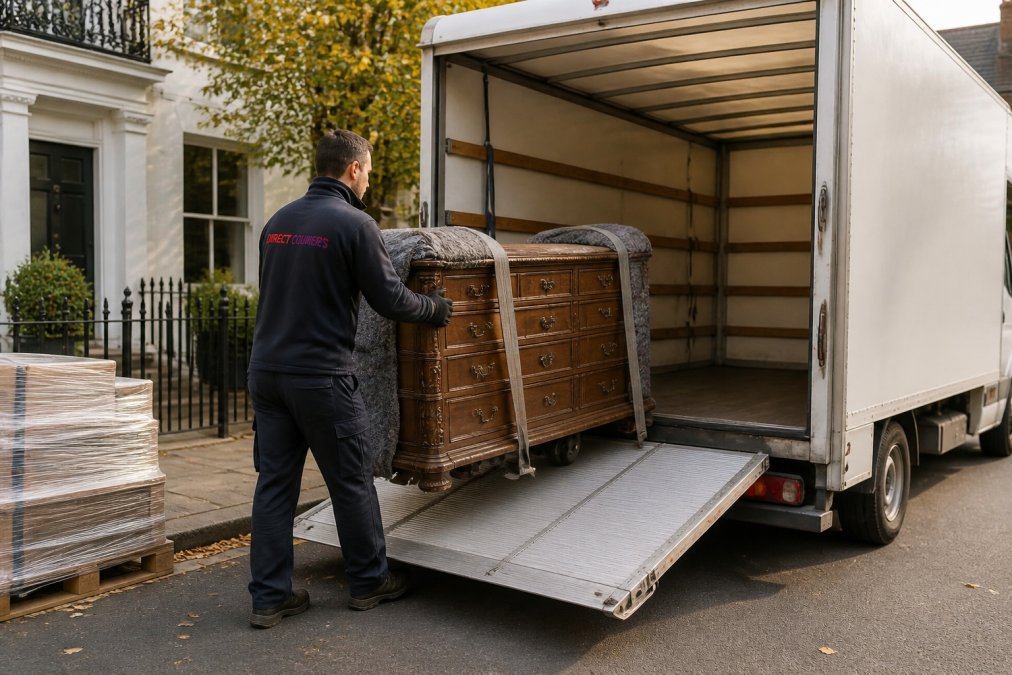
Direct Couriers London Ltd is the strongest choice for oversized goods, from delicate furniture to palletised stock. The fleet runs from compact vans to tail-lift Luton vans, so a wardrobe or chest of drawers moves without being manhandled into a car boot.
Key Features
- Same-day and next-day delivery options
- Fully insured delivery services
- Instant access to tracking information
- Nationwide coverage, with flexible storage for stock or belongings
Pros and Cons
What works: the tail-lift fleet handles genuine weight, and every job is insured. The one limitation is that pricing is quote-based, so you cannot see a figure before you call.
Pricing
Pricing depends on item size, weight, distance, and date. Request a quote for current rates.
Red Rocket Couriers: Best for Bespoke, High-Value Antique Transport
For a single delicate piece, such as a vintage antique or a framed artwork, Red Rocket Couriers offers dedicated vehicle options that cut handling to a minimum. Their protocols focus on preserving condition in secure transit.

Key Features
- Specialist handling for fragile, high-value goods
- Dedicated vehicles to reduce handling risk
- Condition-preserving transport protocols
Pros and Cons
The expertise in careful handling is genuine. The drawback: pricing is not listed online, so every job needs a bespoke quote.
Pricing
Quote-based. Contact the courier directly for a figure.
The UPS Store: Best for Packing and Shipping Smaller Antiques
For collectables and small antiques, The UPS Store solves the packing problem first. Custom crating and declared value coverage make it a sensible route for items that fit a counter.

Key Features
- Custom crating and packaging services
- Fragile collectible handling
- A nationwide network of service centres
Pros and Cons
The packing expertise is the real draw, and accessible locations help. Pricing varies significantly by location, which makes budgeting harder.
Pricing
Variable, based on weight, dimensions, and destination.
How to Secure Drawers for Furniture Transport
The single most common mistake is shipping a chest of drawers with the drawers left in. They slide, jam, and crack the frame. How to secure drawers for furniture transport comes down to five steps.
- Remove every drawer and wrap each one separately in bubble wrap
- Tape the drawer runners so they cannot extend in transit
- Refit the drawers, or pack them in a separate crate
- Wrap the carcass in moving blankets, then stretch film
- Strap the unit to the van wall using ratchet straps
Best Practices for Packing Fragile Furniture
Best practices for packing fragile furniture start with the surface itself. Felt pads, corner protectors, and acid-free tissue prevent the scratches and chips that destroy value. What most guides skip is the order of operations and the cost of getting it wrong.
The preparation checklist
Work through this in sequence. Skipping a step is how veneer lifts and finials snap.
- Photograph the piece from every angle before touching it, this is your claim evidence
- Remove drawers, shelves, and loose hardware; bag the screws and label each drawer's position
- Wrap legs and finials separately, then tape them to the frame so they cannot swing
- Pad corners with foam, not newspaper, which compresses and leaves ink marks
- Cover the whole piece in a moving blanket, then shrink-wrap so the blanket cannot shift
- Crate the item if it is high-value or travelling more than a short distance
- Mark the crate "fragile" and "this way up" on every face
Layered protection, in order
- Surface layer, acid-free tissue against polished wood, gilded surfaces, and marquetry.
- Corner and edge layer, closed-cell foam, cut to fit, taped in place rather than stuck to the wood.
- Shock layer, bubble wrap or moving blanket, wrapped tightly enough that it does not slide.
- Rigid layer, a custom crate for anything with a valuation that would hurt to lose.
- Restraint layer, ratchet straps to the van wall, never across a fragile surface.
What packing actually costs
- Volume versus weight. A large, light piece, a gilt mirror, a chaise, is priced on the space it occupies, not its mass. Couriers quote on volumetric weight, so a bulky item can cost more than a dense one.
- Crating. A bespoke wooden crate adds material and labour, and it adds weight, which feeds back into the transport charge.
- Access. Stairs, narrow doorways, and no parking within a reasonable distance all add time and cost.
- Distance and date. Nationwide moves are priced by mileage band; weekend and evening slots usually carry a premium.
- Insurance tier. Declared value cover costs more than standard liability, and the premium scales with the value you state.
Get the packing right and the insurance conversation becomes straightforward: the evidence pack is already complete, and the insurer has no grounds to argue the item was inadequately protected.
Insurance Requirements for Antique Shipping
Insurance requirements for antique shipping are not a formality. Standard courier liability often covers only a fraction of an antique's value, and that gap is where sellers lose money. Most competitors stop at "get insurance". The useful part is knowing what happens when you need to claim. Proactive documentation and rigorous packing standards remain the primary defense against denied claims when you ship expensive collectibles.
What each cover type actually pays
| Cover Type | What It Typically Pays | Watch For |
|---|---|---|
| Standard liability | A low fixed limit per consignment, often set by the courier's terms | Rarely covers antiques fully; the limit is per shipment, not per item |
| Declared value | Up to the value you state, subject to the courier's maximum | Requires proof of worth before dispatch, not after loss |
| Specialist transit cover | Agreed value in writing, often via a broker | Needs a professional valuation and may exclude inherent faults |
The claim process, step by step
A common pattern among specialist brokers is a five-stage process. Timings vary, but the sequence is consistent:
- Notify in writing within the courier's stated window. Most terms require notification within a set number of days of delivery or expected delivery. Miss it and the claim can be refused regardless of fault.
- Submit the evidence pack. Photographs of the item before packing, photographs of the damage and the packaging on arrival, the original valuation, the receipt, and the consignment note.
- Allow inspection. The insurer or courier may appoint an independent assessor to view the item before any repair or disposal. Do not repair or discard the piece first.
- Receive a settlement offer. This is usually the lower of the agreed value, the repair cost, or the replacement cost, not the retail price you hoped to achieve.
- Escalate if refused. If the claim is declined, the route is the courier's internal complaints procedure, then the relevant alternative dispute resolution scheme or the small claims track, depending on the amount.
Liability limits and exclusions to check before you book
- Per-item caps. Many couriers apply a maximum per item even when you declare a higher value. Ask for the figure in writing.
- Inherent vice. Damage caused by the item's own condition, a hairline crack that opens in transit, or wood that moves with humidity, is commonly excluded.
- Inadequate packing. If the insurer judges the packing insufficient, the claim can be reduced or refused. This is why the packing steps below matter as much as the cover itself.
- Consequential loss. Loss of a sale, storage costs, or restoration delays are rarely covered.
Keep photographs, receipts, and a professional valuation before dispatch. If a claim arises, that paperwork decides the outcome, not the courier's reputation.
Conclusion: Choosing the Right Courier for Antiques
Matching the courier to the item is the whole game: heavy furniture needs a tail-lift fleet, while a delicate collectable needs bespoke handling and crating. Get that pairing right and most transit risk disappears before the van moves.
Frequently Asked Questions
What is the best courier for high-value antique items?
The best courier for high-value antiques depends on the item's size and fragility. For heavy furniture and palletised goods, Direct Couriers London Ltd offers a fully insured fleet with tail-lift Luton vans and real-time tracking. For smaller, delicate collectables, some packing and shipping services provide custom crating. Specialist art couriers are ideal for bespoke, high-value pieces requiring dedicated vehicles and condition-preserving protocols.
How do I ensure my antiques are insured during nationwide transit?
Check the courier's insurance requirements for antique shipping before booking. Most providers require accurate declared value and may ask for a professional valuation or receipt. Ensure the policy covers the full replacement cost, not just weight-based compensation. Direct Couriers London Ltd offers fully insured services, but always confirm liability limits and exclusions in writing. For items over a certain value, you may need additional transit insurance.
What is the difference between a standard courier and a specialist antique courier?
A standard courier typically handles general parcels with limited fragile-item training and basic liability cover. A specialist antique courier provides dedicated vehicles, custom crating, climate-controlled conditions, and higher insurance limits. They also use specialised equipment and careful handling protocols to preserve condition. For high-value or delicate antiques, a specialist service reduces risk, while standard couriers may suit robust, lower-value items.
How should I pack fragile antiques for long-distance transport?
Follow best practices for packing fragile furniture: wrap each piece in acid-free tissue or bubble wrap, pad corners with foam, and secure drawers and doors with low-tack tape. Use custom crates for high-value items and label boxes as fragile. Avoid newspaper directly on finishes. For upholstered pieces, cover with breathable fabric. Always photograph the item before packing and consider professional crating for exceptional pieces.
Are there specific regulations for shipping antique furniture in the UK?
There are no specific UK regulations for shipping antique furniture, but items containing certain materials like ivory or tortoiseshell may require CITES permits. For international shipping, customs declarations are needed. Within the UK, ensure your courier complies with standard road transport rules. Always check if your antique falls under restricted categories before booking, and ask your courier about any documentation they require.