 ultimate-guide
Eco-Friendly Packing Supplies for Furniture Transport
Last Updated: November 11, 2026
Quick Summary
Recycled cardboard, paper-based wraps, moving blankets and reusable straps can all protect furniture in transit, provided each is matched to the piece being moved. Eco-friendly packing supplies work best when corners and glass are protected first, with moisture and load security addressed separately.
- Protect corners, legs, glass and polished surfaces first, then wrap the whole item.
- Recycled cardboard suits contents but should not be the only barrier against sharp edges.
- Use recycled kraft paper for polished wood and honeycomb paper for glass and mirrors.
- Wrap upholstery in breathable textile rather than plastic film so moisture can escape.
- Disassemble and wrap legs separately, since wrapping them attached can strain joints during lifting.
Table of Contents
- Why Furniture Needs a Different Packing Approach
- Recycled Cardboard Moving Boxes: Where They Work and Where They Fail
- Biodegradable Furniture Wrap and Paper-Based Alternatives to Plastic
- Using Household Textiles and Reusable Padding
- How to Pack Furniture for Long Distance Transport, Step by Step
- Moisture, Abrasion and Load Security: What Eco Materials Need
- Booking Your Next Furniture Move With Direct Couriers London Ltd
- Frequently Asked Questions
Moving a sofa, a dining table or a wardrobe is a different job from packing a box of books, and the packing materials you choose should reflect that. Furniture carries weight, edges and surfaces that scratch or dent, and it often sits in transit for hours or days. Heavy furniture, pallets and bulky items are often moved by courier, and the packing decisions made before collection shape how well a piece arrives. This guide covers the eco-friendly packing supplies that hold up for furniture transport, where they fall short, and how to use them properly. Proper application of these sustainable materials ensures structural integrity during transit, a standard maintained by Rising Phoenix Transport when navigating the complexities of moving bulky furniture safely.
Why Furniture Needs a Different Packing Approach
Furniture is not simply a larger version of a parcel. A flat-pack bookshelf has long panels that bow under their own weight, a glass tabletop concentrates pressure at its corners, and an upholstered armchair can be marked by anything rubbing against its fabric. Packing that protects a shoebox will rarely protect a chest of drawers.
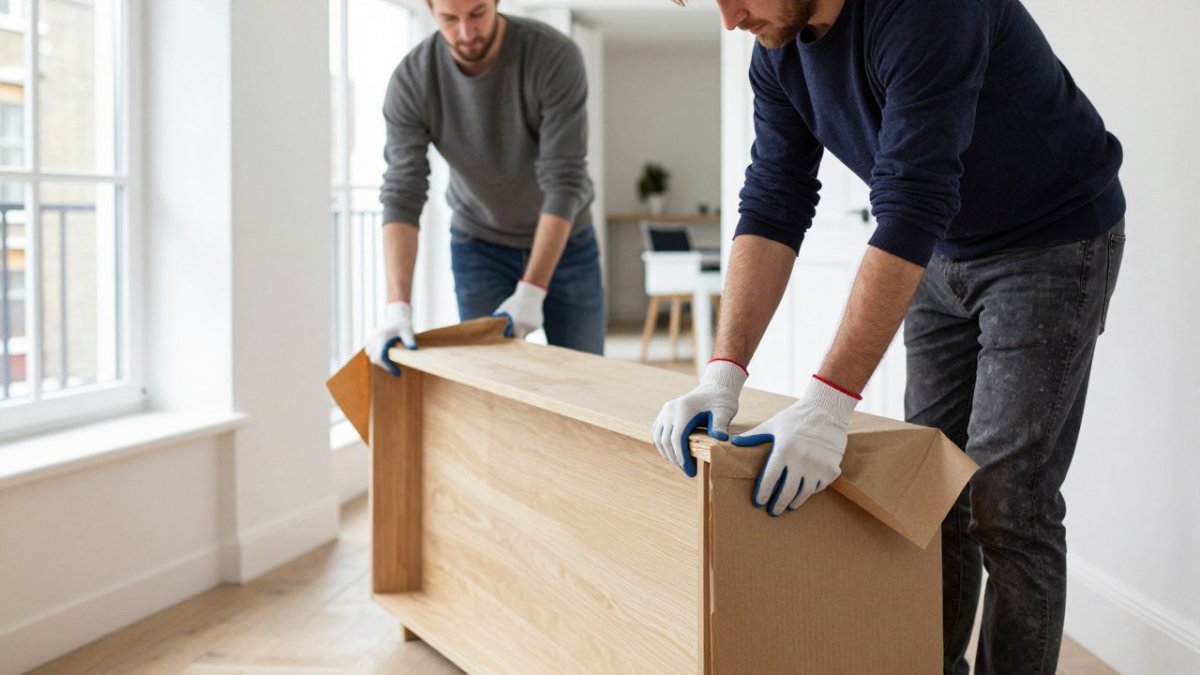
The first step is to identify which parts of each piece are most vulnerable: corners, legs, mirror glass, polished veneer and fabric. Protect those areas first, then wrap the whole item so that nothing can shift against it during loading. Eco-friendly materials can do this job well, but only if they are matched to the item rather than applied as a single solution to everything.
Recycled Cardboard Moving Boxes: Where They Work and Where They Fail
Recycled corrugated cardboard is the most common eco-friendly choice for moving, and it has clear strengths. Reused boxes from supermarkets or retailers are usually free, and sturdy double-walled boxes can be reused several times if they are kept dry and undamaged. They work well for lamps, cushions, small décor items and the contents of drawers.
They fail in three predictable ways. First, a box that has been compressed or water-damaged loses much of its strength, and a stack of heavy boxes can collapse in transit. Second, cardboard offers little protection against sharp edges or point loads, so it should never be the only barrier between a chair leg and a mirror. Third, the box sizes available for reuse rarely match the items inside, which leads to excess void space and movement.
A sensible approach is to use recycled cardboard for contents and to reserve purpose-built furniture protection for the pieces themselves. Check each box for crushed corners and damp patches before packing, and discard any that cannot be reinforced.
Biodegradable Furniture Wrap and Paper-Based Alternatives to Plastic
Plastic stretch film and bubble wrap are the default for many movers, and they are the materials most people want to replace. Paper-based alternatives are now widely available, including recycled kraft paper, honeycomb paper and paper-based cushioning.
Paper wraps are good at preventing scuffs and light abrasion, and kraft paper is particularly useful for wrapping table legs, chair frames and wooden panels. Honeycomb paper gives better cushioning than flat paper and can be used around corners and glass. However, paper alone does not resist moisture.
Biodegradable and paper-based tapes deserve the same scrutiny. Many are sold as eco-friendly but need proper adhesion to hold heavy wrapping in place. Test a short strip on an inconspicuous part of a piece before using it across a finished surface.
Using Household Textiles and Reusable Padding
Blankets, towels, duvets and old clothing are among the most effective and least wasteful furniture protectors available. They are soft enough to avoid marking polished wood or upholstery and thick enough to absorb knocks. Moving blankets are designed for the job, but household textiles perform well when they are clean and dry.
Reusable padding has a clear environmental advantage because it can be used for many moves.
A common mistake is using textiles on their own to protect glass or mirrors. Fabric absorbs impact but does not stop a sharp edge from penetrating or a heavy item from cracking the glass. Use rigid support, such as corner protectors or cardboard, under the textile for these pieces.
How to Pack Furniture for Long Distance Transport, Step by Step
For long-distance journeys, the order of operations matters as much as the materials.
- Clean and dry the item. Dust, grit and moisture cause marks under wrapping. Allow time for any surface to dry fully. A microfibre cloth and a mild, pH-neutral cleaner are enough; avoid silicone polishes before wrapping because they can react with paper tapes.
- Photograph and label before disassembly. Take a picture of the assembled piece and bag screws, bolts and shelf pins in a paper envelope taped to the largest panel. This avoids the common pattern of lost fixings and a second trip.
- Remove loose parts. Take off legs, shelves, handles and drawers where possible, and wrap them separately in recycled kraft paper or a labelled cardboard box. Keep fixings with the piece they belong to.
- Protect corners and edges first. Fit moulded pulp corner protectors or folded double-wall cardboard angles before wrapping the body. For glass tabletops, use rigid cardboard on both faces plus corner protectors, then a textile layer.
- Apply the primary wrap by material. Use recycled kraft paper for polished wood and veneer, honeycomb paper for glass and mirrors, and clean moving blankets or household textiles for upholstery. Wrap upholstery in breathable textile rather than plastic film so any residual moisture can escape.
- Add a moisture barrier only where needed. For journeys in wet weather or unheated storage, add a waterproof outer layer such as a reusable polythene-free cover or a compostable film designed for the purpose. Do not seal breathable textiles inside a waterproof layer for long periods.
- Secure the wrap without over-tightening. Use paper-based or biodegradable tape on the wrap, never directly on finished surfaces. Over-tightening paper tape on veneer can leave a residue line; test on an inconspicuous area first.
- Label and document. Mark each piece with its contents and any fragile or orientation requirements, such as "this side up", using a paper label and water-based marker rather than a plastic sleeve where possible.
Quantity and cost planning. Pricing for packing supplies varies, so check current prices from suppliers before buying. Reusable blankets and straps can reduce repeat purchases of single-use film over several moves.
Watch out: Wrapping a heavy item before removing its legs can trap the legs against the body and concentrate load on the joints during lifting. Disassemble first, wrap the body, then wrap the legs separately.
Expect to spend more time on preparation for long journeys than for short local moves, because items are handled more often and exposed to a wider range of conditions.
The steps below show which eco-friendly supply does each job, in the order the article recommends.
| Step | What to do | Key supply |
|---|---|---|
| Clean and dry | Dust and dry fully before wrapping | Microfibre cloth, pH-neutral cleaner |
| Photograph and label | Record assembly and bag fixings | Paper envelope, tape |
| Remove loose parts | Wrap legs and shelves separately | Recycled kraft paper |
| Protect corners | Fit corners before wrapping body | Moulded pulp or cardboard angles |
| Primary wrap | Match wrap to material | Kraft, honeycomb paper, textiles |
| Moisture barrier | Add only where needed | Waterproof or compostable cover |
| Secure wrap | Avoid over-tightening paper tape | Paper-based tape |
| Label | Mark contents and orientation | Paper label, water-based marker |
Moisture, Abrasion and Load Security: What Eco Materials Need
Three factors determine whether eco-friendly materials will perform in transit: moisture, abrasion and load security. Each one affects material choice differently, and each one also changes what happens to the material after the move. That end-of-life question is where most guides stop short, so it is worth planning for from the start.
Moisture. Paper and cardboard are the main weakness here.
Abrasion. This happens when items rub against each other or against the vehicle. Control it by separating pieces with a textile or paper layer and by ensuring no two surfaces are in direct contact during transit.
Load security. This is the least visible factor and often the most important. A well-wrapped sideboard that slides across the floor of a van will be damaged regardless of its packaging.
Environmental trade-offs and end-of-life disposal. No material wins on every measure, so compare them honestly:
- Reusable moving blankets and straps have the highest upfront cost but the lowest waste per move over several moves. They are durable, repairable in some cases, and avoid repeat purchases. End of life is usually textile recycling or donation.
- Recycled cardboard is widely recyclable through kerbside collections, but its strength drops each time it is reused and it loses recyclability if contaminated with tape, moisture or oil. Remove tape before recycling and keep boxes dry.
- Recycled kraft and honeycomb paper are recyclable and compostable in many home compost systems, but they offer little moisture resistance and should not be expected to survive more than one or two moves.
- Biodegradable and compostable films vary widely. Some meet recognised compostability standards and some do not; check the certification mark rather than the marketing wording, and note that most kerbside recycling will not accept compostable film.
- Moulded pulp corner protectors are recyclable and compostable and are a good replacement for foam corners, which are rarely recyclable.
Watch out: Mixing compostable film into a kerbside recycling bin can contaminate the recycling stream. Keep compostable and recyclable materials in separate bags until you know which collection accepts them.
Eco materials should be assessed against these conditions, not only against how they look on the day of packing.
Booking Your Next Furniture Move With Direct Couriers London Ltd
Once you have chosen your packing materials, the next decision is how the furniture will travel.
If your move involves pallets or bulk items, our pallet delivery service handles palletised loads, and for full home or office moves our removals service covers packing and transport together. You can also review the van fleet available to choose the vehicle that suits your load.
Guidance from the UK Government and Recycle Now can help you check the materials you choose. Whichever materials you use, the aim is the same: a piece that arrives in the condition it left.
Frequently Asked Questions
What are the best eco-friendly alternatives to plastic bubble wrap for furniture?
Paper-based cushioning, such as packing paper and honeycomb paper, works well for corners, legs and fragile edges, and it is widely recyclable after use. Clean moving blankets, towels and clothing can also pad furniture surfaces and reduce the amount of new material you buy. For wrapping, compostable or paper-based packing paper can handle lighter protection, while reusable furniture blankets suit large pieces. Choose materials that match the item, since a glass-fronted cabinet needs firmer padding than an upholstered chair. Check with your mover about what they accept and what you can reuse on the day.
Can I use recycled cardboard for heavy furniture transport?
Recycled cardboard moving boxes are suitable for lighter items such as books, kitchenware and small accessories, but they are not a substitute for structural protection on heavy furniture. Corrugated boxes can crush under weight, so furniture should be protected with padding and sturdy wrapping, with boxes used only for contents. Look for boxes with a strong double-wall or heavy-duty rating if you intend to stack them. Reuse boxes where they remain in good condition, and recycle damaged ones through local kerbside or household recycling where accepted. Pricing for transport depends on quantity, dates and delivery; contact Direct Couriers London Ltd for a quote.
Are there sustainable alternatives to plastic stretch wrap for sofas?
Yes. Reusable furniture blankets and moving pads protect sofas and can be used across many moves, which reduces the need for disposable film. Paper-based wrapping and biodegradable furniture wrap can cover surfaces that need a clean outer layer, though they offer less moisture resistance than plastic. For upholstery, pair a breathable layer with a plastic-free outer wrap to limit dust and abrasion. Keep upholstery dry, as paper can absorb moisture and transfer colour if damp. Always check the specific material before wrapping valuable or antique pieces.