 ultimate-guide
Moving House Furniture Transport Guide 2026
Last Updated: October 30, 2026
Quick Summary
Furniture transport for a house move works best when you plan a timeline, measure every doorway and staircase, wrap each piece to suit its material, and secure the load before the van leaves. Start planning four to six weeks before moving day.
- Start decluttering four to six weeks before moving day to reduce van size and damage risk.
- Measure every doorway, staircase, landing turn and lift at both addresses before booking.
- Choose a van one size larger than you think you need to avoid a second trip.
- Match wrapping materials to each piece: blankets for upholstery, corner guards and boxes for glass.
- Keep all screws and fittings in a labelled bag taped to the piece they belong to.
Table of Contents
- Planning Your Move and Building a Furniture Moving Checklist
- Measuring Access and Choosing the Right Van Size
- How to Protect Furniture When Moving
- How to Move a Sofa Safely
- Loading, Securing and Transporting Your Furniture
- Preventing Damage, Documenting Condition and Handling Claims
- Booking Your Furniture Transport with Direct Couriers London Ltd
- Frequently Asked Questions
Moving house in London means furniture has to get from one door to another in one piece, and most of the stress comes from the parts nobody plans for: the narrow stairwell, the sofa that will not turn the corner, and the bed frame that was never meant to be taken apart twice. This moving house furniture transport guide for 2026 sets out how to plan it properly.
Planning Your Move and Building a Furniture Moving Checklist
A furniture moving checklist is a dated list of tasks that starts several weeks before moving day and ends with the last piece placed in the new home. If you are moving a whole house, check whether a removals service can handle the full job rather than just transport. Most people underestimate how much of the work happens before a van arrives.
Setting a Timeline and Deciding What to Take
Start with a simple timeline. Work backwards from your moving date and set rough milestones: decluttering four to six weeks ahead, booking transport three to four weeks ahead, and packing the furniture-specific items in the final week. Each piece of furniture should get a clear decision: move it, sell it, or leave it. Every item you move costs time and handling, so decluttering first reduces both the van size you need and the risk of damage.
Getting Quotes and Booking Transport
Pricing for furniture transport depends on quantity, dates, distance and whether you need help with loading, so ask for a written quote that states what is included. For guidance on how to choose a reliable direct transport service in the UK, read our comparison advice before you decide. Compare how each provider describes its vehicle, insurance and collection window.
Measuring Access and Choosing the Right Van Size
Furniture that fits through the door at your old home may not fit through the door at your new one. Access measurements decide the van, the number of trips and whether some pieces need to be disassembled before they can leave. Taking these measurements is quick, and skipping them is expensive.
Measuring Doorways, Stairs and Lifts
Measure every doorway, staircase width, landing turn and lift interior at both addresses. Note the height of stairwell ceilings and any low beams, since a wardrobe that clears the door can still catch on a banister. Write each measurement next to the furniture it affects. Pay particular attention to the largest pieces, such as a sofa, a bed frame or a dining table with its legs fixed on.
Matching Van Size to Your Load
Once you know your largest item and your total volume, match the van to the load rather than guessing. You can see the van fleet and sizes available before requesting a quote. A compact van suits a small flat with a few pieces, while a tail-lift Luton van is better for a full household or for heavy items that are hard to lift up a ramp.
The table below summarises the key vehicle and access decisions covered in this section.
| Decision | Key factor | Note |
|---|---|---|
| Doorways and stairs | Measure every door, staircase and lift | Record each measurement beside the furniture it affects |
| Compact van | Small flat with a few pieces | Suits a light load |
| Tail-lift Luton van | Full household or heavy items | Avoids lifting furniture up a ramp |
| Van size | Choose one size larger than you think | Usually cheaper than a second trip |
How to Protect Furniture When Moving
Protection is where furniture transport goes wrong most often. Scratches, torn upholstery and cracked wood are usually the result of poor wrapping and loose loading, not rough handling on the road. The right approach is to match the material to the piece, then secure it so it cannot shift.
Matching Materials to Furniture Types
Not every piece needs the same treatment. Sorting furniture into four groups before wrapping anything helps protect each piece:
- Upholstered items (sofas, armchairs, mattress bases): breathable moving blankets first, then stretch wrap to hold them. Avoid sealing upholstery in plastic for long periods, because trapped moisture can cause mildew.
- Solid wood and veneered furniture: blankets or furniture pads, with corner protectors on every exposed edge. Stretch wrap only to secure the padding, never directly on a polished or waxed surface, because the film can leave marks.
- Glass, mirrors and glass-topped tables: cardboard or foam corner guards, then a rigid layer such as double-wall cardboard or a purpose-made mirror box. Label the piece "GLASS" on both sides.
Wrapping, Padding and Securing Techniques
Work from the most delicate surface outwards. For a wooden table, pad the top, then the legs, then wrap the whole piece so the padding cannot slip.
Use the right tape. Low-tack or painter's tape releases cleanly from most finishes; standard packing tape can strip varnish, paint or veneer. Never tape directly to leather, polished wood or fabric.
Keep a simple kit: moving blankets, stretch wrap, corner guards, bubble wrap for mirrors and frames, low-tack tape, and double-wall boxes for anything that goes inside a box. Standardizing these packing protocols ensures that even the most complex relocations remain organized, a principle reflected in the military moving checklist that helps maintain order during high-stakes transitions.
Disassembling Beds, Tables and Wardrobes
Disassembling furniture is the single biggest space saver and one of the best forms of protection, because a dismantled piece has fewer protruding parts to catch or snap.
Keep all screws, fittings and small parts in a labelled bag taped to the piece they belong to. Photograph the assembly before you take it apart; this makes reassembly far quicker and reduces the chance of a missing part.
How to Move a Sofa Safely
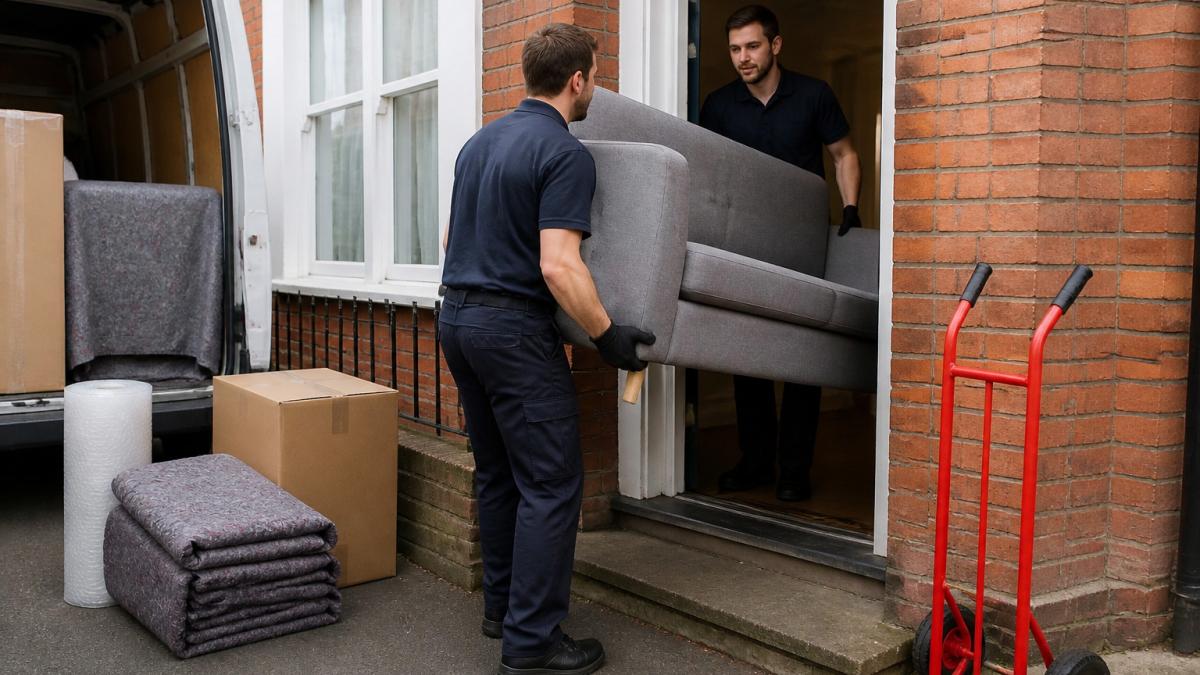
A sofa is the most common piece of furniture to cause injury or damage during a move. It is bulky, heavy and difficult to balance, and it often fails on a staircase or a tight turn.
Lifting, Carrying and Avoiding Injury
Plan the route before you lift. Clear the path, check where the sofa must turn, and remove any obstacles along the way. Lift with the legs rather than the back, keep the load close to your body, and communicate clearly with the person on the other end. Tilt the sofa to pass through a narrow doorway rather than forcing it straight.
Loading, Securing and Transporting Your Furniture
Loading is where a good plan is tested. For large items that need to travel securely, the pallet and furniture delivery option is designed for this kind of move. A well-wrapped piece can still be ruined by a poorly loaded van, and a badly distributed load can make the vehicle unsafe to drive. Treat loading as three separate jobs: choosing the vehicle, distributing the weight, and securing the load.
Choosing the Right Vehicle for the Load
Match the vehicle to the largest item and the total volume, not to guesswork. A compact van suits a small flat with a few pieces; a long-wheelbase van or a Luton van with a tail lift is better for a full household or for heavy items that are hard to lift up a ramp.
For heavy or awkward items, a tail lift removes the need to lift furniture to shoulder height, which is where most loading injuries happen.
Weight Distribution and Stacking Order
Load the heaviest pieces first, low down and over the axle line rather than at the very back. Distribute weight evenly from side to side, because an uneven load affects braking and cornering.
Stack lighter, boxed items on top of heavier furniture, and keep the floor clear around the doors so nothing has to be climbed over.
Securing the Load and Checking It
Furniture that can move in transit is far more likely to be damaged, even if it was well wrapped.
Before you set off, check that nothing can slide forward under braking, that tall items cannot topple, and that the doors close without pressure on the load. Re-check the straps after the first few miles, because loads settle, and again at any stop on a longer journey.
Preventing Damage, Documenting Condition and Handling Claims
Before the van leaves, photograph each piece of furniture from several angles and note any existing marks. If you need somewhere to hold furniture before or after the move, storage options can help avoid rushed or damaging handovers. Keep a copy of the inventory with the photographs. If something arrives damaged, record it with dated photographs at the new address and report it to the transport provider as soon as possible.
Booking Your Furniture Transport with Direct Couriers London Ltd
Furniture transport is a job where planning, measuring, protecting and documenting all matter. Direct Couriers London Ltd offers nationwide courier and storage solutions, with same-day and next-day services, fully insured delivery and instant tracking, so you can follow your furniture from collection to drop-off. Contact us today to talk through your move and request a quote.
Frequently Asked Questions
What should I do before moving furniture to a new house?
Measure every large piece and the doorways, staircases and lifts it must pass through at both addresses. Confirm parking and access for the van, and check whether building management needs notice for a lift booking. Clear a route through each property, and list which items you will disassemble. Doing this early gives your transport provider the details needed to quote accurately and avoids surprises on moving day.
How do I protect furniture when moving house?
Wrap each piece in a moving blanket or stretch wrap, and pad corners, legs and glass with bubble wrap or cardboard. Remove drawers, cushions and loose fittings, and tape down any hardware so it cannot scratch surfaces. Keep upholstered items covered and upright in the van, and avoid stacking heavy objects on softer pieces. Protection is most effective when combined with secure loading.
How do I prepare a sofa or wardrobe for transport?
For a sofa, remove the legs and cushions if they unscrew or detach, then wrap the frame fully. For a wardrobe, take out shelves, drawers and rails, and secure the doors with tape so they stay closed. Label any removed screws and fittings in a bag attached to the piece. Keep the wardrobe upright during transit and mark it as fragile or heavy so the team handles it correctly.
Can I move furniture without hiring a removal company?
Yes, for small loads you can move furniture yourself, provided you have suitable transport and enough helpers. Use a van large enough for the largest piece, and borrow or hire equipment such as trolleys, straps and blankets. For heavy or awkward items, or several floors without a lift, professional help reduces the risk of injury and damage. Check your van insurance before carrying items for others.
What should a furniture moving checklist include?
A useful checklist covers measurements and access routes, a list of items to disassemble, protective materials, a booking date and time, parking arrangements, and a record of each item's condition with photographs before loading. It should also include a note of who holds the keys at each address and any building access rules. Tick each item off as it is completed so nothing is missed on the day.
How far in advance should I arrange furniture transport?
Book as early as you can, particularly for weekends, month-end dates and the summer peak. Arranging transport several weeks ahead gives you more choice of dates and time slots and allows time to gather packing materials. Pricing depends on the quantity of goods, the distance, the date and whether same-day or next-day delivery is needed, so request a quote from Direct Couriers London Ltd for current prices.
What is the safest way to transport large furniture?
Use a vehicle with enough height and length for the piece, secure the load with straps or ratchet tie-downs, and keep heavy items low and against the van wall. Upright items such as wardrobes should be strapped so they cannot shift, and fragile items should be placed away from the load's heaviest parts. Two or more people should handle large pieces, and lifting should be done with the legs rather than the back.
How can I compare furniture transport services?
Compare the vehicles offered and whether they suit your largest item, the insurance cover provided and how claims are handled, the availability of same-day or next-day slots, and whether live tracking is included. Ask how protection materials are supplied and whether the team will disassemble and reassemble furniture. Request a written quote so you can compare like for like, and ask for current prices directly from the provider.