 how-to
How to Hire a Tail Lift Van in London
Quick Summary
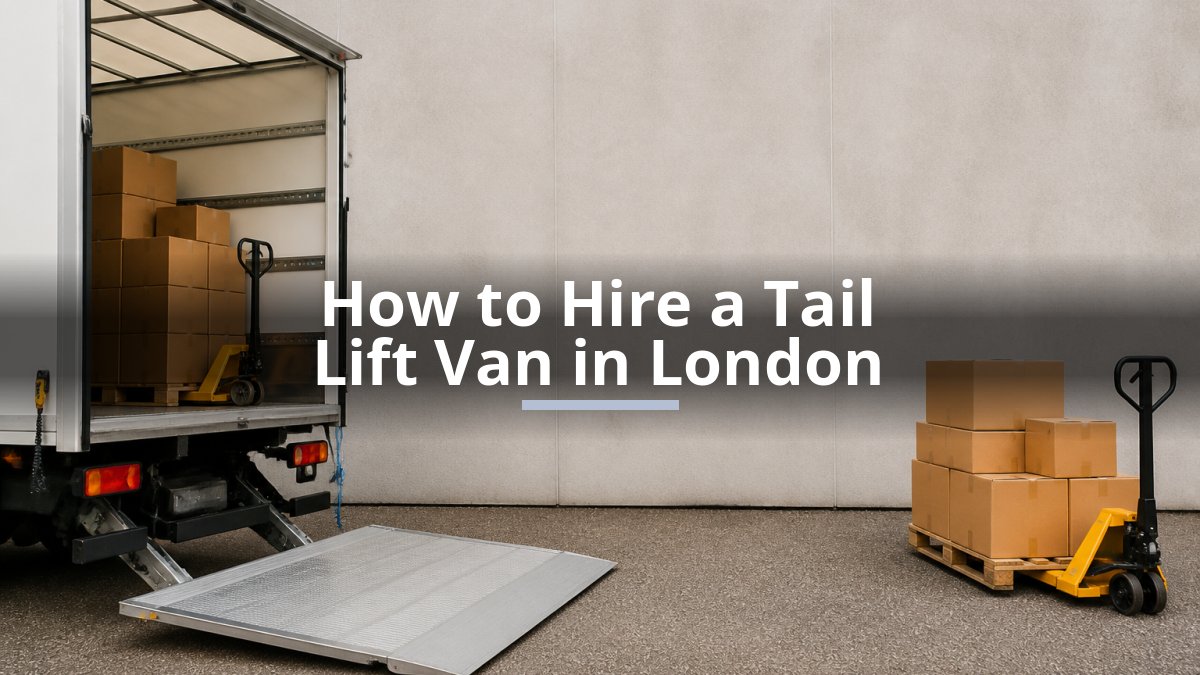
A tail lift van is a Luton-style van with a hydraulic platform at the rear that lowers to ground level, so heavy or awkward items can be loaded without lifting them by hand. It is the practical choice for house moves, furniture, appliances and pallets that a single person cannot safely lift.
- Hire one when the load weighs more than a single person can safely lift.
- Check both the van's payload and the tail lift platform's own load rating before booking.
- Confirm Ultra Low Emission Zone compliance and who pays any Congestion Charge during the hire.
- Compare total cost including VAT, insurance excess, deposit, mileage limit and fuel policy.
- Secure pallets with ratchet straps anchored to fixing points before the van moves.
Table of Contents
- What a Tail Lift Van Is Used For and When to Hire One
- Choosing the Right Size and Tail Lift Van Payload Capacity
- Checking Load Space, Lift Limits and Access Before You Book
- How to Secure Pallets in a Van Before Loading
- Self-Drive or Tail Lift Van Hire With a Driver
- Understanding Tail Lift Van Hire Cost and What Affects the Quote
- Booking Your Tail Lift Van and Next Steps With Direct Couriers London Ltd
- Frequently Asked Questions
What a Tail Lift Van Is Used For and When to Hire One
A tail lift van is a Luton-style van fitted with a hydraulic platform at the rear, which lowers to ground level so heavy or awkward items can be loaded without lifting them by hand. For most people, that single feature decides whether a job is manageable alone or needs a team. A tail lift van is the practical choice when items are too heavy or bulky to carry up a ramp, when pallets are involved, or when the load needs to come off the ground at the right height.
Hiring one makes most sense for house moves, furniture deliveries, moving a washing machine or fridge freezer, shifting office equipment, or collecting stock for a small business. We recommend hiring a tail lift van when the load weighs more than a single person can safely lift, or when the job involves repeated loading and unloading. If the goods fit comfortably in a standard car or a small panel van, a tail lift is unnecessary extra cost.
Watch out: the tail lift is a small platform that passing drivers can miss, and overloading it is a real safety risk. Always stay within the stated limit and keep people clear while the platform moves.
Choosing the Right Size and Tail Lift Van Payload Capacity
Size and payload are two different things, and confusing them is the most common booking error. Cargo volume tells you how much space there is. Payload tells you how much weight the van can carry. A van can have plenty of space and still be unsafe for a heavy load.
Payload varies by vehicle, so check the exact figure for the van you are booking rather than assuming it.
Work out your total load before you choose. Add up the heaviest items, then include any pallets, packaging and fuel margin. If the total sits close to the payload limit, step up a size rather than running at the edge of capacity. Overloading affects braking, handling and the tail lift itself.
Checking Load Space, Lift Limits and Access Before You Book
Measure your largest item and compare it with the cargo area's internal height, width and length. Remember that the tail lift platform has its own load rating, which can be lower than the van's overall payload, so check both figures before you book.
Access is where London jobs are won or lost, and it deserves as much planning as the load itself.
Emission and congestion charges. The Ultra Low Emission Zone covers all boroughs, and a non-compliant van attracts a daily charge (Ultra Low Emission Zone). The central Congestion Charge zone applies during its operating hours on weekdays (Congestion Charge (Official)). For a deeper explanation of standard pallet weight limits, read our guide to pallet weight limits for shipping.
Height and width restrictions. Many residential streets, mews and service roads have width restrictions, and some have height barriers at car parks and loading areas. A Luton van with a tail lift is tall, so check the height of any barrier, archway or underground car park you intend to use.
Loading bays and parking. Loading bays in town centres often have time limits and may be suspended for works or events. Red routes have strict stopping restrictions, and parking enforcement is camera-based in many areas.
The route from kerb to door. Steps, narrow doorways, lifts, stairwells and shared entrances all affect how the load moves from the platform to its final position. Walk the route before the day and note any pinch points. If the platform cannot be lowered safely because of parked cars or street furniture, the job stalls.
Timing. Plan loading and unloading around school run hours, refuse collection and peak traffic. A tight kerbside slot that is only free for 20 minutes will not accommodate a full house move, so book a longer suspension or choose a quieter window.
If you are unsure whether a location is workable, describe the address and access to the hire team when you book. A firm that knows the area can tell you whether a smaller vehicle, a different time, or a parking suspension is the sensible choice.
How to Secure Pallets in a Van Before Loading
Pallets must be secured before the van moves, or the load can shift under braking and damage both goods and vehicle. Start by placing the heaviest pallets at the front of the cargo area, close to the bulkhead, and work backwards so weight is spread evenly across the axle.
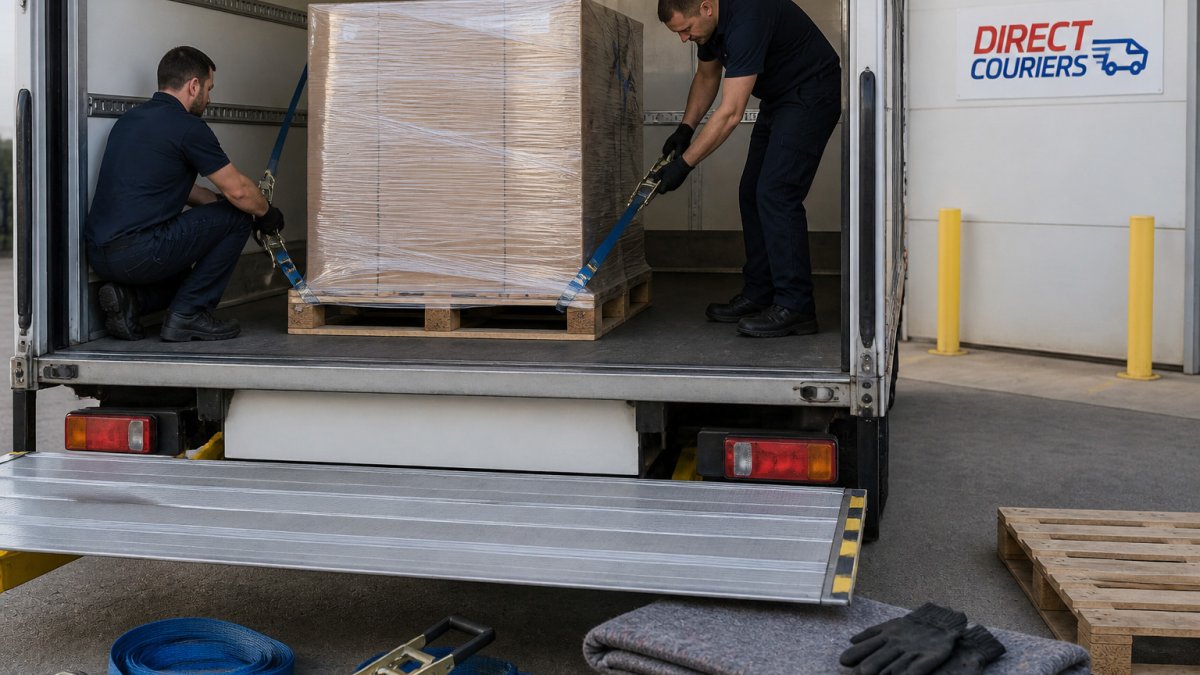
Use ratchet straps or load restraint straps anchored to the van's fixing points, and tighten each one until the pallet cannot move when pushed. Place corner protectors where straps cross sharp edges. Check the straps again after the first few miles, since loads can settle during early driving.
Common mistakes include leaving gaps that let pallets slide, using only one strap per pallet, and stacking goods higher than the van's internal height allows. Keep loads low and stable, and never let a pallet overhang the tail lift platform. Securing heavier or more complex cargo requires a different approach, often necessitating the professional oversight provided by contract lift services.
Self-Drive or Tail Lift Van Hire With a Driver
You have two broad options: hire the van and drive it yourself, or book a van with a driver. Self-drive suits people who are confident driving a larger vehicle, who know the route, and who can handle the loading. It usually costs less in direct fees, but you carry the responsibility for driving, parking and loading time.
A van with a driver suits jobs with tight deadlines, heavy loads, unfamiliar roads, or a team that cannot spare people to drive. A courier service that handles delivery end to end can be the simpler route when you do not want to manage a hired vehicle yourself. You can compare our courier service with a driven option before you decide. Compare the total time and effort of each option, not just the hire fee.
Understanding Tail Lift Van Hire Cost and What Affects the Quote
Headline daily rates for a tail lift van are only the starting point.
The hire fee itself. Short-term self-drive hire is usually charged per day, with a weekend or 24-hour rate that differs from a weekday rate.
VAT. Most hire firms quote rates excluding VAT, and VAT at the standard rate is added to the invoice. A quote of £X per day plus VAT is not the same as £X all-in, so compare like with like.
Insurance and excess. Collision damage cover is normally included, but with an excess, the amount you pay towards repairs if the vehicle is damaged. Excess waiver products reduce that exposure for an extra daily charge.
Security deposit. A deposit is usually taken on a credit or debit card at collection and released after the van is returned undamaged and fuelled. The amount varies by vehicle size and hire firm.
Mileage limits. Many daily rates include a mileage allowance, with a pence-per-mile charge beyond it.
Fuel policy. The common arrangement is collect full, return full. If you return the van short of fuel, the refuelling charge plus an administration fee is typically higher than pump price.
Delivery and collection. Having the van delivered to your address and collected afterwards saves time but adds a charge, sometimes per leg.
Optional equipment. Tail lifts are often standard on Luton vans, but some firms charge extra for a sack truck, pallet truck, extra straps, or a sat-nav. Ask what is included as standard.
Congestion Charge and ULEZ. If your route takes you through the central Congestion Charge zone, the charge is payable by the hirer unless the hire firm explicitly includes it.
Because rates change with dates, vehicle size and demand, no article can give a reliable figure. Request a written quote that itemises each of the components above, and ask directly what the total payable will be if you return the van on time, undamaged and full of fuel.
The headline daily rate is only part of the total, so the article breaks the cost into these components to compare.
| Cost component | What to check | Why it matters |
|---|---|---|
| Hire fee | Weekend or 24-hour rate | Short hires may be charged as multiple days |
| VAT | Is it included in the quote? | Standard rate is usually added on top |
| Insurance excess | Amount and waiver cost | Excess is what you pay towards repairs |
| Security deposit | Amount and release timescale | Ties up funds for several working days |
| Mileage limit | Included allowance and pence-per-mile charge | Longer runs can add significant cost |
| Fuel policy | Collect full, return full | Short return incurs refuel charge plus admin fee |
| Congestion Charge and ULEZ | Who pays the charge | Hirer is normally liable unless stated otherwise |
Booking Your Tail Lift Van and Next Steps With Direct Couriers London Ltd
Start by listing your load: the heaviest item, total weight, number of pallets and the route. Use that to pick a van size and confirm the payload and platform limits. Then decide between self-drive and a driver, and request a written quote that covers insurance, mileage and any extra fees.
When you are ready, contact the Direct Couriers London Ltd team to check availability and get a quote for your job. If you are unsure which vehicle fits your load, browse our van fleet to compare sizes and payloads before you commit. For palletised goods, check our pallet delivery service to see whether it suits your shipment.
Frequently Asked Questions
What is a tail lift van used for?
A tail lift van has a hydraulic platform fitted at the rear that lowers to ground level, so heavy or bulky items can be loaded and unloaded without ramps or lifting them up a step. They are commonly used for house moves, furniture deliveries, palletised stock, and heavy equipment. The lift is particularly useful where there is no loading bay, because it lets one or two people move items that would otherwise need several helpers. Check the lift's rated capacity before loading, and never exceed it.
What size tail lift van do I need?
Choose by the largest item and the total volume rather than by the number of items. A Luton van with a tail lift is typically suited to full house moves and bulky loads, while smaller vans suit single pallets or a few boxes. Measure the largest item and check that its height and width fit the cargo area, and that the door opening allows it through. If you are unsure, describe your load to the hire provider before booking so they can recommend a suitable vehicle.
Can I hire a tail lift van with a driver?
Yes, many providers offer a tail lift van with a driver, which is useful if you are not confident driving a larger vehicle in London or if you do not want to handle the loading lift yourself. You can contact Direct Couriers London Ltd to discuss your job and what service is available. Ask what the driver is responsible for, such as loading, securing, and unloading, before you book.
How long does tail lift van hire usually take?
Hire periods vary with the job, so agree the collection time, return time, and any extra time you may need before booking. Allow time for loading, securing the load, and the journey, and factor in London traffic and parking restrictions. For current periods and pricing, contact Direct Couriers London Ltd directly.