 how-to
How to Pack Antiques for Shipping: A Step-by-Step Guide
Table of Contents
- Assess Your Antique and Gather Supplies
- Best Packing Materials for Fragile Items
- Wrapping and Cushioning Methods for Safe Transit
- How to Secure Drawers for Furniture Transport
- Creating Bespoke Wooden Crates for High-Value Pieces
- Shipping Insurance for High-Value Antiques
- Labelling, Sealing, and Preparing for Pickup
- Professional vs. DIY Packing: When to Call the Experts
- Frequently Asked Questions
Last Updated: September 21, 2026
Assess Your Antique and Gather Supplies
Before you pack antiques for shipping, take time to evaluate what you're working with. Different pieces need different approaches. A fragile porcelain figurine requires entirely different protection than a solid oak desk.
Start by documenting your antique. Take clear photographs from multiple angles. Note any existing damage, cracks, or weak points. This matters for insurance claims if something goes wrong in transit. Measure the item's dimensions and weight; you'll need these numbers for your courier.
Next, gather your packing supplies. Quality materials make the difference between a safe arrival and a costly loss.
Essential packing supplies you'll need:
- Bubble wrap (minimum 12mm thickness)
- Packing peanuts or foam chips
- Kraft paper and newsprint
- Corrugated cardboard boxes in various sizes
- Packing tape (heavy-duty, 48mm width)
- Protective foam sheets
- Tissue paper for delicate surfaces
- Wooden crating materials (for high-value pieces)
Don't skimp on materials. The cost of quality supplies is minimal compared to the value of most antiques.
Choose a clean, flat workspace for packing. Dust and debris can scratch surfaces. Lay down clean kraft paper or newsprint to protect your antique during the wrapping process.
Best Packing Materials for Fragile Items
The right packing materials provide shock absorption and prevent movement inside the box. Fragile items need multiple layers of protection.
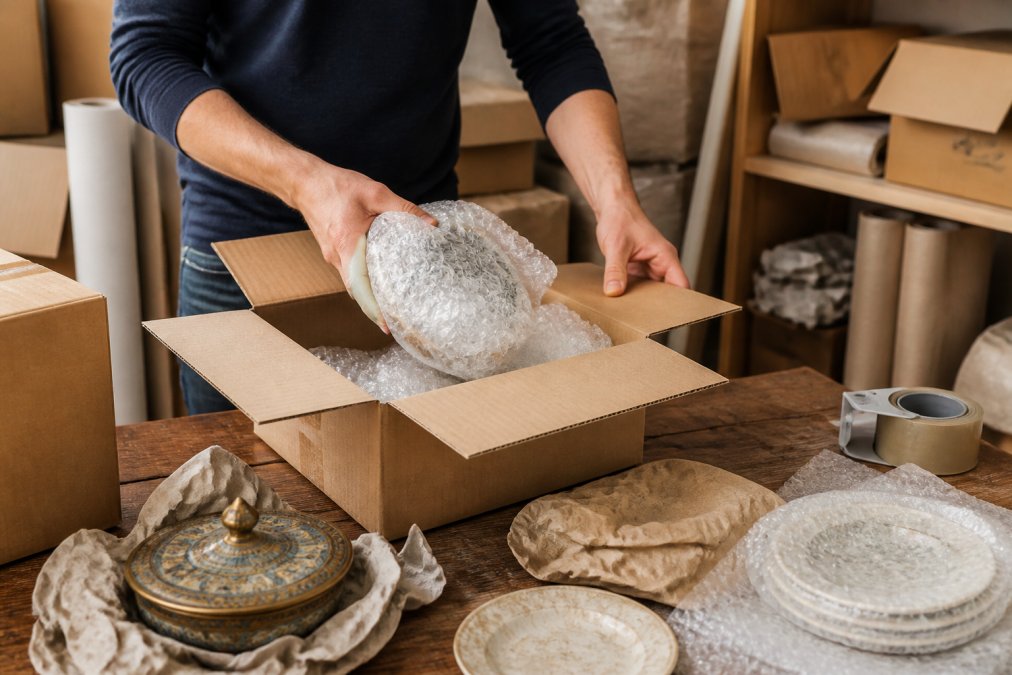
Bubble wrap is your first line of defence. Wrap items in at least two layers, with the bubbles facing inward toward the item. This creates a cushioning barrier that absorbs impact during transit. For particularly delicate pieces, use bubble wrap with larger bubbles (12-16mm) rather than small bubble wrap.
Packing peanuts fill void spaces and prevent items from shifting. Use them generously. Loose items that move during transport are far more likely to break. Fill all gaps inside your box completely. A good rule: if you can shake the box and hear movement, you need more packing peanuts.
Kraft paper protects surfaces from scratches and dust. Wrap antiques in several layers before applying bubble wrap. This prevents bubble wrap from directly contacting delicate finishes, veneers, or painted surfaces.
Protective foam sheets work well for flat items like mirrors, artwork, or glass-topped tables. Cut foam to size and create a sandwich: foam on top, foam on bottom, protective wrapping around the sides.
Corrugated cardboard boxes provide structural integrity. Double-wall corrugated is stronger than single-wall and worth the extra cost for valuable pieces. Ensure your box is sturdy enough to support the weight without collapsing.
For high-value antiques, skip standard boxes entirely. Move to bespoke wooden crates instead. Wooden crates provide superior structural integrity and protection during long-distance shipping.
Wrapping and Cushioning Methods for Safe Transit
Proper wrapping technique prevents surface damage and keeps internal components stable. This step determines whether your antique arrives pristine or scratched.
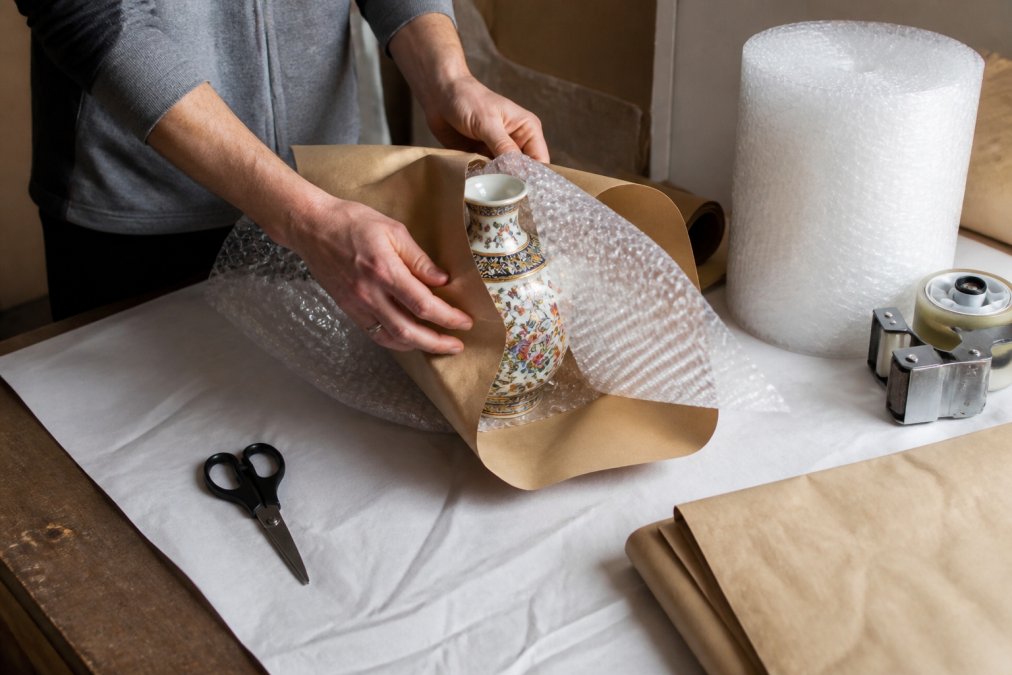
Start with a base layer of kraft paper. Lay the paper flat and position your antique in the centre. Wrap the paper around the item, overlapping edges by at least 10cm. Secure with low-tack tape; you want it to hold without damaging the antique's finish when removed later.
Next, apply bubble wrap. Position the item in the centre of a large sheet of bubble wrap. Roll it completely, ensuring overlap of at least 15cm. Tape the seam. Then apply a second layer of bubble wrap, rotating 90 degrees so seams don't align. This cross-pattern provides better protection against impact from any direction.
For items with protruding parts (handles, legs, decorative elements), wrap these separately first. Use extra padding around vulnerable areas. Wrap feet and legs individually with bubble wrap before wrapping the entire piece.
Cushioning strategy for different antique types:
- Ceramics and porcelain: three layers of bubble wrap plus kraft paper base
- Glass and mirrors: protective foam sheets plus bubble wrap
- Wooden furniture: kraft paper plus bubble wrap, extra padding around joints
- Upholstered items: kraft paper only (bubble wrap can damage fabric)
- Metal items: kraft paper plus light bubble wrap to prevent oxidation
Double-Boxing Technique
Double-boxing provides maximum protection for high-value antiques. This professional technique creates a shock-absorbing air gap between two boxes.
Wrap your antique fully as described above. Place it in your first box with generous packing peanuts on all sides, minimum 5cm of void fill on every surface. The wrapped item should not touch the box walls. Seal this inner box securely with heavy-duty packing tape.
Now place this sealed box inside a larger outer box. Create at least 8cm of space between the inner and outer boxes on all sides. Fill this gap completely with packing peanuts or protective foam. This air gap absorbs shock and prevents the inner box from striking the outer box during transit.
Seal the outer box with heavy-duty tape. Use the H-taping method: tape along all seams, then reinforce with additional tape running the length of the box on all four sides.
How to Secure Drawers for Furniture Transport
Furniture with drawers requires special attention. Unsecured drawers shift during transit and can damage the piece or other items in the van.
Remove drawers completely if possible. Wrap each drawer individually in bubble wrap and pack them separately. This prevents damage to drawer runners and keeps the main piece lighter.
If you can't remove drawers, secure them tightly. Use strong packing tape to tape each drawer shut. Tape should run across the drawer front and around the sides of the furniture piece, creating a continuous seal. Use at least three horizontal strips of tape per drawer.
For valuable antique furniture, consider using wooden blocks or corner protectors. These brace the furniture and prevent drawers from opening under pressure or vibration.
Protect the furniture's exterior with kraft paper and bubble wrap. Pay special attention to corners and edges where impact is most likely.
Creating Bespoke Wooden Crates for High-Value Pieces
For antiques worth thousands of pounds, a bespoke wooden crate is the gold standard. Custom crating provides superior protection and professional presentation.
A proper wooden crate uses timber framing with interior dimensions slightly larger than your antique. The frame is sheathed with plywood, creating a rigid box that resists crushing and impact. For heavier items, ensure the timber used is sufficiently strong.
Build your crate from softwood or hardwood depending on weight. For very heavy pieces, use hardwood. For lighter items, softwood is sufficient. Ensure all joints are reinforced with corner braces.
Line the interior with protective foam or kraft paper. Mount your wrapped antique inside using wooden blocks or foam supports that prevent movement. The item should be suspended slightly away from all crate walls.
Seal the crate completely with plywood panels on all sides. Use galvanised nails or screws; they won't rust and stain the wood. Reinforce corners with metal corner brackets.
Add handles cut into the crate sides for easier handling.
Shipping Insurance for High-Value Antiques
Insurance protects your investment if something goes wrong. Don't skip this step, especially for valuable pieces. It's crucial to understand the terms of your policy, ensuring it covers the full replacement value of the antique and any potential damage during transit. Many specialist insurance providers offer tailored policies for high-value goods.
Labelling, Sealing, and Preparing for Pickup
Clear labelling ensures your package is handled correctly and reaches its destination safely.
Label your package on multiple sides. Use large, clear text. Include:
- "FRAGILE" in red letters
- "THIS SIDE UP" with an arrow
- "HANDLE WITH CARE"
- Destination address and postcode
- Your contact phone number
- Item description (e.g., "Antique porcelain vase")
Prepare documentation for the courier. Provide:
- Itemised packing list
- Declared value and insurance amount
- Photographs of the packed item (before sealing)
- Special handling instructions
- Recipient contact information
- Preferred delivery date and time window
Professional vs. DIY Packing: When to Call the Experts
Some antiques are worth packing yourself. Others require professional expertise.
Pack it yourself if:
- The item is under £500 in value
- It's a standard shape (box, frame, simple furniture)
- You have time and a clean workspace
- The item isn't irreplaceable or historically significant
- You're shipping domestically within the UK
Fragile items that fall outside these criteria often require specialized handling, particularly when shipping collectible figures that demand precise internal support to prevent structural damage during transit.
Hire professionals if:
- The item exceeds £1,000 in value
- It's an unusual shape (sculpture, ornate furniture, delicate assemblies)
- It's an heirloom or historically important piece
- International shipping is required
- You lack packing experience
- The item has existing damage or fragile components
| Packing Method | Best For | Protection Level | Cost |
|---|---|---|---|
| Standard box with bubble wrap | Items under £500, standard shapes | Moderate | Low |
| Double-boxing technique | Items £500-£2,000, fragile pieces | High | Moderate |
| Bespoke wooden crate | Items over £2,000, irreplaceable pieces | Maximum | Higher |
| Professional packing service | High-value antiques, complex items, international shipping | Maximum | Higher |
Frequently Asked Questions
What is the safest way to ship high-value antiques?
The safest approach combines multiple protective layers: wrap items individually in acid-free tissue, add bubble wrap for shock absorption, use double-boxing with void fill between boxes, and secure everything with quality tape. For valuable pieces, bespoke wooden crates provide superior structural integrity. Always obtain shipping insurance that covers the full replacement value, and use a courier service with experience handling fragile goods and full fleet insurance coverage. Direct Couriers London Ltd offers specialised services for such items.
Can I ship something just wrapped in bubble wrap?
Bubble wrap alone is insufficient for antiques during shipping. Transit involves multiple handling points, vibration, and potential impacts that single-layer protection cannot withstand. Proper packing requires bubble wrap as one layer within a multi-stage system: protective tissue underneath, bubble wrap for cushioning, void fill in the box, and ideally a secondary outer box. This layered approach absorbs shock and prevents movement that causes damage.
Do I need specialist insurance for shipping antiques?
Yes, standard shipping coverage rarely covers the full replacement value of antiques. Specialist shipping insurance for high-value antiques accounts for the item's age, rarity, and market value. Before purchasing insurance, obtain a professional valuation of your antique. Declare the full value to your courier and verify the policy covers transit damage, theft, and loss. Many professional couriers offer comprehensive transit insurance as part of their service.
What materials are essential for packing fragile antiques?
Essential materials include acid-free tissue paper for direct contact, bubble wrap for impact resistance, corrugated cardboard boxes in sturdy condition, packing peanuts or crinkled paper for void fill, quality packing tape, and wooden blocks or corner protectors for furniture. For high-value items, consider protective foam sheets and blanket wrap. Avoid newspaper and coloured paper that can transfer ink to finishes. Use moisture barriers such as silica gel packets to protect against humidity during transit.