 comparison
Secure Pallet Storage Services in London: What to Compare
Quick Summary
Secure pallet storage keeps your palletised goods in a managed London warehouse with controlled access, monitoring and handling included, so you don't have to run the facility yourself. Compare providers on the total cost for your period of need, using the same five cost lines in each quote.
- Ask for the storage rate per pallet per week and per month, in GBP, and whether reserved positions are charged.
- In and out charges can exceed the storage rate itself on short contracts, so compare them directly.
- Confirm handling, collection and delivery rates, and whether quotes include VAT.
- Ask for a sample access log and the CCTV retention period, and confirm insurance cover in writing.
- Prepare pallet count, dimensions, weight and goods type so every provider quotes on the same details.
Table of Contents
- What Secure Pallet Storage Covers and Who Uses It
- Racked Bays Versus Floor Storage: Choosing a Format
- Pallet Storage Costs: What to Ask For in a Quote
- Pallet Storage Security Features to Verify in Practice
- Pallet Storage With Collection and Delivery: Handling Logistics
- Short-Term Pallet Storage: Flexibility, Contracts and Cut-Offs
- Booking Your Pallet Storage: Information to Prepare for a Quote
- Frequently Asked Questions
What Secure Pallet Storage Covers and Who Uses It
Secure pallet storage keeps palletised goods in a managed warehouse, with controlled access, monitoring and handling included in the service. For London businesses, it means your stock sits in a facility you don't have to run yourself. Most providers offer a range of pallet storage options, from a single pallet to a full warehouse bay.
The main users are small and medium-sized businesses that hold stock but lack the space or staff to store it safely. Online sellers of bulky furniture, e-commerce retailers holding overflow inventory and office managers moving equipment during a renovation all fit this profile. Homeowners storing furniture during a house move can also use the same service.
When you compare providers, check what the service actually covers. Some quote a storage rate only, while others bundle in handling, insurance and reporting. Confirm whether you get access to your stock on your own schedule, or only during set hours.
Racked Bays Versus Floor Storage: Choosing a Format
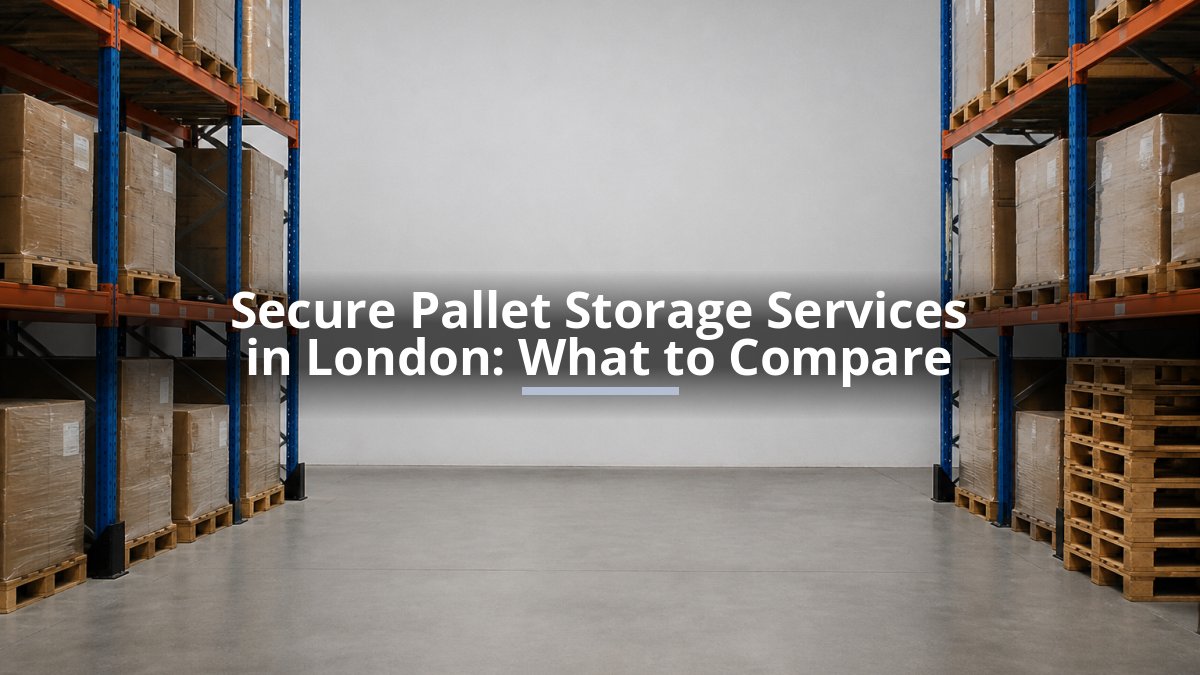
Storage providers usually offer two formats: racked bays and floor storage. Racked bays place each pallet on a steel rack, which lets you stack several levels and use the vertical space. Floor storage keeps pallets on the ground, often in caged areas, and suits heavy or irregular goods that cannot go on a rack.
Racked bays tend to suit businesses holding many pallets of the same product, where stock rotation matters. Floor storage works better for fewer, larger or oddly shaped loads, and for items the racking cannot safely take. Ask the provider which format they recommend for your goods, and why.
Check the weight limits for each format before you commit. A pallet that fits the bay dimensions may still exceed the rack's load rating.
Pallet Storage Costs: What to Ask For in a Quote
Pricing for pallet storage depends on the number of pallets, the length of the contract, the storage format and any handling you add. Most providers in this market quote on request rather than publishing fixed rates, so you won't get a reliable figure without a written quote.
The useful way to compare is to build a total cost for your actual period of need, not to compare headline weekly rates. Ask for each quote to be broken into the same five lines so the numbers sit side by side.
Storage rate. Ask for the rate per pallet per week and per month, in GBP, and whether it is charged on pallets held or on pallet positions reserved. The difference matters if your stock fluctuates: a reserved-position charge applies even when the bay is empty. Ask whether there is a minimum charge per week or per month regardless of volume.
In and out charges. Most providers charge separately for putting pallets away and for retrieving them. Ask for the rate per pallet in and per pallet out, and whether a pallet retrieved and returned in the same week is charged once or twice. These charges often exceed the storage rate itself over a short contract.
Handling fees. Picking, labelling, repalletising, shrink-wrapping and loading are usually priced per pallet or per hour. Ask which tasks are included in the storage rate and which are billed separately, and request the hourly rate for ad hoc work.
Collection and delivery. If you need the provider to move pallets, ask for the rate per pallet or per run, the minimum charge per collection, and whether the charge varies by postcode or by vehicle size. A tail-lift Luton van and a compact van carry different loads and are usually priced differently.
Minimum term and notice. Ask for the minimum contract length, the notice period to end it, and whether early termination carries a charge. Rolling monthly terms usually cost more per week than a fixed six- or twelve-month term, so compare the total for your expected duration rather than the weekly figure.
Also ask for insurance cover and any excess, and whether the quote includes VAT. A quote that excludes VAT can look cheaper than it is.
Watch out: A low weekly rate can hide charges for entry, exit and handling. Compare the total cost for the period you actually need, not just the headline rate, and ask each provider to confirm the quote in writing against the same five lines.
The article breaks a storage quote into five lines, which makes providers easier to compare side by side.
| Cost line | What to ask for | Watch for |
|---|---|---|
| Storage rate | Rate per pallet per week and per month, in GBP | Reserved-position charges and minimum charges |
| In and out charges | Rate per pallet in and per pallet out | Often exceed the storage rate on short contracts |
| Handling fees | Hourly rate for ad hoc work | Picking, labelling, shrink-wrapping billed separately |
| Collection and delivery | Rate per pallet or per run, and minimum charge | Varies by postcode and vehicle size |
| Minimum term and notice | Contract length, notice period, early termination charge | Rolling terms cost more per week than fixed terms |
Pallet Storage Security Features to Verify in Practice
Security claims are easy to make and harder to check, so ask the provider to show you rather than tell you. A credible facility should be able to walk you through four layers: perimeter and access control, monitoring and recording, fire and environmental protection, and stock accountability.
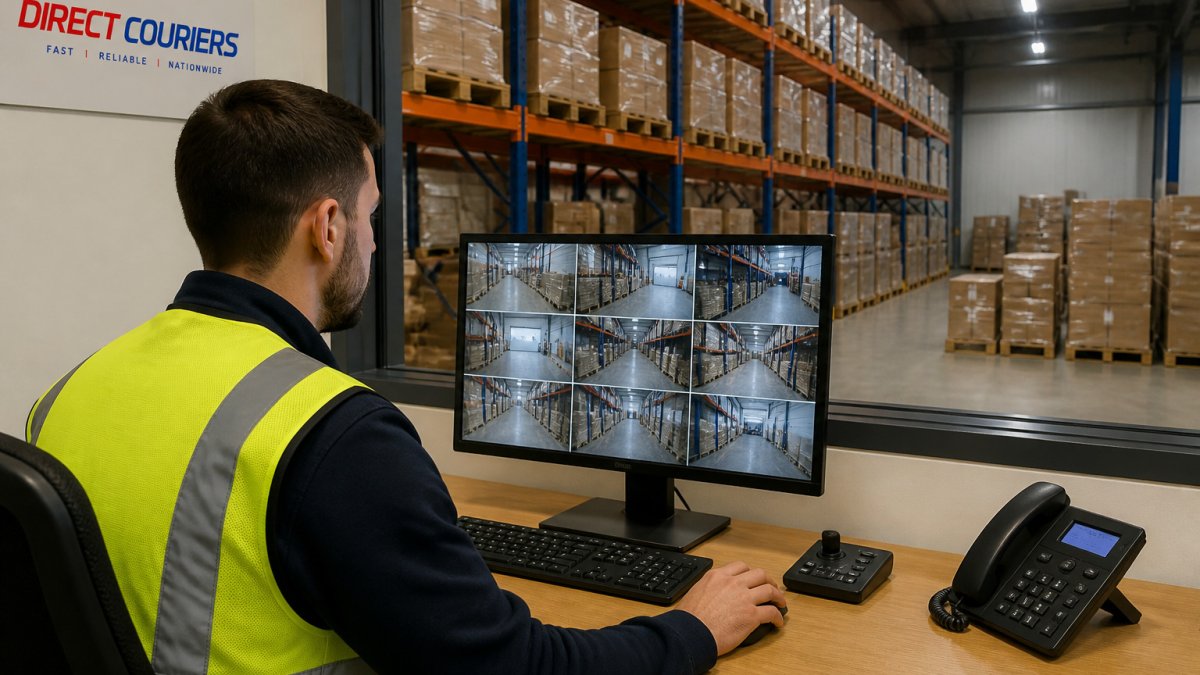
On access control, ask how many entry points the storage area has, whether they are gated or fob-controlled, and who holds keys or codes. A common pattern is a single controlled goods-in door with a separate pedestrian entrance, visitor sign-in and escorted access to the racking. Ask whether your own staff can enter unescorted and, if so, what record is kept of each visit. Request a sample access log, a provider that cannot produce one is relying on trust rather than process.
On monitoring, ask whether cameras cover the racking aisles, the loading bay and the caged floor-storage area, and how long footage is retained. Retention periods vary widely; 30 days is a common baseline, but confirm the figure in writing. Ask whether the system records continuously or on motion, and whether footage can be pulled for a specific date if you report a discrepancy.
On fire and environmental protection, ask whether the site has a current fire risk assessment, whether the racking is sprinklered, and what detection is fitted. For goods sensitive to damp or temperature, ask whether the warehouse is ambient-only or has a temperature-controlled zone, and what humidity range is maintained. These details matter more than a generic "secure warehouse" claim.
On stock accountability, ask how pallets are recorded on arrival, by pallet count, by label, by SKU, and how often you receive a stock report. Weekly reporting is typical; daily is available from some providers at a premium. Ask what happens when a count does not match: who investigates, within what timescale, and what evidence you receive.
Visit the facility if you can. Look at how staff sign visitors in, whether gates and doors close properly, and how the racking and caged bays are secured. Confirm the insurance terms in writing: what the cover includes, what it excludes, the maximum payout for a single claim, and whether cover is held by the provider or must be arranged by you. Cover that does not match the value of your stock leaves you exposed.
Pallet Storage With Collection and Delivery: Handling Logistics
Many businesses don't want to move pallets themselves, so they look for storage that includes collection and delivery. Direct Couriers London Ltd offers same-day and next-day services with a fleet that runs from compact vans to tail-lift Luton vans.
Before you book, confirm the collection window, the delivery window and whether the driver will wait for loading. Ask how you'll track the consignment. If your customers expect goods by a set date, agree a fallback plan with your provider.
Short-Term Pallet Storage: Flexibility, Contracts and Cut-Offs
Short-term storage suits a few weeks of extra stock, a seasonal peak or the months a renovation takes. Ask whether the provider accepts rolling monthly contracts or requires a fixed term. A flexible contract costs more per period, but it avoids paying for space you no longer need.
Check the operational cut-offs carefully. Many providers set a deadline for booking a collection or delivery to be processed the same day. Missing that cut-off can push your stock out by a full day or more. Ask for the cut-off times in writing, along with the notice period for ending the storage.
Booking Your Pallet Storage: Information to Prepare for a Quote
A precise quote depends on precise details. Have these ready before you contact a provider:
- Number of pallets and their dimensions in millimetres
- Weight per pallet in kilograms
- Type of goods, including any that are hazardous, perishable or high-value
- Expected storage length and whether it may change
- Whether you need collection, delivery or both, and from which postcodes
- Your access requirements, such as loading bay size and opening hours
Send the same information to each provider you compare, so the quotes are directly comparable. A quote built on vague details will often change once the real specifications come to light.
Frequently Asked Questions
How much does pallet storage cost?
Pallet storage is usually quoted on a per-pallet basis, and the price depends on pallet count, storage duration, the storage format (racked or floor) and whether handling is included. Because the supplied research does not confirm current rates for London, the most reliable approach is to request an itemised quote and compare what is included, such as receiving, handling, insurance and any minimum term. Direct Couriers London Ltd provides tailored pricing, so check the website or contact the team for a current quote based on your requirements.
What security features should a pallet storage warehouse have?
Look for controlled access to the building and storage areas, CCTV coverage, monitored alarms and documented procedures for who can enter and retrieve stock. Ask whether caged bays or racked sections are available for higher-value goods, and request details of insurance and liability terms in writing. Practical verification, such as asking to see the facility or how access logs are kept, gives a clearer picture than marketing descriptions alone.
Can pallet storage providers arrange collection and delivery?
Many storage providers offer collection and delivery as an add-on, but the scope varies. Confirm whether the service covers pickup from your site, delivery to multiple UK postcodes, tail-lift or Luton van access, and same-day or next-day timings. Ask about cut-off times for bookings, as these affect whether stock can be moved on the same day. Direct Couriers London Ltd offers same-day and next-day services with instant tracking across the UK, so check current availability for your route.
Is short-term pallet storage available?
Yes, many providers offer short-term pallet storage for periods such as a few weeks or months, alongside longer-term contracts. When comparing options, check the minimum term, notice period for ending storage, and whether monthly or weekly billing applies. Flexible storage suits businesses managing seasonal stock, office relocations or renovations, where the duration may change at short notice.