 comparison
Alternatives to Standard Parcel Carriers for Palletised Goods
Table of Contents
- Why Standard Parcel Carriers Fall Short on Palletised Goods
- Pallet Network vs Courier: What Changes for Palletised Goods
- Tail-Lift Pallet Delivery: When You Need It and What It Costs
- Pallet Delivery Costs: What Actually Drives the Quote
- Third-Party Logistics (3PL) for Bulky Goods: Storage, Pick and Distribution
- Choosing a Carrier for Palletised Goods: A Decision Framework by Shipment Profile
- Frequently Asked Questions
Last Updated: October 15, 2026
Why Standard Parcel Carriers Fall Short on Palletised Goods
Standard parcel carriers are built for boxes, not pallets, and that single design fact explains most of the problems sellers hit when shipping bulky goods. If you sell furniture, antiques or heavy equipment, you have probably discovered that the alternatives to standard parcel carriers for palletized goods matter more than the parcel rate card ever did. The pattern is consistent: the parcel network works beautifully until the consignment stops looking like a parcel.
Weight, size and handling limits that decide the carrier
Parcel networks cap individual items by weight and by dimensions, and they sort mechanically. Anything that needs a forklift or a tail lift sits outside that system. Once a consignment is palletised, it is freight, not a parcel, and it needs a carrier set up for it.
When a parcel carrier still makes sense
Small, light, boxed items under the carrier's limit are still cheapest by parcel. The mistake is forcing a palletised load through a parcel account because it is familiar. Match the service to the consignment, not the other way round.
Pallet Network vs Courier: What Changes for Palletised Goods
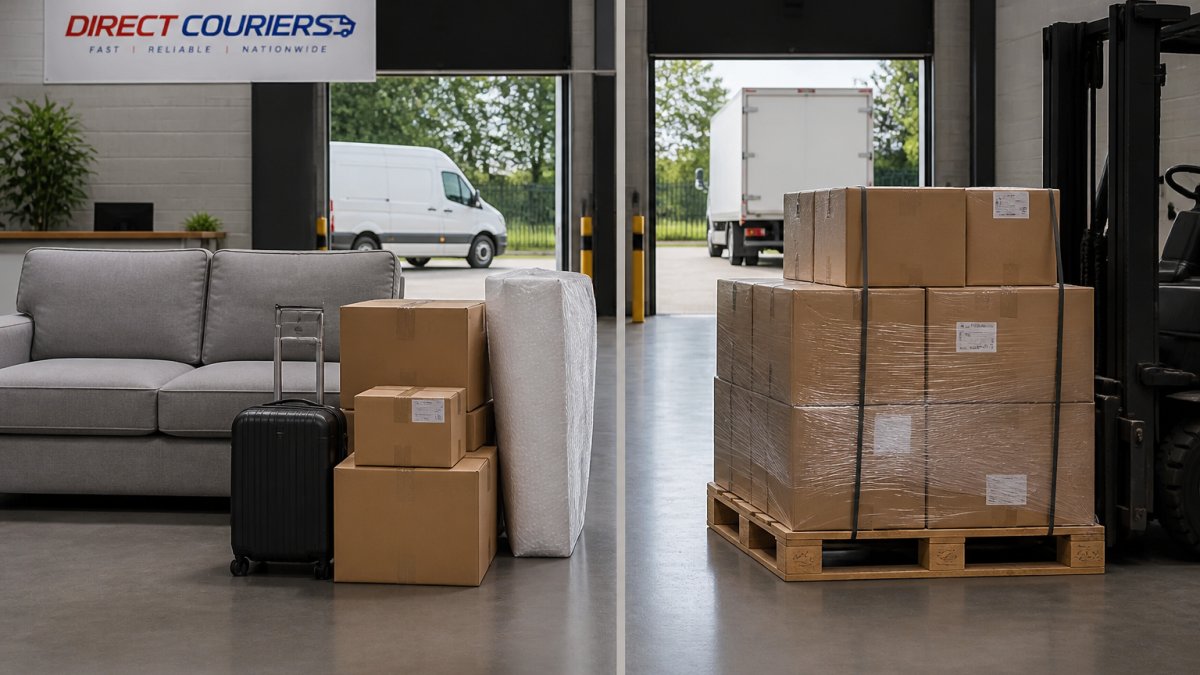
The pallet network vs courier choice comes down to volume, urgency and how much handling you can tolerate. A pallet network consolidates your pallet with others, which keeps costs down but adds handling stages and transit time. A dedicated courier keeps your goods on one vehicle from collection to delivery. The difference is not just speed and price, it is how many times your goods are touched, who is liable at each stage, and what evidence you get when the pallet arrives.
Dedicated transport versus shared network freight
Shared network freight suits planned, non-urgent distribution where cost matters most. Your pallet is collected, trunked to a hub, sorted, trunked again and delivered by a local depot. That model is efficient, but each transfer is a handling point. Dedicated transport suits high-value, fragile or time-critical loads because the vehicle that collects is the vehicle that delivers. For a one-off antique or a same-day commitment, dedicated wins every time.
| Factor | Pallet Network | Dedicated Courier |
|---|---|---|
| Cost | Lower per pallet | Higher, one vehicle |
| Transit time | 1-3 days typical | Same-day or next-day |
| Handling | Multiple depots | Single vehicle |
| Best for | Planned bulk distribution | Urgent or fragile loads |
| Typical handling points | 3-5 (collection, hub, depot, delivery) | 1 (collection to delivery) |
| Damage exposure | Higher, due to repeated transfers | Lower, goods stay loaded |
| Claims process | Via network, often slower and split between depots | Direct with the courier, single point of contact |
| Proof of delivery | Depot-generated, sometimes delayed | Driver-captured, often same day |
| Insurance | Network standard terms, check excess | Courier policy, confirm goods-in-transit cover |
| Tracking | Depot scan events | Live vehicle tracking |
Service levels, risk and proof of delivery
Transit-time commitments differ in kind, not just in days. A network typically quotes a working-day window with no timed slot, while a dedicated courier can commit to an hour.
Damage exposure rises with every transfer. A pallet that is forklifted onto a trunk vehicle, off again at a hub, and onto a local van has had several chances to be struck, tipped or crushed.
Claims and insurance are where the two models diverge most sharply. Network claims are often handled through the network's own terms, with liability split between depots and a claims window you must meet. A dedicated courier gives you one counterparty.
Proof of delivery is the quiet differentiator. A network POD may arrive hours or days after delivery; a dedicated driver can capture a signature and photograph at the door.
Sustainability and emissions
Consolidation is generally the lower-emission option per pallet because a shared vehicle carries multiple consignments on the same trunk run. Dedicated transport moves one load on one vehicle, so emissions per pallet are higher unless the vehicle is full. The trade-off is real: speed and reduced handling usually cost more carbon. If emissions matter to your customers, ask whether the network reports emissions per consignment and whether the dedicated option can be combined with a return load.
Tail-Lift Pallet Delivery: When You Need It and What It Costs
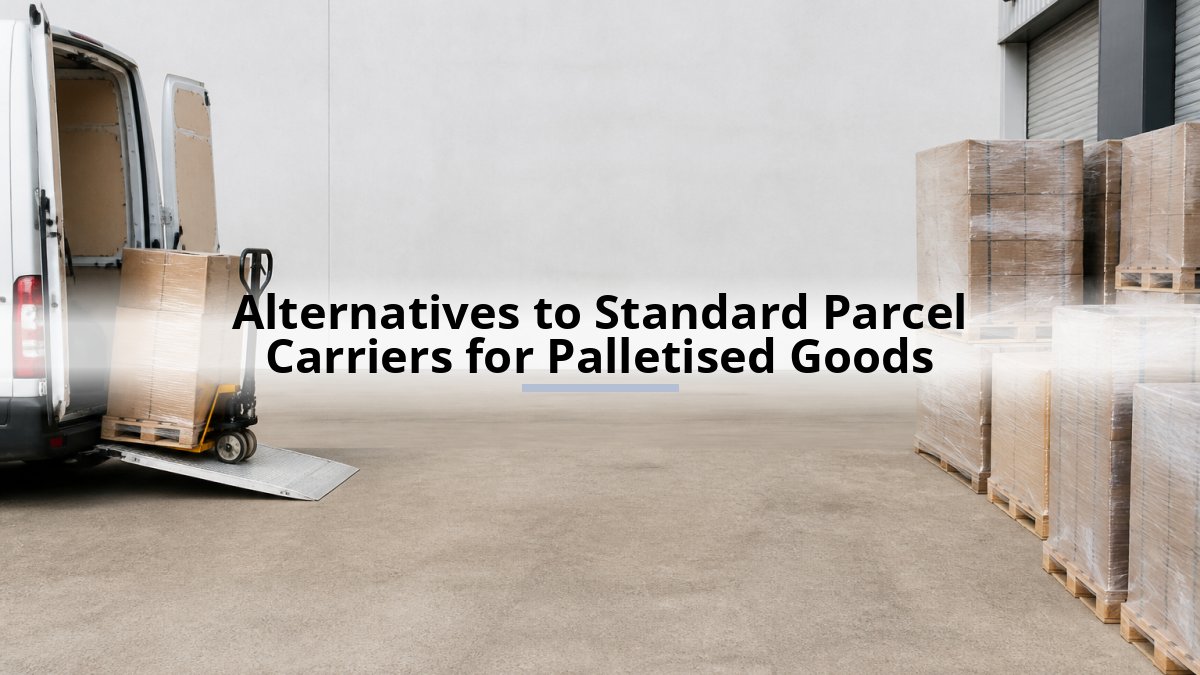
Tail-lift pallet delivery is essential when the delivery address has no loading bay or forklift. The vehicle's hydraulic platform lowers the pallet to ground level, which is the only safe way to deliver to a home, a shopfront or a site without machinery.
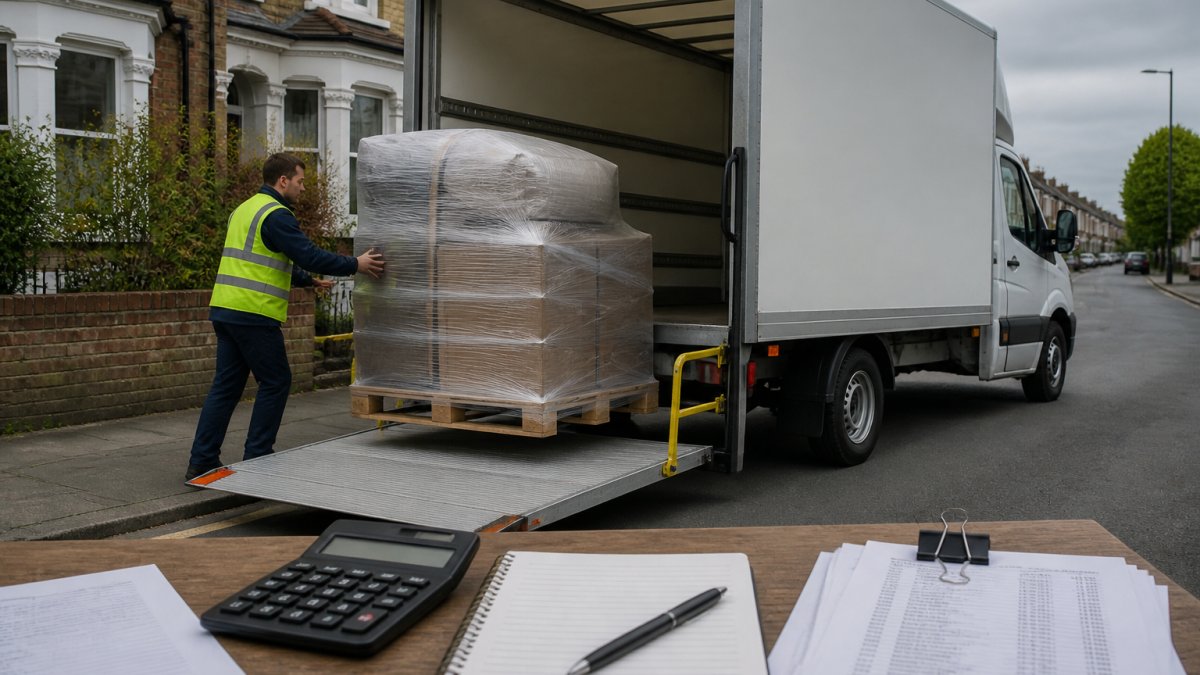
Pricing depends on the access, the pallet weight and whether the driver can move the goods to the door. Tell your carrier about stairs, narrow lanes and parking restrictions before the quote, not on the day.
Pallet Delivery Costs: What Actually Drives the Quote
Pallet delivery costs are driven by weight, dimensions, access and urgency, not by a flat rate. Two pallets of identical weight can price very differently if one needs a tail lift and a two-person team and the other rolls straight into a warehouse. The headline rate is only the starting point; the final invoice is built from a base rate plus accessorial charges, and understanding that structure is how you compare quotes like for like. Complexity increases further when shipping specialized freight, which makes consulting a haulier selection guide essential for navigating the specific requirements of heavy construction materials.
The main cost drivers:
- Weight and dimensions, measured accurately
- Collection and delivery postcodes
- Tail-lift or forklift requirements
- Same-day versus planned collection
- Residential versus commercial access
- Fuel surcharges and congestion or clean-air zone charges
- Timed slots, waiting time and failed-delivery charges
How the quote is built
A typical pallet quote combines a base rate for the lane (collection postcode to delivery postcode), a weight or volume band, and then add-ons. Add-ons commonly include tail lift, two-person lift, booked time slot, waiting time after a set free period, and re-delivery if the first attempt fails.
Measure your pallet properly before requesting a quote. Under-declared dimensions get re-priced, and that re-price usually arrives at the worst moment. A pallet that is 1.2 m long, 1 m wide and 1.5 m high is not the same as one that is 1.2 m by 1.2 m by 1.8 m, even if the weight is identical, because the taller and wider pallet may no longer fit two to a vehicle deck.
Worked examples
These are illustrative structures, not fixed prices, always confirm with the carrier.
Example 1: Single pallet, commercial delivery, planned. One standard pallet, 250 kg, collected from a warehouse with a loading bay and delivered to a trade counter with a forklift.
Example 2: Single pallet, residential delivery, tail lift required. Same pallet, but delivered to a home with no forklift, narrow street and no parking.
Example 3: Same-day dedicated. One pallet, high value, collected and delivered the same day on a dedicated vehicle. Justified when the goods are fragile, urgent or the delivery slot is fixed.
Example 4: Failed delivery. A residential delivery is attempted but nobody is home and no safe place was agreed. The carrier returns the pallet to the depot and charges a re-delivery fee, often close to the original delivery charge.
Total landed cost, not just the rate
The cheapest quote is not always the cheapest shipment. Total landed cost includes the base rate, accessorials, fuel surcharge, insurance for the declared value, packaging or pallet cost, and the cost of a failed or damaged delivery. A network rate that looks lower can lose its advantage once a tail-lift charge, a re-delivery fee or a damage claim is added. A dedicated rate that looks higher can win once you remove the risk of multiple handling points and the admin of chasing a split claim.
Third-Party Logistics (3PL) for Bulky Goods: Storage, Pick and Distribution
Third-party logistics (3PL) for bulky goods combines warehousing with pick, pack and distribution, so you hold stock without holding a lease. For online sellers of furniture and antiques, it means goods sit in a secure facility until an order comes in, then move out on the next collection.
This suits sellers who need flexible short-term storage during a renovation, a relocation or a seasonal peak. Ask about contract length and how goods are tracked while in storage.
Choosing a Carrier for Palletised Goods: A Decision Framework by Shipment Profile
Choosing a carrier for palletised goods gets easier when you match the shipment profile to the service instead of comparing headline rates. Use this framework:
| Shipment Profile | Best Service | Why |
|---|---|---|
| Single urgent pallet | Dedicated same-day courier | One vehicle, no depot handling |
| Planned bulk distribution | Pallet network | Lower cost per pallet |
| High-value or fragile item | Dedicated, insured courier | Fewer handling points |
| Stock needing storage | 3PL with warehousing | Flexible hold and dispatch |
Business and residential delivery constraints
Commercial addresses with loading bays accept larger vehicles and forklifts. Residential addresses rarely do, so they need a tail lift, a smaller van and often a booked time slot. Confirm the access before booking, because a failed delivery costs more than the original job.
For most sellers of bulky goods, a fully insured fleet from compact vans to tail-lift Luton vans, same-day and next-day options, instant tracking, and storage for stock that needs to wait are important considerations.
Frequently Asked Questions
What are the alternatives to standard parcel carriers for palletised goods?
The main options are pallet networks, dedicated courier services with tail-lift vehicles, third-party logistics (3PL) providers for storage and distribution, and multi-carrier platforms that compare rates across several freight services. Each suits a different shipment profile. A single heavy pallet to one address often suits a dedicated courier, while regular multi-pallet distribution is usually better handled through a pallet network or 3PL arrangement.
When should a business use a pallet network instead of a parcel carrier?
Move to a pallet network once consignments are stacked on a wooden pallet, exceed parcel weight or size limits, or need forklift handling at either end. Pallet networks consolidate multiple items into shared vehicles, which keeps pallet delivery costs down for regular domestic distribution. A parcel carrier remains cheaper for small, light cartons that one person can lift and scan through a standard sorting hub.
How much does 3PL cost for bulky goods?
Third-party logistics pricing depends on storage volume, how long stock sits in the warehouse, and the number of pallets moved in and out each month. Most providers quote a monthly storage rate plus a handling fee per pallet, with delivery charged separately. Because rates vary with pallet count and contract length, ask for a written quote covering storage, handling and outbound freight before committing.
Can a specialist courier transport palletised goods?
Yes. A specialist courier with tail-lift Luton vans can collect a pallet from a warehouse or business address and deliver it to a residential property where no loading bay or forklift exists. This suits bulky furniture, antiques and heavy equipment where the goods need careful handling and a two-person team. Confirm the vehicle has a tail lift and that the service includes insurance for the full replacement value.
How do I choose a carrier for heavy or fragile palletised items?
Start with the shipment profile: pallet dimensions, weight, whether the destination has a loading bay, and how fragile the contents are. Fragile or high-value goods need dedicated transport rather than shared network freight, where the pallet is handled several times. Check weight limits, insurance cover, tracking, and whether the driver can move the pallet from the vehicle to the door.
Palletised freight punishes guesswork. Get the weight, dimensions and access right, and the right carrier becomes obvious. Direct Couriers London Ltd handles the whole job with a fully insured fleet, tail-lift Luton vans for residential and commercial access, instant tracking, and flexible storage for bulky stock. Contact us today for a quote.