 blog
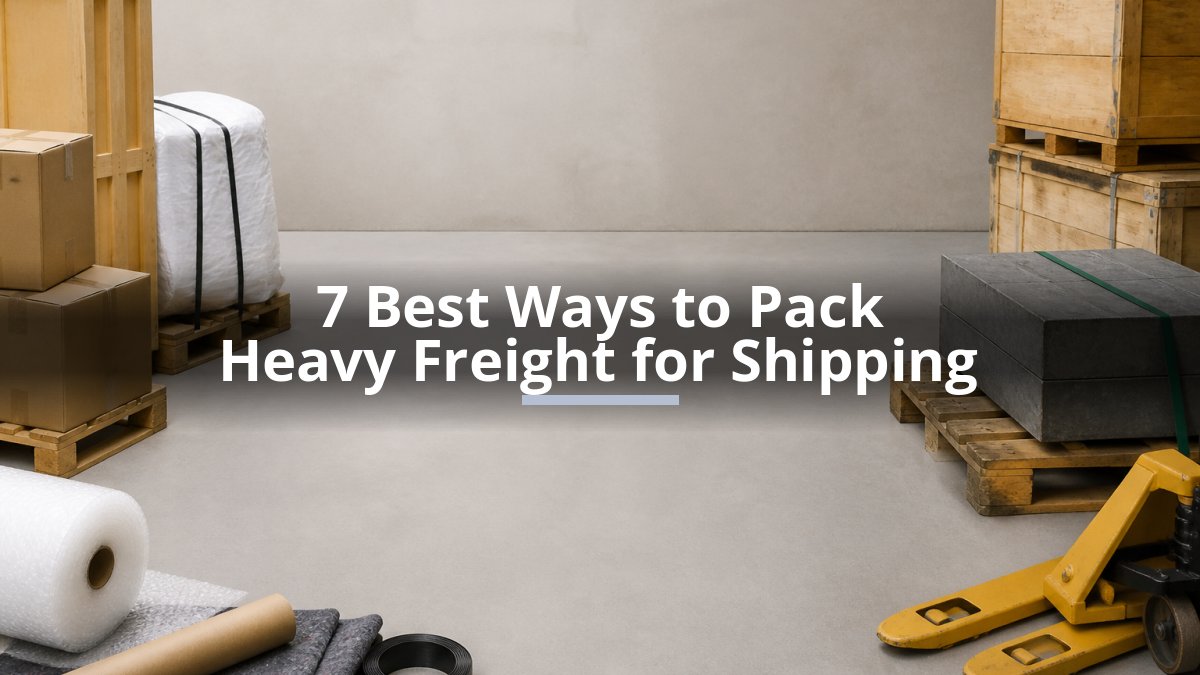
7 Best Ways to Pack Heavy Freight for Shipping
Table of Contents
- 1. Choose the Right Heavy Freight Packaging Materials
- 2. How to Pack a Pallet for Shipping: Base Selection and Weight Limits
- 3. How to Secure Freight to a Pallet Without Damaging the Goods
- 4. Cushioning and Void Fill: Protecting Heavy Items in Transit
- 5. How to Protect Furniture During Shipping Without Damaging the Finish
- 6. Freight Labeling, Documentation, and Pre-Shipment Inspection
- 7. Hazardous, Fragile, and Temperature-Sensitive Heavy Freight
- Conclusion: Book a Courier That Handles Heavy Freight Properly
- Frequently Asked Questions
Last Updated: October 12, 2026
1. Choose the Right Heavy Freight Packaging Materials
Packing heavy freight starts with one decision: the box. Pick the wrong one and no amount of tape or bubble wrap will save the shipment. Corrugated cardboard is fine for light parcels, but anything with real weight needs a double-wall or triple-wall board, or a wooden crate for the heaviest loads. At Direct Couriers London Ltd, we move everything from antique wardrobes to palletised machinery, and the same rule holds every time: the packaging has to match the weight, not the other way round.
Here is what belongs in a heavy freight packaging kit:
- Double or triple-wall corrugated boxes for items up to around 30kg
- Wooden crates for machinery, glass, and anything fragile and heavy
- Corner protectors and edge boards to stop crushing
- Cushioning such as foam, air pillows, or crumpled paper
- Void fill and dunnage to stop movement inside the box
- Water-activated tape for a bond that holds under stress
- Plastic strapping and banding for palletised loads
The mistake we see most often is reusing a flimsy box because it happens to fit. A box that bows under weight will fail in transit, every time. Choose the container for the load, then build the protection inside it.
2. How to Pack a Pallet for Shipping: Base Selection and Weight Limits
To pack a pallet for shipping, start with the base. A standard UK pallet is 1200mm x 1000mm, and carriers build their vehicles and rates around that footprint. Oversized or non-standard pallets can attract surcharges or be refused outright, so check the dimensions before you build the load.
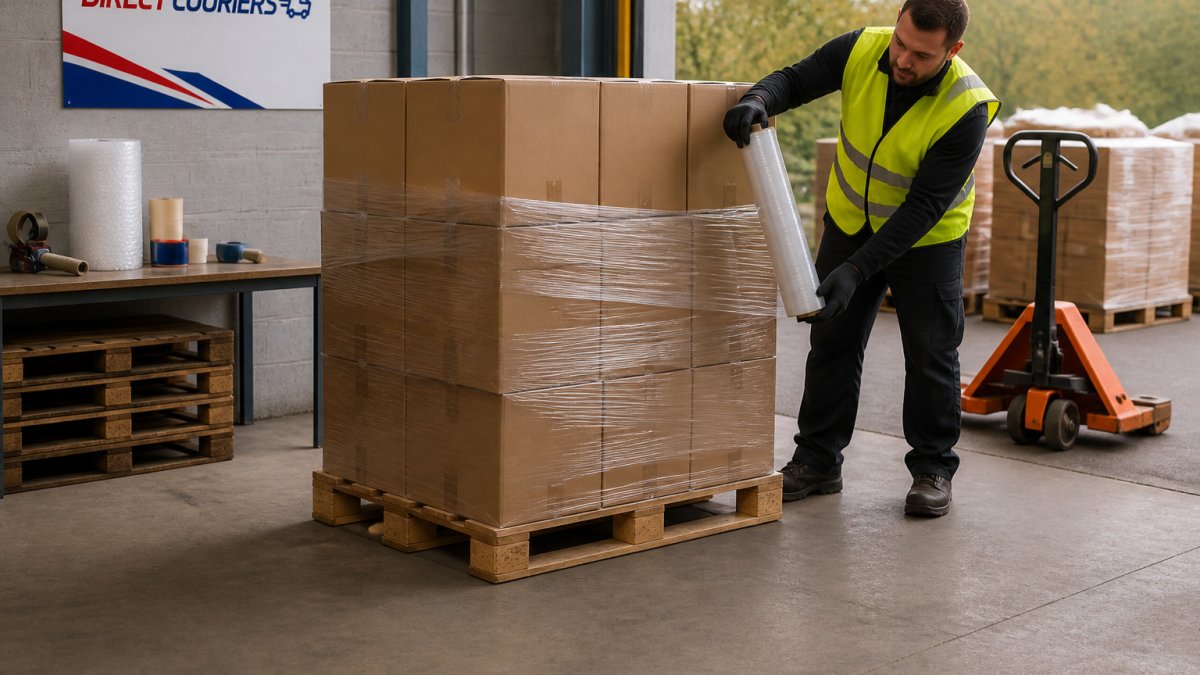
Weight matters just as much as size. A pallet that is top-heavy or unevenly loaded is far more likely to tip or collapse than one with a low, centred centre of gravity. The rule we give customers is simple: heaviest items at the bottom, lighter items on top, and nothing overhanging the edges.
Standard Pallet Dimensions and Carrier Compatibility
Pallet selection is really about compatibility. A base that fits one carrier's system may not fit another's, and mismatched pallets cause delays at collection.
| Pallet Type | Typical Footprint | Best For |
|---|---|---|
| Standard UK pallet | 1200mm x 1000mm | Most palletised freight |
| Euro pallet | 1200mm x 800mm | Smaller, denser loads |
| Half pallet | 800mm x 600mm | Light or partial loads |
| Custom crate base | Built to size | Oversized or irregular goods |
Check the weight limit of both the pallet and the carrier before you load. A pallet rated for one tonne will not safely carry two, no matter how well you stack it.
3. How to Secure Freight to a Pallet Without Damaging the Goods
Securing freight is about stopping movement without crushing what is underneath. Stretch film holds the load together, but it does not anchor it to the pallet on its own. Use strapping or banding over the top of the load, threaded through or under the pallet base, to lock everything down.
Strapping, Banding, and Load Securing Techniques
- Stretch film: wrap from the base upward, overlapping each pass
- Plastic strapping: run over the top and under the pallet, tension evenly
- Edge boards: place under straps to spread pressure and protect the goods
- Corner protectors: stop straps cutting into boxes
The common mistake is over-tightening. A strap pulled too hard will dent a box or crack a fragile item before the van even moves. Tight enough to stop movement, not tight enough to crush.
4. Cushioning and Void Fill: Protecting Heavy Items in Transit
Cushioning absorbs the shocks that happen every time a van brakes or a pallet is set down. Heavy items need more than a layer of bubble wrap. Use dense foam, air pillows, or moulded inserts that hold the item in place and soak up vibration. Proper stabilization remains the most critical factor when shipping heavy items, especially when dealing with the unique structural requirements of bulk pet supplies.
Void fill stops the item moving inside its box. Any gap is a gap the item will slide into. Fill every empty space with dunnage so the contents cannot shift, and double box fragile items: a smaller box cushioned inside a larger one.
- Cushioning: foam, air pillows, crumpled paper
- Void fill: paper, air bags, packing peanuts
- Double boxing: small box inside a larger, cushioned box
- Dunnage: any filler that stops movement
5. How to Protect Furniture During Shipping Without Damaging the Finish
Protecting furniture comes down to three layers: wrap, cushion, and secure. Start with protective wrapping over the finish, then add cushioning at the corners and edges, then secure the whole piece so it cannot move.
For a sofa or a table, we recommend:
- Wrap the surface in furniture blankets or foam wrap
- Add cardboard or foam corner protectors
- Cushion any protruding parts, such as legs or handles
- Stretch-wrap the piece to hold everything in place
- Label it as fragile and note which way is up
Antiques and polished finishes need a soft inner layer that will not scratch. Never let tape touch a finished surface directly. Tape residue and lifted veneer are two of the most common damage claims we see, and both are avoidable.
6. Freight Labeling, Documentation, and Pre-Shipment Inspection
Good labeling and paperwork prevent more delays than almost anything else. Every package needs a clear label with the delivery address, a return address, and any handling instructions. Heavy freight should also carry weight markings and orientation arrows.
Freight-specific documentation matters for palletised and oversized loads. Depending on the load, you may need a delivery note, a packing list, and, for certain goods, safety documentation. For anything classed as dangerous goods, check the UK government guidance on transporting dangerous goods before you book.
Run a final inspection before collection:
- Is the packaging undamaged and dry?
- Is the load secure and unable to shift?
- Is the weight clearly marked?
- Is the label legible and correct?
- Are fragile items marked on every side?
- Is the centre of gravity low and centred?
7. Hazardous, Fragile, and Temperature-Sensitive Heavy Freight
Some loads need more than good packaging. Hazardous goods, fragile items, and temperature-sensitive freight each carry their own rules, and getting them wrong can mean refused collection or a failed delivery.
Hazardous heavy freight must be classified, packed, and labeled to the correct standard, with the right documentation. Fragile goods need extra cushioning and clear handling marks. Temperature-sensitive items need insulated packaging and a transit plan that keeps them within range.
For packaging performance, it helps to work to a recognised standard. The British Standards Institution on packaging and transit testing publishes standards that cover how packaging should perform in transit, which gives you a measurable way to check your protection rather than guessing.
If you are unsure whether your load counts as hazardous, check with the carrier before booking. It is far cheaper to ask than to have a shipment turned away at the depot.
Conclusion: Book a Courier That Handles Heavy Freight Properly
Packing heavy freight well is only half the job. The other half is choosing a courier that handles heavy loads with the care your packaging deserves. A perfectly wrapped pallet still needs a carrier who turns up, loads it safely, and delivers on time.
At Direct Couriers London Ltd, we move heavy furniture, palletised goods, and oversized items with a fully insured fleet, from compact vans to tail-lift Luton vans. You get same-day and next-day options, instant tracking, and storage if you need it. Get started with Direct Couriers London Ltd and ship your heavy freight with confidence.
Frequently Asked Questions
How do you pack heavy freight for shipping?
Start by selecting a pallet rated for the load, then build the shipment in layers with the heaviest items at the bottom and the centre of gravity as low as possible. Use corrugated cardboard or a wooden crate for outer protection, cushion corners with foam or bubble wrap, and fill gaps with dunnage so nothing shifts. Secure everything with plastic strapping and water-activated tape, then label the freight clearly before collection. A final inspection before the courier arrives catches loose strapping or crushed corners.
What is the best way to secure heavy items to a pallet?
Use plastic strapping or banding rated for the shipment weight, run it over the top of the load and through the pallet apertures so the goods are locked to the base rather than just held down. Add corner protectors under the strapping to stop it cutting into cartons. For irregular shapes, combine strapping with shrink wrap or stretch film applied from the base upwards. Never rely on tape alone, and check that no item overhangs the pallet edge by more than a few centimetres.
How do you protect heavy goods from damage in transit?
The main risks are movement, compression, and impact. Stop movement with void fill and dunnage, protect against compression by keeping heavy items at the bottom and using double boxing for fragile pieces, and reduce impact by cushioning corners and edges with foam or bubble wrap. Wrap furniture in protective wrapping before it goes near a pallet. Label fragile goods clearly and note any handling restrictions on the documentation so the courier knows what is inside.
What packaging is best for shipping heavy items?
Corrugated cardboard boxes work for most items up to moderate weights, but anything heavy or oversized is better on a wooden pallet or inside a wooden crate. Double boxing adds a layer of protection for fragile or high-value goods. Pair the outer packaging with cushioning, protective wrapping, void fill, and dunnage, then close it with water-activated tape and plastic strapping. The right combination depends on the shipment weight, dimensions, and how many times it will be handled.