 blog
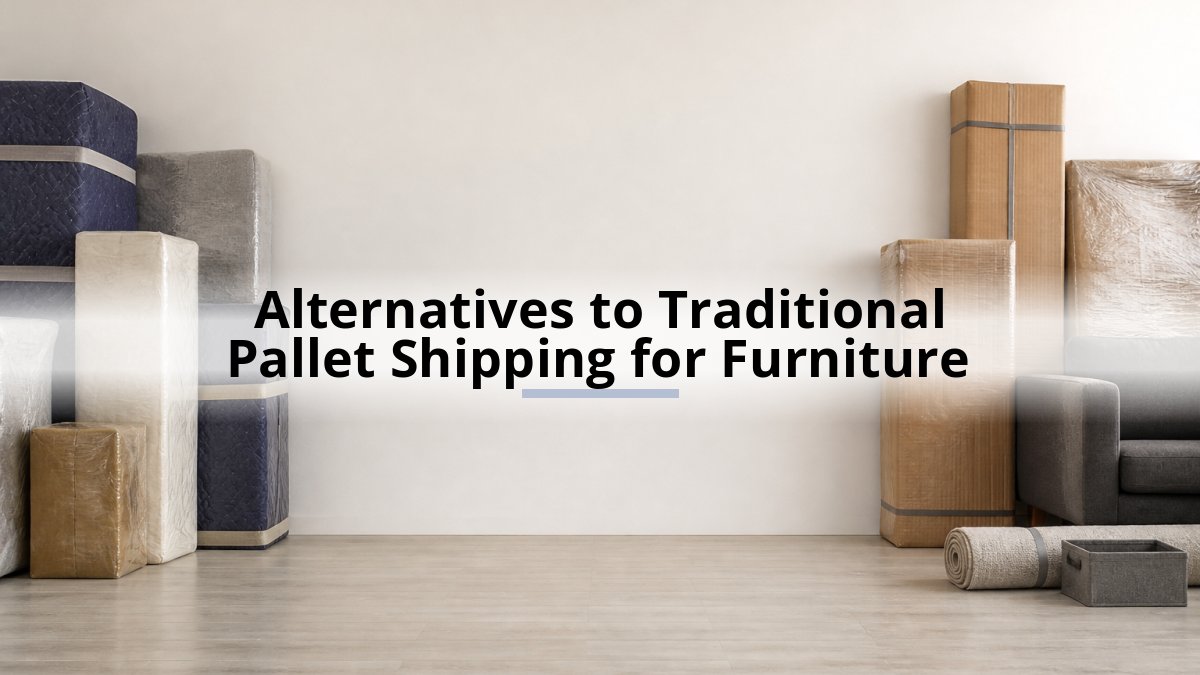
Alternatives to Traditional Pallet Shipping for Furniture
Last Updated: October 22, 2026
Quick Summary
Alternatives to traditional pallet shipping for furniture include dedicated furniture courier services, two-person van delivery, white-glove services, and non-palletised shipping. These methods offer faster delivery, lower damage rates, and often lower total costs once hidden pallet fees and packaging premiums are factored in.
- Broker fees add £120-£240 per shipment on top of traditional pallet freight, plus packaging premiums of 15-25%.
- Dedicated furniture courier services for single items over 150-250 miles typically cost £180-£800 depending on service level.
- Non-palletised two-person delivery eliminates multiple handling events, reducing damage risk compared to pallet networks.
- For items under 500 kg travelling under 300 miles, dedicated courier services often cost less than pallet freight when all fees are included.
- White-glove delivery ranges from £500-£2,370 per item depending on distance and complexity, justified for high-value or fragile pieces.
Table of Contents
- Why Businesses Are Moving Away From Traditional Pallet Shipping
- How to Ship Furniture Without a Pallet
- Furniture Courier Service: Speed and Flexibility
- Dedicated Van Furniture Delivery for Larger Items
- Understanding Furniture Delivery Cost Across Methods
- Comparing Pallet Alternatives: Pros and Cons
- Choosing the Right Shipping Method for Your Furniture
- Frequently Asked Questions
Why Businesses Are Moving Away From Traditional Pallet Shipping
Wooden pallets have dominated furniture logistics for decades: standardised, widely available, and compatible with most handling equipment. But they carry real costs many shippers overlook.
The shift isn't a rejection of a proven system, it's a recognition that one-size-fits-all logistics rarely suits furniture. Palletised freight often means your sofa shares a pallet, passes through multiple hubs, and arrives days after pickup, adding unnecessary risk for valuable or fragile pieces.
According to WhyLoyalty's cross-border furniture shipping cost guide, broker fees alone add £120 to £240 per shipment on top of freight charges. When you factor in packaging premiums (typically 15-25% of the shipping cost), the total expense climbs fast. At the same time, businesses increasingly recognise that alternatives to traditional pallet shipping for furniture offer better control, faster delivery, and lower damage rates.
For furniture, the pallet era is fading.
How to Ship Furniture Without a Pallet
Shipping furniture without a pallet means treating your item as the priority, not one unit in a consolidated load. Several approaches work depending on size, value, and destination.
Non-palletised shipping uses specialist couriers with dedicated vehicle space. Your furniture travels on a protected floor or secured directly in the van, eliminating pallet handling steps. It works especially well for single pieces, a dining table, sofa, or dresser, where consolidation isn't necessary.
Costs differ from traditional freight: you pay by vehicle, distance, and add-ons like two-person delivery or access assistance rather than per pallet or cubic metre. For a single large item this is often more cost-effective, avoiding the middleman and consolidation delays.
A key advantage is speed. Palletised shipments often wait at distribution hubs for a full load to form. Non-palletised services can collect and deliver within 24 hours across much of the UK, depending on location.
Furniture Courier Service: Speed and Flexibility
A furniture courier service prioritises your item over logistics optimisation, moving it safely and quickly rather than consolidating it with dozens of other shipments.
These services use vans sized to the furniture, not half-empty lorries. A single sofa doesn't need a 40-tonne articulated lorry; a specialist courier dispatches a matched van, reducing cost and improving handling. The driver knows furniture, protecting surfaces, navigating tight doorways, and positioning items in rooms.
Speed is the defining feature. Many furniture courier services offer next-day or same-day collection and delivery. This eliminates the multi-day waiting periods common with traditional pallet networks. For online sellers, this responsiveness directly impacts customer satisfaction and repeat orders.
Insurance and accountability are clearer: one operator is responsible from pickup to delivery, not a chain of handlers across multiple hubs. That direct relationship reduces lost claims and simplifies liability.
Dedicated Van Furniture Delivery for Larger Items
For heavy, oversized, or delicate furniture, a dedicated van with two trained professionals is the gold standard, a more specialised offering than standard courier services.
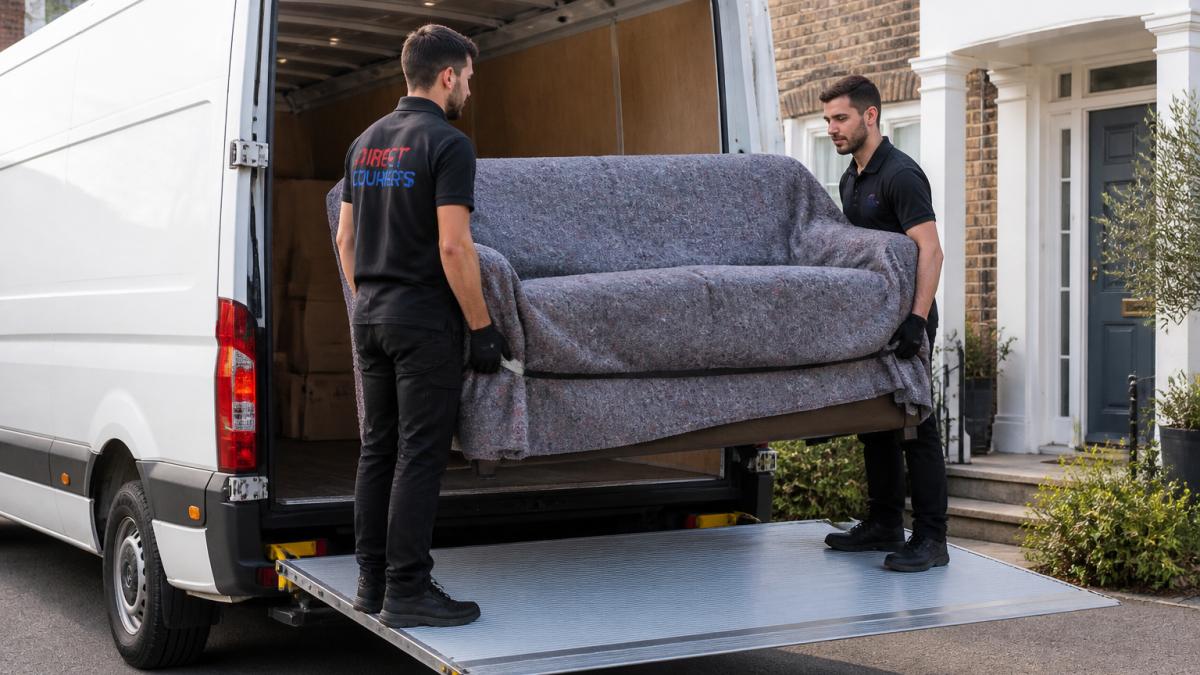
A tail-lift van lowers the cargo platform to ground level, so heavy items needn't be lifted over the van's edge, protecting furniture and crew. Two-person teams manoeuvre large pieces, corner sofas, bed frames, antique wardrobes, through doorways and up stairs without damage.
This service model works best for high-value pieces, antique furniture, or items with fragile surfaces. According to Reperch's comparison of freight versus white glove delivery services, white glove furniture shipping costs range from £950 to £2,370 per item depending on distance and complexity.
Direct Couriers London Ltd operates a fleet ranging from compact vans to tail-lift Luton vans, allowing us to match the right vehicle to each furniture shipment.
Understanding Furniture Delivery Cost Across Methods
Cost is rarely simple: each method has different drivers, and the cheapest headline rate is often not the best value once access, packaging, and liability are priced in.
Traditional pallet freight. Priced per pallet or per cubic metre, plus a booking fee and often a tail-lift or two-person surcharge.
Parcel networks. Suitable only for flat-pack or boxed furniture within size and weight limits (often 30 kg per box and around 1.5 m maximum length).
Dedicated furniture courier (one or two people, van). Priced by vehicle, distance, and service level rather than by pallet. A single item over a medium distance (roughly 150-250 miles) commonly costs £180-£350 for a one-person courier and £400-£800 for a two-person tail-lift service. The higher figure buys fewer handling events, a booked delivery window, and a single operator accountable end to end.
White-glove or room-of-choice delivery. The premium tier: blanket-wrap or crate, two-person team, placement in the room of choice, assembly, and packaging removal.
Shared-load or part-load movers. A part-load service shares van space with other customers' goods.
Comparing Pallet Alternatives: Pros and Cons
Wood Pallets vs. Plastic and Hybrid Options
Wood pallets remain the most common choice: inexpensive and universally compatible with handling equipment. But they carry hidden downsides for furniture.
Wood pallets require ISPM-15 treatment (heat or chemical, to prevent pest transfer across borders), adding cost and complexity to cross-border shipments.
Plastic pallets eliminate these problems. They don't require pest treatment, don't absorb moisture, and won't splinter. However, plastic pallets cost 2-3 times more than wooden ones, according to uShip's comparison of pallet materials for household goods.
Hybrid pallets (plastic base, wooden deck boards) are lighter than all-wood, cutting freight weight and cost, and need no ISPM-15 treatment, but cost more than wood and are less durable than all-plastic options.
The practical reality: for single-item furniture shipments, the pallet material choice matters less than whether you use a pallet at all. Non-palletised alternatives often cost less and perform better.
Non-Palletised Two-Person Delivery
This approach skips the pallet entirely: furniture is blanket-wrapped, secured directly in a van, and delivered by a trained two-person team. It's the fastest-growing alternative to traditional pallet shipping for furniture.
Pros:
- Faster delivery (same-day or next-day common)
- Lower damage risk (direct handling by trained professionals)
- No pallet rental or return logistics
- Clearer liability and accountability
- Better for fragile surfaces and antiques
Cons:
- Harder to source and schedule than standard freight networks
- More expensive per mile for very long distances
- Limited availability in rural areas
- Requires advance booking rather than drop-and-go flexibility
This method works best for single items, valuable pieces, or time-sensitive deliveries. For bulk shipments or routine logistics, traditional pallet networks remain more practical.
Crate and Box Shipping for Fragile Pieces
Crating builds a custom wooden or cardboard structure around furniture for transit. It's the most protective option and the most expensive.
Pros:
- Maximum protection for fragile or valuable items
- Allows stacking in some cases
- Professional appearance for antique or high-end pieces
- Suitable for international shipping
Cons:
- Significantly higher cost (crate construction, labour, materials)
- Longer lead time (custom crating takes 3-7 days)
- Adds weight and cubic volume, increasing freight charges
- Requires uncrating at destination (not always included)
Crating makes sense for antiques, fine art, or furniture worth thousands of pounds. For standard pieces, the protection premium is rarely justified.
Choosing the Right Shipping Method for Your Furniture
The right method follows from four measurable variables: the item's longest dimension, weight, replacement value, and distance and access at both ends. Use this framework before requesting quotes.
Step 1: Can it be boxed? If the item is flat-pack, disassembles, or fits within a parcel carrier's limits (commonly up to 30 kg per box and around 1.5 m longest side), a parcel network is the cheapest option.
Step 2: How many handling events can it survive? Every transfer between vehicle, hub, and depot risks damage. A pallet network may handle an item four to six times; a dedicated courier twice (pickup and delivery).
Step 3: What is the value-to-freight ratio? If the item is worth less than roughly three times the cost of the premium service, the premium is hard to justify on damage risk alone. If the item is worth several thousand pounds, or is irreplaceable, the cost of a two-person tail-lift or white-glove delivery is usually less than the excess and disruption of a claim.
Step 4: What does the route and access demand? Urban routes with parking restrictions, upper-floor flats, narrow staircases, and listed buildings favour a two-person team with a tail-lift and blankets.
A simple decision matrix:
| Item profile | Best-fit method | Why |
|---|---|---|
| Flat-pack or boxed, under 30 kg per box | Parcel network | Lowest cost; within carrier limits |
| Single solid item, low value, flexible dates | Pallet freight or shared-load mover | Cost-efficient; damage risk acceptable |
| Single upholstered or veneered item, medium value | Dedicated furniture courier | Fewer handling events; booked window |
| Heavy or oversized item, stairs or tight access | Two-person tail-lift van | Trained team; protects item and property |
| Antique, glass, marble, or high-value piece | White-glove or crated dedicated van | Maximum protection and clear liability |
| Multiple items or regular volume | Pallet freight or part-load | Consolidation lowers per-item cost |
Two practical checks before booking. First, ask each provider how many times the item will be handled and who is liable at each stage; the answer often separates a courier from a broker. Second, confirm the liability limit in writing and declare the true replacement value, because standard terms frequently cap cover well below the value of good furniture.
Frequently Asked Questions
Can furniture be shipped without a pallet?
Yes. Non-palletised delivery using dedicated courier services and two-person teams is increasingly common for furniture. These services eliminate pallet handling, reducing damage risk to delicate surfaces and finishes. Specialist furniture couriers use protective wrapping, blankets, and custom crating instead of standard pallets, making them ideal for valuable or antique pieces. This method costs more than traditional pallet shipping but offers superior protection and flexibility.
What are the main alternatives to traditional pallet shipping for furniture?
The primary alternatives include dedicated van delivery, specialist furniture courier services, and non-palletised two-person delivery. Dedicated vans offer exclusive use of the vehicle for your shipment, ensuring better handling and faster transit. Courier services provide flexible pickup and delivery with real-time tracking. Crate and box shipping works well for smaller, fragile items. Each method suits different furniture types, distances, and budgets. Plastic and hybrid pallets also reduce weight and eliminate pest-treatment requirements compared to wooden pallets.
How much more expensive is non-palletised furniture delivery?
Non-palletised delivery costs depend on furniture size, distance, and delivery complexity. Broker fees add £120 to £240 per shipment. For accurate pricing tailored to your furniture dimensions, weight, and destination, contact a specialist courier service for a quote.
When should I use a dedicated van instead of a standard courier?
Use a dedicated van when shipping multiple large items, valuable antiques, or furniture requiring special handling. Dedicated vans offer exclusive vehicle use, reducing handling and damage risk. They suit long-distance domestic shipments and items too large or heavy for standard parcel services. Standard couriers work better for single pieces or lighter furniture. A dedicated van also provides faster transit and more flexible pickup/delivery windows, making it ideal for time-sensitive business relocations or customer orders.