 comparison
Is 3PL Fulfillment Worth It for Small Retailers?
Table of Contents
- Is 3PL Fulfillment Worth It for Small Retailers? The Honest Answer
- What 3PL Fulfillment Actually Means for a Small Retailer
- 3PL Fulfilment Costs for Small Businesses: The Break-Even Model
- 3PL vs In-House Fulfilment: Where Each One Wins
- 3PL Minimum Order Requirements and Small-Account Fees
- How to Choose a 3PL Provider Without Getting Locked In
- When a Small Retailer Should Not Use a 3PL
- Frequently Asked Questions
Last Updated: October 17, 2026
Is 3PL Fulfillment Worth It for Small Retailers? The Honest Answer
For most small retailers shipping fewer than roughly 150 orders a month, 3PL fulfillment is not worth it: fees, minimums and lost control outweigh the savings until picking and packing becomes your bottleneck. Above that threshold, the maths flips quickly.
The longer answer depends on your order profile, product sizes and how much of your week disappears into packing tape.
What 3PL Fulfillment Actually Means for a Small Retailer
Third-party logistics (3PL) is the practice of outsourcing warehousing, order processing and shipping to an external provider who stores your stock and dispatches orders on your behalf. You keep the storefront and the customer relationship; the 3PL handles the physical movement of goods.
For a small retailer, stock sits in someone else's warehouse, with orders flowing from your e-commerce platform to their warehouse management system automatically.
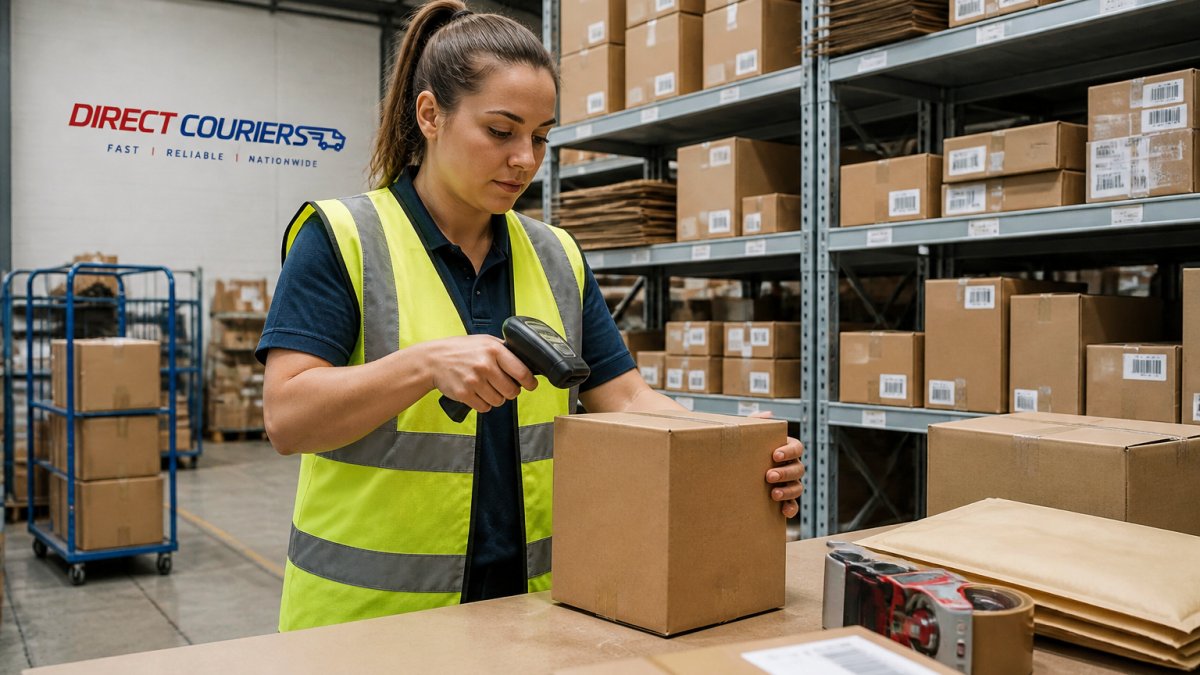
The core services a 3PL handles
- Receiving and checking inbound stock against your delivery notes
- Inventory storage across racked or bulk floor space
- Picking and packing to your specification, including custom packaging
What stays on your plate
Plenty. You still own demand forecasting, customer service, product listings, pricing and what stock to hold. A 3PL does not fix bad inventory planning; it just stores the consequences. You also remain responsible for stock accuracy disputes, so inventory visibility matters.
3PL Fulfilment Costs for Small Businesses: The Break-Even Model
The break-even calculation is simpler than providers make it sound, but most small retailers get it wrong by comparing a 3PL quote to their carrier bill alone. Your carrier bill is not your fulfilment cost. Add storage, labour, packaging, carrier rates and management overhead, then compare that total to a 3PL quote at your actual monthly order volume. Most find the crossover sits higher than expected.
Fee types you will see on a quote
| Fee type | What it covers | Watch for |
|---|---|---|
| Storage fees | Space per pallet or shelf per week | Charged on space reserved, not space used |
| Pick-and-pack fees | Per-item or per-order handling | Per-item charges punish multi-item orders |
| Receiving fees | Unloading and checking inbound stock | Often charged per carton or per pallet |
| Account minimums | Monthly spend floor | You pay the difference in quiet months |
| Returns fees | Inspection and restocking | Frequently excluded from headline quotes |
| Surcharges | Peak-season, oversized-item, manual-handling | Can double the effective per-order cost in Q4 |
A worked break-even example
Take a small retailer shipping 200 orders a month, averaging 1.5 items per order, with products that fit a standard shelf. Here is how the two sides compare using typical UK market ranges.
In-house costs (monthly):
- Your packing time: 40 hours at a realistic £12-£15 per hour opportunity cost = £480-£600
- Storage: a spare room or small unit at £150-£300
- Packaging materials: £0.60-£1.20 per order = £120-£240
3PL costs (monthly, typical ranges):
- Storage: £40-£80 per pallet per month, assuming two pallets = £80-£160
- Pick-and-pack: £1.50-£3.00 per order = £300-£600
- Receiving: £15-£30 per pallet, amortised = £30-£60
At 200 orders a month, the 3PL looks cheaper on paper, but only if you value packing time at a real opportunity cost and your in-house storage genuinely costs money.
Where the break-even actually sits
The crossover depends on four variables, not one:
- Order volume. Below roughly 100-150 orders a month, account minimums and receiving fees dominate. Between 150 and 400, the maths is genuinely close. Above 400, a 3PL usually wins on labour alone.
- Items per order. Per-item pick fees punish multi-item baskets. A retailer averaging four items per order can pay twice the per-order handling cost of one averaging 1.5.
- Product size. Bulky or heavy items attract oversized-item surcharges and consume more storage. Small, light products are the best fit for standard 3PL pricing.
- Your own labour cost. If you are turning down sales enquiries to pack boxes, your true labour cost is high. If packing fills quiet hours, it is low.
Run your own numbers before you call a provider
- Count your average monthly orders and items per order.
- Estimate your monthly packing hours and value that time honestly, including sales you did not chase.
- Add current storage, packaging, carrier rates and admin time.
- Request a 3PL quote structured the same way: storage plus pick-and-pack plus receiving plus returns plus minimums.
- Compare totals at your current volume, at half (your quiet month), and at double.
If the 3PL only wins at double your volume, you are buying capacity you do not yet need. If it loses at half your volume, a seasonal swing will hurt you. For the regulatory side of storing and moving goods, the Health and Safety Executive guidance on workplace transport sets out the obligations that apply to any warehouse handling your stock.
3PL vs In-House Fulfilment: Where Each One Wins
In-house fulfilment wins on control and small-volume cost; a 3PL wins on scalability and peak-season capacity. The right answer usually changes as you grow, and can change back.
In-house suits low, predictable volume, high-touch packaging or products needing specialist handling: you see every order, fix problems immediately and avoid account minimums.
A 3PL earns its fee when seasonal demand spikes, storage runs out, or packing eats a day of your week.
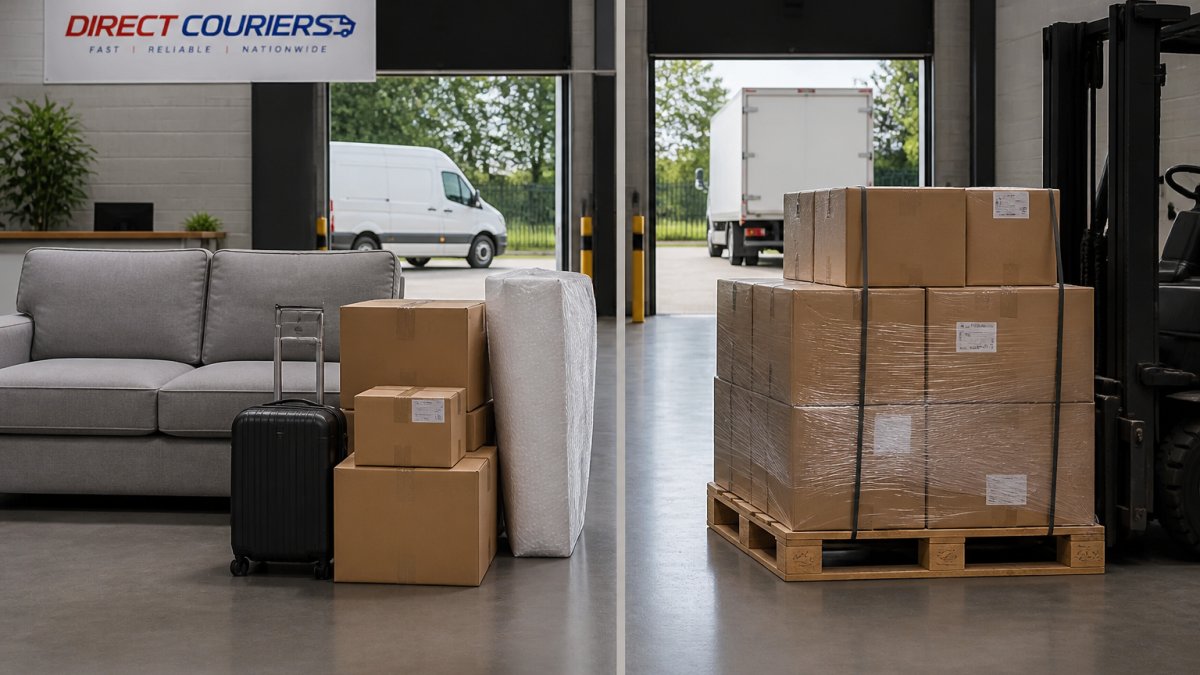
There is a middle path. Our fleet at Direct Couriers London Ltd runs from compact vans to tail-lift Luton vans, fully insured, with instant tracking, covering exactly this gap for furniture and palletised goods.
3PL Minimum Order Requirements and Small-Account Fees
Minimum order volumes and small-account fees are the quiet deal-breakers. A provider advertising attractive per-order rates may also require a monthly minimum order count or spend, and small retailers pay the shortfall, the most common reason a cheap-looking 3PL quote ends up costing more than packing at home. These hidden overheads often force a reevaluation of broader shipping cost considerations that determine whether your margins can truly sustain the convenience of outsourced logistics.
The four minimums to ask about
Ask directly about four things, and get each answer in writing:
- Monthly minimum order volume or spend. A common pattern is a floor of £500-£1,000 per month in fees, or a minimum of 100-200 orders. If you ship 80 orders in January, you pay the difference.
- Minimum storage commitment. Providers often charge on space reserved, not space used. A half-empty pallet position still bills as a full one, and some contracts set a minimum number of pallet positions.
- Receiving charges. Unloading and checking inbound stock is billed per carton or per pallet, and it lands before you have shipped a single parcel. A first delivery of 20 cartons at £1.50-£3.00 each is £30-£60 before storage begins.
- Small-account or low-volume surcharge. Some providers add a flat monthly admin fee, commonly £25-£75, for accounts below a volume threshold, on top of the per-order rate.
How tiered pricing catches seasonal sellers
Providers often tier pricing so low-volume accounts pay a higher per-order rate. That is not unreasonable, but the headline rate you were quoted may not be the rate you pay in January. If your volume swings, and for most small retailers it does, model the cost at your quietest month, not your best one.
Worked example: a retailer quoted £2.00 per order at 300+ orders, £2.75 at 150-299 and £3.50 below 150. In December they ship 400 orders and pay £800.
Surcharges that sit outside the rate card
Beyond minimums, ask about surcharges that can double the effective per-order cost:
- Peak-season surcharges in the run-up to Christmas, often £0.20-£0.50 per order
- Oversized or heavy-item surcharges, which apply to furniture, equipment and anything outside standard parcel dimensions
- Manual-handling fees for products that cannot go on a conveyor
What to do before you sign
- Ask for a full annual cost model at realistic monthly volumes, including your quietest month.
- Confirm whether the minimum applies during your notice period if you leave.
- Ask what happens in month one, when stock arrives but orders have not started flowing, receiving fees, storage and an account minimum can land together.
How to Choose a 3PL Provider Without Getting Locked In
Choose on contract terms and measurable performance, not the sales call. A provider that will not put service-level commitments in writing is telling you something useful.
Ask for a service-level agreement covering order accuracy, on-time dispatch cut-off times, and the process and timescale for resolving stock discrepancies. Then ask what happens if they miss those targets.
Contract terms, exit costs and inventory migration
- Notice period: how much notice to leave, and whether it runs from the contract anniversary
- Exit fees: any charge for terminating early, and whether minimums still apply during notice
- Inventory migration: who pays to pick, pack and transport your stock out, and how quickly it happens
Migration is where small retailers get hurt. Moving stock out of a warehouse takes labour, and that labour is often billed to you. A provider that cannot explain its exit process clearly is a provider to avoid. For consumer-facing obligations around delivery and returns, the Chartered Trading Standards Institute guidance is a useful reference point.
When a Small Retailer Should Not Use a 3PL
Also skip it if you sell bulky or specialist items: standard 3PL warehouses are built for parcels, not antique furniture or heavy equipment.
For those retailers, the practical setup is storage you control plus a specialist courier for delivery. You can read more about the requirements for moving goods safely before you plan your next dispatch.
The real challenge is not choosing between a 3PL and doing it yourself.
Frequently Asked Questions
Is it cheaper to use a 3PL or fulfil orders in-house?
It depends on your monthly order volume and what your own time is worth. In-house fulfilment looks cheaper because storage and labour are hidden in your rent and salary, but once you add pick-and-pack fees, storage fees and receiving fees, a 3PL only beats in-house above a certain order count. Build a simple break-even model: total your current rent per square metre, packaging, postage and the hours you spend packing, then compare that figure with a 3PL quote at your real monthly volume. Below roughly 50 orders a month, in-house usually wins on cost alone.
What are typical 3PL fees for a small retailer?
Most 3PL quotes are built from four parts: storage fees charged per pallet or shelf space per week, pick-and-pack fees charged per order and per item, receiving fees for inbound stock, and shipping rates passed through from the carrier network. Some providers add account management or minimum monthly charges. Pricing depends on your product size, order volume, peak season demands and how much handling each item needs, so ask for a fully itemised quote rather than a single blended rate. A quote you cannot break down line by line is one you cannot compare.
When should a small retailer use a 3PL?
The clearest signals are running out of storage space at home or in your unit, spending evenings and weekends packing instead of selling, and losing orders because delivery speed is too slow. Seasonal demand is another trigger: a 3PL lets you scale up for peak season without signing a longer lease or hiring temporary staff. If you sell bulky items, antiques or products needing custom packaging, a provider with the right handling capability matters more than the headline rate. If none of these apply, outsourcing logistics may add cost without solving a real problem.
What are the disadvantages of using a 3PL?
You lose direct control over picking and packing, so a mis-picked order becomes someone else's process problem rather than something you can fix on the spot. Inventory visibility depends on how well their warehouse management system connects to your e-commerce platform, and poor technology integration causes oversells and stock discrepancies. Contract terms can be restrictive, with notice periods and exit costs that make switching slow. Returns processing and reverse logistics also need to be agreed upfront, because handling exceptions badly damages customer satisfaction faster than slow delivery does.