 Comparison
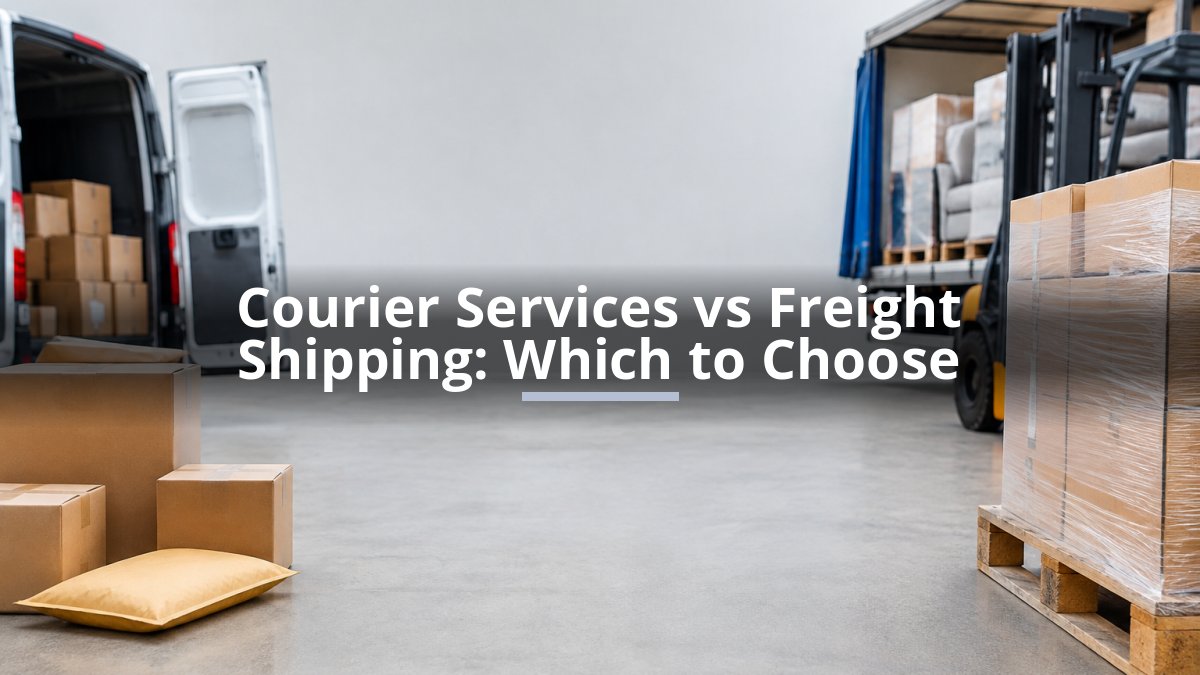
Courier Services vs Freight Shipping: Which to Choose
Last Updated: November 21, 2026
Quick Summary
The difference in courier vs freight comes down to whether your consignment is a parcel or a consignment load. Courier services move individual parcels and small items door to door on a van, with one carrier handling the whole journey, while freight shipping moves palletised or bulk cargo through a network of carriers, forwarders and depots, priced around volume and weight rather than per parcel.
- A single item one or two people can lift and secure in a van belongs with a courier.
- Once goods need a pallet, a tail lift or forklift handling, you are in pallet delivery service territory.
- Courier delivery times are short and specific, while freight transit is built around depot cut-offs.
- Dimensional weight means bulky but light items can be charged on the space they occupy.
- Ask providers whether a quote covers surcharges, handling and redelivery so you compare like for like.
Table of Contents
- Courier Services vs Freight Shipping: The Core Difference
- Shipment Size, Weight and the Pallet Delivery Service Split
- Courier Delivery Times vs Freight Transit Schedules
- Freight Shipping Costs and What Drives Courier Pricing
- Collection, Handling and End-to-End Responsibility
- Packaging, Liability and Claims: The Risk You Carry
- How to Choose a Courier Service or Freight Option for Your Shipment
- Book Your Next Large or Palletised Delivery
- Frequently Asked Questions
Courier Services vs Freight Shipping: The Core Difference
The difference in courier vs freight comes down to one question: is your consignment a parcel or a consignment load? Courier services move individual parcels and small items door to door, usually on a van, with one carrier handling the whole journey. Freight shipping moves palletised or bulk cargo through a network of carriers, forwarders and depots, priced around volume and weight rather than per parcel.
Direct Couriers London Ltd runs a fleet from compact vans for single items to tail-lift Luton vans for heavy furniture and palletised goods. Below, we cover weight thresholds, transit times, costs, liability and a two-minute decision matrix.
For a deeper side-by-side look at heavy goods, our courier vs freight comparison for heavy goods is worth reading next.
What Counts as a Courier Service
A courier service is a door-to-door collection and delivery operation built around individual parcels, documents and small-to-medium items. One provider takes responsibility from pickup to signature, typically on a dedicated van, with tracking updates along the way.
The defining features are direct handling and speed. Your item is collected from one address, travels on a known vehicle and is delivered to another, often same day or next day. That makes courier work ideal for urgent delivery, fragile single items and anything a customer is waiting on.
Where couriers stop is scale. Once a shipment needs a pallet, a tail lift or a multi-drop route, the economics and the handling change.
What Counts as Freight Shipping
Freight shipping is the movement of larger consignments, palletised freight, heavy cargo and bulk shipments, normally through a freight forwarder or carrier network. Goods travel between depots, get consolidated with other customers' loads, and are handed between vehicles before final delivery.
The trade-off is cost against speed. Freight prioritises cost efficiency for large volumes, often at the expense of pace, as CharterSync's 2026 freight comparison notes. Each pallet needs individual labelling, and the shipment may share a trailer with a dozen other businesses.
Freight wins on volume: recurring bulk shipments, international shipping with customs clearance, and anything where a day or two of extra transit time costs less than the load itself.
Shipment Size, Weight and the Pallet Delivery Service Split
The practical dividing line is weight and volume, not the label on the van. As a working rule, a single item one or two people can lift and secure in a van belongs with a courier.
Weight thresholds vary by provider. BSI Freight's courier versus air freight guide discusses a 45 kg threshold and shipments of 100 kg or more as a common courier-to-freight tipping point.
If you are checking whether your load fits, our guide to standard pallet weight limits for shipping explains the limits that decide which service takes it.
| Shipment Type | Typical Handling | Service Route |
|---|---|---|
| Single parcel or item | Manual, one van | Courier service |
| Heavy furniture | Two-person, tail lift | Courier or pallet |
| Palletised freight | Forklift or tail lift | Pallet delivery service |
| Bulk or consolidated load | Depot network | Freight shipping |
Courier Delivery Times vs Freight Transit Schedules
Courier delivery times are short and specific: same-day and next-day windows, with a driver routed straight to the address.
That gap matters most when a customer is waiting. A homeowner expecting a sofa by a certain date, or an online seller promising next-day dispatch, needs the courier model. A business restocking a warehouse can absorb the extra day for a lower freight rate.
For urgent delivery, courier speed is the point. For planned bulk movement, freight's slower rhythm is where the savings come from. A common mistake is booking freight for a deadline that only a courier can meet.
Freight Shipping Costs and What Drives Courier Pricing
Freight shipping costs are driven by volume, pallet count, weight and route, with consolidation spreading the trailer cost across many customers. Courier pricing is driven by distance, urgency, item size and the vehicle needed, which is why a single heavy item can cost more than its weight suggests.
Pricing depends on the load, the date and the delivery postcodes, so contact Direct Couriers London Ltd via the website for current prices or a quote. Compare quotes against the same shipment details: dimensions, weight, collection and delivery addresses, and how fast it must arrive. The mechanics behind those quotes explain why two apparently similar jobs can price very differently.
The Cost Mechanics That Actually Move the Quote
Dimensional weight is the mechanism most often misunderstood. Carriers price the space an item occupies, not just what it weighs, so a bulky but light item like a flat-packed wardrobe or a large framed mirror can be charged on its dimensional weight. Measure length, width and height before you request a quote: accurate dimensions get you a real price instead of a surprise surcharge.
A Worked Comparison You Can Apply to Your Own Shipment
Because we do not publish fixed rates, the most useful thing we can do is show the shape of a comparison.
Watch out: comparing a courier quote for a single item against a freight quote for a pallet without matching the accessorials, the delivery window and the handling requirements will almost always mislead you. Ask each provider to quote the same scope.
Questions to Ask Before You Compare Quotes
Ask providers whether a quote covers the items that affect the final cost, such as surcharges, handling and redelivery, so you can compare like for like.
Collection, Handling and End-to-End Responsibility
End-to-end responsibility is the quiet difference between the two. A courier service usually owns the whole journey: one provider collects, drives and delivers, so accountability sits in one place. Freight shipping often splits the journey between a forwarder, linehaul carriers and a final-mile depot, and each handover is a point where goods can be delayed or damaged.
That is not a reason to avoid freight, but a reason to ask who is responsible at each stage. For palletised goods, confirm whether final delivery includes a tail lift and whether the driver will move the pallet beyond the kerb.
Door-to-door delivery is standard with couriers and variable with freight. Ask before you book, not after.
Packaging, Liability and Claims: The Risk You Carry
Liability follows the service. Courier terms usually set out cover for loss or damage, and freight moves under carrier conditions that can limit what you reclaim, so read the terms before booking. Either way, packaging quality decides most claims: a poorly wrapped item weakens your position, however good the carrier.
If you are shipping something valuable, read the cover before you book. Our guide to courier transit insurance and what it covers explains how protection works in general terms. And if a delivery fails, knowing what you can claim when a courier delivery fails saves arguments later.
Watch out: under-declaring an antique's value to save on cover is the fastest way to a rejected claim. Declare it properly.
Carrier Liability Versus Insurance: What You Are Actually Covered For
Carrier liability is not the same as insurance. Ask for the liability limit and the insurance cover in writing before you book, and check whether goods are covered at every stage of the journey.
How a Claim Actually Works
A claim usually needs evidence of value, damage or loss, and proof of how the goods were packed. Photograph the goods before collection and any damage on arrival, report damage at delivery where possible, and follow the carrier's claims procedure.
Watch out: signing for a delivery as "unchecked" or without noting visible damage can weaken a claim, because the carrier may argue the damage occurred after delivery. Note any visible damage on the delivery paperwork before you sign.
Special Handling and When Neither Standard Option Fits
Some goods sit outside standard courier and freight models, such as fragile, oversized, hazardous or temperature-sensitive items. Ask the provider directly whether they handle the category before you book.
How to Choose a Courier Service or Freight Option for Your Shipment
Choosing comes down to four inputs: size, weight, deadline and value. Answer those honestly and the decision mostly makes itself. The trap is letting habit decide, booking freight for everything because it is familiar, or a courier for a load that needs a pallet.
A Decision Matrix You Can Apply in Two Minutes
Work down the list and stop at the first line that matches:
- Item fits in a van and one or two people can handle it? Book a courier service.
- Item is heavy or bulky but still a single piece, such as a sofa? Book a two-person courier with a tail lift.
- Goods are palletised or too heavy for manual handling? Book a pallet delivery service.
- Load is bulk, recurring or international? Use freight shipping.
- Deadline is same day or next day? Courier, every time.
- Deadline is flexible and volume is high? Freight will usually cost less.
- Value is high or the item is fragile? Prioritise tracked, insured, single-provider handling.
Three questions settle most cases: can it be lifted, must it arrive fast, and is it one item or many? If the answers point in different directions, choose the service that protects the deadline.
Book Your Next Large or Palletised Delivery
The real test of any shipping decision is whether the goods arrive when the customer expects them. Direct Couriers London Ltd offers same-day and next-day services, a fleet from compact vans to tail-lift Luton vans, fully insured delivery, instant access to tracking information and nationwide coverage across the UK.
If you are weighing up a large or palletised consignment, our pallet delivery service lets you arrange it directly.
Large or awkward loads rarely fit neatly into a parcel booking or a full freight contract. If you are moving furniture, palletised stock or heavy equipment and need it handled properly, we can help.
Frequently Asked Questions
What is the difference between courier services and freight shipping?
Courier services move individual parcels and small consignments directly from sender to recipient, usually with a single carrier and a fast, tracked transit. Freight shipping consolidates larger loads, often palletised, and may involve a freight forwarder coordinating several carriers. The practical split comes down to size and urgency: a single item or a few boxes suits a courier, while bulk shipments and heavy cargo are built for freight.
When is a courier cheaper than freight shipping?
The cheaper option depends on the size, weight and frequency of your shipment. Ask for a quote on both for anything around a pallet in size, since dimensional weight can swing the answer either way.
Can a courier carry pallets or heavy furniture?
Direct Couriers London Ltd runs tail-lift Luton vans for heavy furniture and palletised goods. The limit is usually the vehicle's payload and the access at both ends, not the fact it is a courier booking. Confirm the weight, dimensions and whether there is a lift or stairs at collection and delivery before booking, and check the item is covered by the carrier's insurance.
How do I choose between a courier and a freight service?
Start with four details: total weight, dimensions, how urgently it needs to arrive, and whether it is a one-off or recurring shipment. Light, urgent, single-destination loads point to a courier. Heavy, bulky or consolidated loads with a flexible delivery deadline point to freight. Then check tracking, insurance cover and collection arrangements, and get a written quote that states what happens if the delivery is delayed or damaged.