 how-to
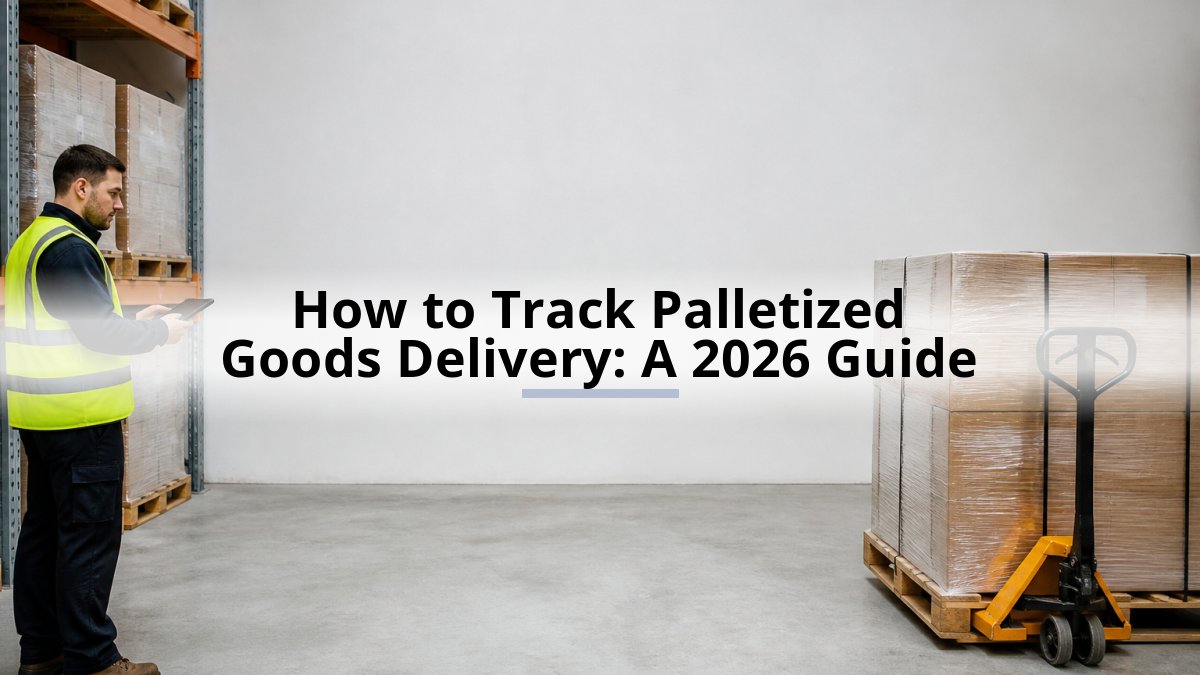
How to Track Palletized Goods Delivery: A 2026 Guide
Table of Contents
- Why Palletized Goods Need Different Tracking to Parcels
- What You'll Need Before You Start Tracking
- Step 1: Find Your Pallet Tracking Number
- Step 2: Access Real-Time Pallet Tracking
- Step 3: Understand Your Pallet Delivery Status Meanings
- Step 4: Get Proof of Delivery for Pallet Shipments
- Common Mistakes to Avoid When Tracking Pallets
- Frequently Asked Questions
Last Updated: October 8, 2026
Why Palletized Goods Need Different Tracking to Parcels
A pallet does not move through the same network as a parcel. It gets forklifted, shrink-wrapped, stacked on a tail-lift, and often handled by more than one vehicle before it reaches its destination. That is why learning how to track palletized goods delivery means reading a different set of signals than you would for a small parcel.
This guide from Direct Couriers London Ltd covers the full process, from finding your pallet tracking number to getting proof of delivery for pallet shipments. Below, we show you exactly how to follow a pallet from collection to doorstep.
So why the difference? A parcel moves on conveyor belts and gets scanned automatically at every depot. A pallet is freight. It moves in smaller batches, with fewer scans and more human handling. That gap is where most tracking confusion starts.
What You'll Need Before You Start Tracking
Before you open a tracking page, have four things ready. Missing any one of them is the most common reason people cannot see where their goods are.
- Your pallet tracking number, also called a consignment or reference number
- The collection postcode and delivery postcode
- The name of the courier or freight company handling the pallet
- The collection date, so you can tell a delay from a normal gap
The Information Commissioner's Office guidance on personal data is worth knowing about too. Courier firms hold your name and address to deliver the pallet, and you have rights over how that data is used.
A common mistake is writing down only the order number from your supplier. That is not the tracking number. Ask for the consignment reference at the point of booking.
Step 1: Find Your Pallet Tracking Number
Your pallet tracking number is a unique reference the courier assigns to your consignment. It links the collection address, the delivery address, and every scan in between.
Where to Look on Your Paperwork
The number usually appears in one of these places:
- On the booking confirmation email, usually near the top
- On the collection note left by the driver
- On the delivery label stuck to the shrink-wrap
- On the supplier's dispatch email, under "consignment" or "reference"
What to Do If You Cannot Find It
If you booked through a supplier, ask them for the consignment reference. They hold the contract with the courier, so they can pull it up fastest.
If you booked the pallet yourself, check your confirmation email inbox and spam folder. Then call the courier with your collection postcode and date. Most firms can find the job from those two details alone.
Step 2: Access Real-Time Pallet Tracking
Real-time pallet tracking is the live view of where your pallet is right now, based on the last scan recorded by the courier. It is not a GPS dot on a map. It is a timeline of events.
Here is how to get to it:
- Open the courier's tracking page on their website
- Enter your pallet tracking number in the search box
- Confirm the collection and delivery postcodes if asked
- Read the latest scan event at the top of the timeline
Some couriers also send text or email updates automatically. If yours does, save the number so alerts are not filtered as spam.
A common mistake is refreshing the page every hour. Freight scans happen at key points, not continuously. If no scan has appeared for a day, that is often normal in transit.
Step 3: Understand Your Pallet Delivery Status Meanings
Pallet delivery status meanings are the labels a courier uses to describe where your goods are in the journey. Each one tells you what has happened, not always what happens next.
Common Statuses and What They Actually Mean
| Status | What It Means | What To Do |
|---|---|---|
| Booked | Job logged, not yet collected | Wait for collection scan |
| Collected | Driver has the pallet on board | Expect a depot scan soon |
| In transit | Moving between depots or vehicles | No action needed |
| At depot | Waiting for the next leg | Check for a delay note |
| Out for delivery | On the final vehicle | Be ready to receive |
| Delivered | Signed for at destination | Request proof of delivery |
The status that trips people up most is "in transit". It can sit unchanged for a full day while the pallet moves between regional depots. That is not a lost pallet.
Step 4: Get Proof of Delivery for Pallet Shipments
Proof of delivery for pallet shipments is the signed record that confirms who received the goods and when. It is your evidence if a customer claims they never arrived.
Ask for it in one of these forms:
- A signed delivery note, scanned and emailed
- A photo of the pallet at the delivery address
- A digital signature captured by the driver's handheld device
Request it the same day the status changes to "delivered". That is when the record is freshest and easiest for the courier to pull.
If you run an online shop and your buyer asks for proof, send the signed note straight away. It settles most disputes before they start. At Direct Couriers London Ltd, we give customers instant access to tracking information, so you can follow a pallet and share updates with your own clients without chasing anyone.
Common Mistakes to Avoid When Tracking Pallets
Most tracking problems come down to four repeated errors. Fix these and you will spend far less time on the phone.
- Using the order number instead of the consignment number. They are different references. Always ask for the consignment one.
- Panicking over a quiet tracking page. Freight scans are spaced out. A gap is not a problem.
- Waiting until delivery day to check. Start tracking at collection, so you spot a delay early.
- Not requesting proof of delivery. Ask on the day it lands, not a week later.
For businesses moving stock regularly, the same lessons apply every time. We handle palletized goods and heavy equipment with a fully insured fleet, from compact vans to tail-lift Luton vans, and offer flexible storage options when your goods need to wait. That means one point of contact for delivery and storage, with tracking you can check any time.
If you are unsure whether a status is normal, call the courier with your consignment number. A two-minute call beats a day of guessing.
Frequently Asked Questions
How do I track a pallet delivery?
Use the pallet tracking number provided by your courier. Enter it on their website or tracking portal to see the current status and location. For real-time updates, many couriers offer SMS or email alerts. If you booked through a company like Direct Couriers London Ltd, you can access instant tracking information online. Always keep your consignment note handy, as it contains the reference you need.
Where can I find my pallet tracking number?
Your pallet tracking number is typically on the consignment note, collection receipt, or booking confirmation email. It may also appear on the pallet label itself. If you cannot find it, contact the courier with your booking reference and delivery postcode. For business accounts, check your account dashboard or ask the person who arranged the shipment.
What do pallet tracking statuses mean?
Common statuses include 'Collected' (goods picked up), 'In Transit' (moving between depots), 'Out for Delivery' (on the final vehicle), and 'Delivered' (signed for at destination). Some couriers use 'Awaiting Collection' or 'Delayed'. Understanding these helps you answer customer queries. If a status does not change for over 24 hours, contact the courier for an update.
What should I do if my pallet delivery is delayed?
First, check the tracking status for any alerts. If no update appears, contact the courier with your tracking number. Ask for a revised delivery time and inform your customer if needed. Most delays are resolved within 24 hours. Keep a record of all communications for reference.
Tracking a pallet should not feel like a guessing game, yet too many businesses lose hours chasing updates that never come. Direct Couriers London Ltd takes that pressure off with same-day and next-day delivery, a fully insured fleet built for heavy and palletized goods, and instant access to tracking information from collection to delivery. Get started with Direct Couriers London Ltd and know exactly where your goods are, every step of the way.