 how-to
How Do You Track a Pallet Shipment Accurately?
Last Updated: October 30, 2026
Quick Summary
The most reliable way to track pallet shipments is to get a specific consignment number at booking, match it to your paperwork, and choose a tracking method suited to the load. Barcodes suit high-volume sites, GPS suits high-value or long journeys, and scan events at pickup and delivery create a complete record.
- Ask for a specific consignment number at booking, not a generic reference.
- Confirm the tracking number matches the consignment note and is active before the pallet leaves site.
- Barcodes suit high-volume, low-value pallets; GPS suits high-value loads and long journeys.
- Track the last confirmed scan and escalate after one working day without movement on domestic shipments.
- Get a signed delivery note and note any damage on the paperwork before the driver leaves.
Table of Contents
- Why Tracking Pallet Shipments Matters for UK Businesses
- Step 1: Get the Right Tracking Number From Your Carrier
- Step 2: Track a Pallet Without a Tracking Number
- Step 3: Choose a Method for Real-Time Pallet Tracking
- Step 4: Handle Delays and Missing Updates
- Step 5: Secure Proof of Delivery for Pallet Shipments
- Booking Your Next Pallet Shipment With Direct Couriers London Ltd
- Frequently Asked Questions
Why Tracking Pallet Shipments Matters for UK Businesses
Losing sight of a pallet costs money fast. A missing load can tie up a warehouse bay, leave a customer waiting, and trigger a dispute over who is responsible. The businesses that track pallet shipments well are the ones that catch problems before they reach the customer.
Pallet tracking is the practice of following a palletised load from collection to delivery, using a tracking number, scan events, or location data. Good tracking gives you a clear record of where the goods are, when they moved, and who signed for them.
Accurate tracking matters most when the goods are time-sensitive, high-value, or part of a wider supply chain. A single load that goes missing can disrupt several orders at once. Clear visibility lets you answer customer questions with facts rather than guesses.
The rest of this guide walks through the steps we recommend, from getting the right tracking number through to securing proof of delivery.
Step 1: Get the Right Tracking Number From Your Carrier
Your carrier's tracking number is the foundation of everything else. Ask for it at the point of booking, not after collection. A number issued at booking can be checked against the shipment record if anything goes wrong.
Confirm three details when you receive the number:
- The number matches the consignment note or booking confirmation
- The number is linked to the correct pickup and delivery addresses
- The number is active on the carrier's tracking system before the pallet leaves site
A common mistake is accepting a generic reference rather than a specific consignment number. Generic references make it hard to separate one load from another, particularly when several pallets leave on the same day. Ask the carrier to confirm exactly which number identifies each pallet.
Step 2: Track a Pallet Without a Tracking Number
Sometimes a pallet arrives without a tracking number, or the number was never shared. For a fuller walkthrough, see how to track palletized goods shipment. In that case, rebuild the trail from the paperwork you already hold.
Start with the consignment note, delivery booking, and any email confirmations. Match the pickup date, the collection address, the delivery address and the number of pallets or packages. Then contact the carrier's customer service team with those details and ask them to locate the load manually.
Keep a written log of each contact: the date, the person you spoke to, and what they told you. This record matters if you need to escalate a claim later.
Step 3: Choose a Method for Real-Time Pallet Tracking
Real-time tracking depends on how the pallet is identified and how often its location is updated. The main options are barcodes, RFID tags, GPS devices, cellular trackers and low-power wide-area network (LPWAN) tags. If you are weighing these against standard parcel carriers, see alternatives to standard parcel carriers for palletised goods for other ways to move and follow pallets. Each has different strengths, so the right choice depends on your shipment type and budget.
Barcodes, RFID and GPS: Matching the Method to the Shipment
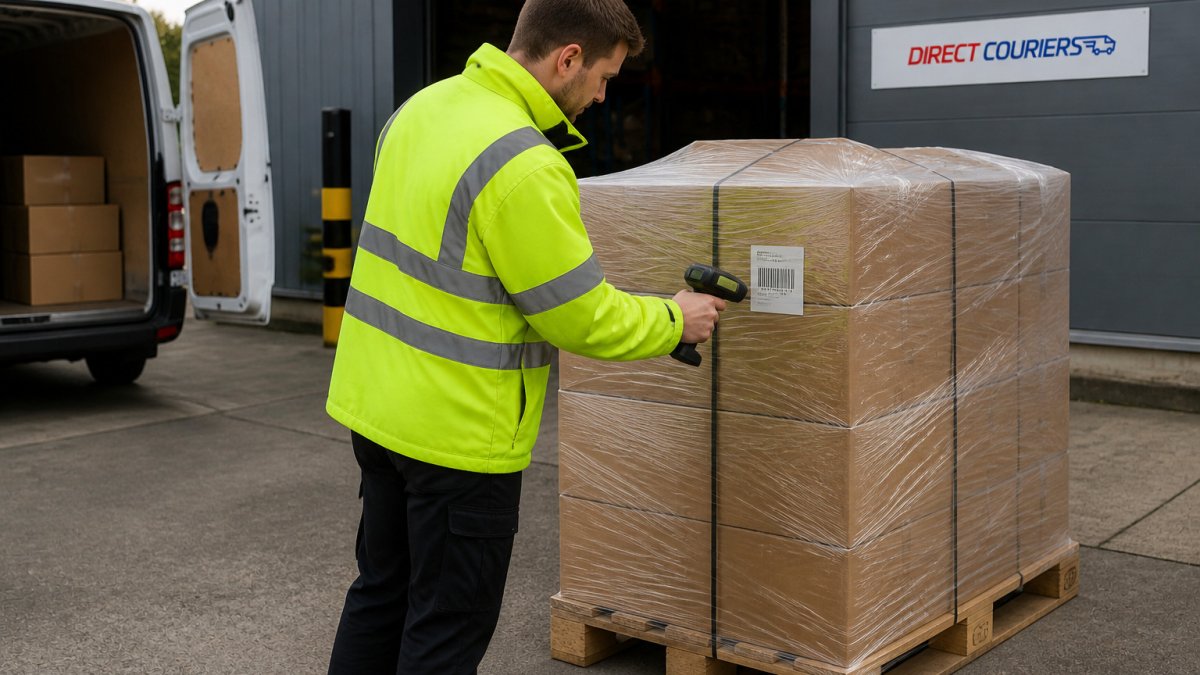
Barcodes are the cheapest and most widely used method. A label is scanned at each checkpoint, which creates a scan event.
RFID tags are read automatically when a pallet passes a reader. They reduce manual scanning and suit high-volume sites with fixed portals.
GPS trackers show live location, which is useful for long journeys or pallets moving between sites. They are best for high-value loads where knowing the exact position matters more than checkpoint scans.
Cellular trackers use the mobile network to report location and status. Integrating these real-time data streams into broader workflows is essential for automating logistics processes across complex retail supply chains.
LPWAN tags (such as LoRaWAN) offer long range and low power consumption, making them suitable for large sites or outdoor yards where Wi-Fi and cellular are unreliable.
Match the method to the load. A warehouse moving many identical pallets within one site may need only barcodes.
Budget and Shipment Type Considerations
Pricing for tracking tools depends on the vendor, the number of units tracked, and the features included. Costs vary considerably between methods, so the most reliable way to compare options is to request a quote tied to your own shipment volume and the number of read points.
Start with the simplest method that meets your needs, then add more precise tracking only where losses or delays justify the cost.
The main pallet tracking methods differ in how they identify loads and how often location is updated, as summarised below.
| Method | Best for | Key difference |
|---|---|---|
| Barcodes | High-volume, low-value pallets on sites you control | Needs manual scanning; gaps where scans are skipped |
| RFID tags | High-volume sites with fixed portals | Read automatically when passing a reader |
| GPS trackers | High-value loads and long journeys | Shows live location; signal can drop indoors |
| Cellular trackers | Pallets moving between depots and customer sites | Relies on mobile signal; shorter battery life |
| LPWAN tags | Large sites and outdoor yards | Long range, low power; needs a gateway on site |
Step 4: Handle Delays and Missing Updates
Gaps in tracking updates are not always a sign of loss. If a pallet is stalled, our guide to tracking palletized goods delivery progress explains how to follow it through each stage. Scan events are sometimes missed at busy sites, and GPS signals can drop inside buildings. Before raising an alarm, check whether the last known location and time still make sense for the route.
A Practical Exception Workflow
When an update is missing or a pallet is delayed, damaged, misrouted or missing, work through the same steps every time so nothing is missed:
- Confirm the last known scan. Contact the carrier with the tracking number and ask for the last confirmed scan, including the time and location. Ask for a status update covering each checkpoint since then.
- Set an escalation point. For example, escalate after one full working day without movement on a domestic shipment, or after two working days for an international consignment. Put the escalation point in writing so everyone knows when it triggers.
- Escalate through the right channel. Start with the carrier's customer service team, then move to the account manager or depot supervisor if there is no movement. Keep a written log of each contact: the date, the person you spoke to, and what they told you.
- Notify the customer. A short, factual update that says what you know and when you will next update them usually reduces pressure more than waiting until you have all the answers.
- Record the outcome. Whether the pallet arrives late, is damaged, or is confirmed lost, record what happened and what was agreed. This record feeds into your claims documentation and your service performance measures.
Claims Documentation and Proof of Delivery
If a pallet is damaged or missing, the claim is only as strong as the paperwork behind it. Gather the consignment note, the tracking record showing the last scan, any photos taken at collection and delivery, and the signed delivery note if the goods arrived. Note any damage on the delivery paperwork before the driver leaves; written notes made at the time carry far more weight than corrections made days later.
Check the carrier's terms and conditions for the claims window and the evidence they require. Most carriers set a time limit for raising a claim, so log the date the issue was identified and the date you notified the carrier. If the shipment involved a freight forwarder or multiple carriers, confirm which party is responsible for the claim and keep copies of every handover record.
Tracking KPIs to Spot Problems Early
Use a small set of measures to see whether your tracking process is working: on-time delivery rate, scan compliance (the proportion of expected checkpoints that were actually scanned), dwell time at each site, location accuracy against the planned route, and the rate of loss or damage per hundred pallets shipped. Review these monthly. A falling scan compliance rate is often the first sign that a carrier or a site is skipping checkpoints, long before a pallet goes missing.
Step 5: Secure Proof of Delivery for Pallet Shipments
Proof of delivery is the record that shows the goods arrived and were accepted. Without it, disputes over damage or shortages are hard to resolve.
Ask for a signed delivery note, a time-stamped record, and where possible a photo of the pallet at the drop-off point. Check the signature against the expected recipient and note any damage on the paperwork before the driver leaves. Written notes made at the time carry far more weight than corrections made days later.
Store proof of delivery with the tracking record for the same shipment so both can be retrieved together.
Booking Your Next Pallet Shipment With Direct Couriers London Ltd
Accurate tracking starts with the right booking. Book a pallet delivery with Direct Couriers London Ltd to see how our service covers large and palletised loads across the UK, with instant tracking information from collection to drop-off.
Our fleet ranges from compact vans to tail-lift Luton vans, and our same-day and next-day services suit both personal moves and business shipments. Our fleet is fully insured.
Contact us today to discuss your next shipment and get a clear plan for tracking it from start to finish.
Frequently Asked Questions
How can I track a pallet shipment?
Start with the tracking number or booking reference your carrier issued when the pallet was collected. Enter it on the carrier's online tracking page or app to see scan events at each handover point. If your carrier offers live GPS or a driver app, use that for real-time location updates. Keep your booking confirmation and any scan timestamps in one place so you can answer customer questions quickly and check progress against the agreed delivery window.
Can I track a pallet shipment in real time?
Real-time tracking depends on the carrier and the technology used. Some providers offer live GPS through a driver app, while others rely on scan events at collection, depot and delivery. Ask your carrier before booking whether live location is included and how often it updates. Where live tracking is not available, scheduled scan updates still give a reliable view of progress across the journey.
What should I do if my pallet tracking has not updated?
First, check that you are using the correct tracking number and that the shipment has actually been scanned at collection. Allow for normal processing delays before escalating. If there has been no update beyond the expected interval, contact the carrier with the booking reference and ask for the last confirmed scan location and the driver's status. Keep a written record of each enquiry so you can follow up consistently.
What is proof of delivery for a pallet shipment?
Proof of delivery is the record that confirms your pallet reached the consignee, usually a signed delivery note, an electronic signature or a photograph of the goods at the drop-off point. Ask your carrier which proof they provide and request a copy for your records. Good proof of delivery protects you if the receiver later disputes the quantity or condition of the goods.